Alternative powertrain progress may have swung in favor of battery electric vehicles (BEVs), but there is still a big demand for liquid fuels in many parts of the world. This month, Toyota, BMW, and Repsol began a pilot scheme in Spain to demonstrate how existing vehicles can run exclusively on Repsol's fully renewable petrol, Nexa 95. Bosch is also a collaborator in the project, contributing its digital fuel tracking solution.
Liquid fuel is big in China, but rather than petrol or diesel, the country is focusing on methanol, accounting for around 60% of the world's production. Although most Chinese methanol has been made from coal, the country is investing in e-methanol production. China began supporting the use of M100 (100% methanol) fuel in cars in 2019 and is now the world's largest market for methanol-fueled vehicles.
 View Price on Amazon
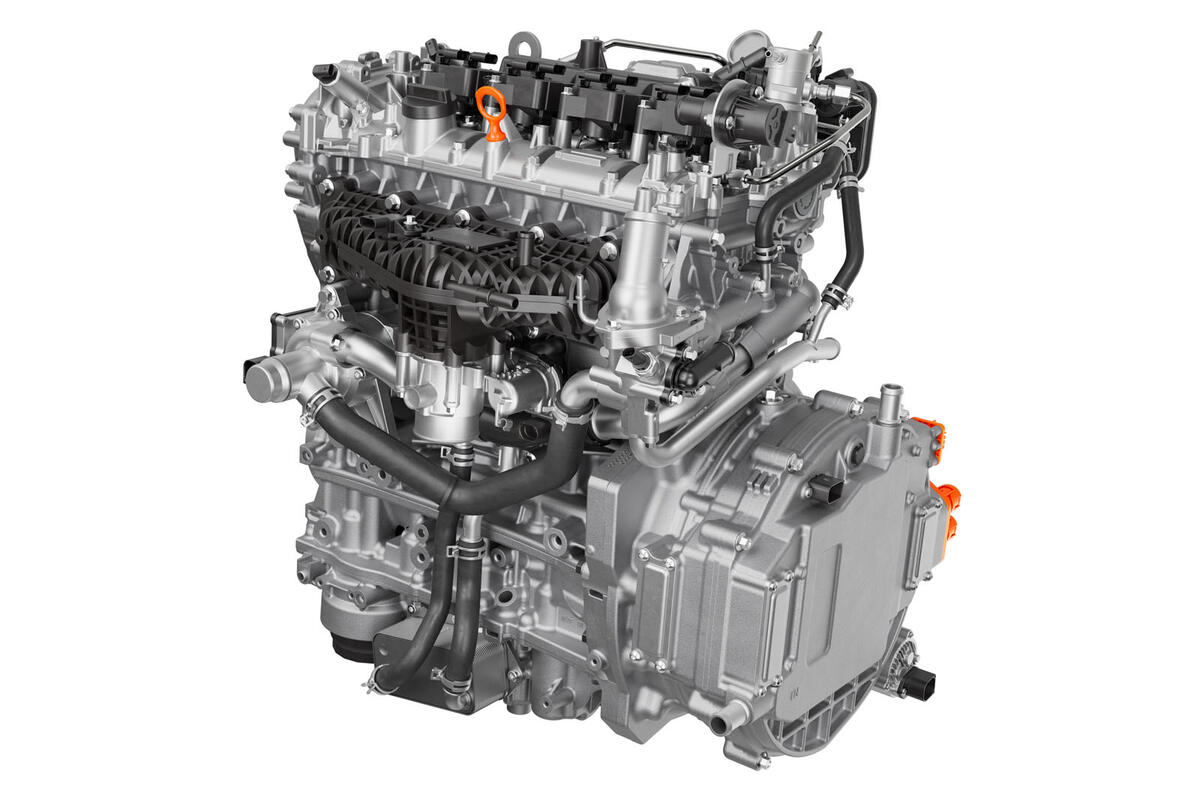
It's not surprising, then, that Horse Powertrain's latest creation is the D20 Methanol, a range-extender EV powertrain featuring an M100-burning 2.0-liter turbo engine and an axial-flux motor-generator. The axial-flux motor is larger in diameter but very short, almost half the length of an equivalent radial-flux motor, with 63% greater energy density by volume, allowing it to produce 63% more power per unit of volume it occupies.
The motor is also yokeless, meaning the stator doesn't use a large, heavy iron disc (a yoke) to mount electrical coils. Instead, lightweight materials and design features do the job. Electrical efficiency is rated at 96.4%, thanks in part to features such as an embedded silicon-carbide power module to minimize electrical losses. The D20 is claimed to achieve a 47% energy conversion ratio of the fuel, which is extremely efficient.
A high-energy ignition system contributes to that by enabling ultra-lean burning of the M100. Cold starts can be tricky, one of the intrinsic drawbacks of methanol fuel, but the new ignition system also means the engine can be fired up in temperatures as low as -31 degrees Fahrenheit. NOx emissions comply with China's CN6b standard of 35mg/kWh and the EU's Euro 7 limit of 60mg/mile.
In 1999, DaimlerChrysler launched the Mercedes A-Class-based Necar 4 hydrogen fuel cell EV, which ran on hydrogen reformed on board from methanol. The company reasoned that existing filling stations could easily be converted to methanol rather than petrol and diesel by installing liners in underground tanks and swapping out pumps.
Source: autocar.co.uk