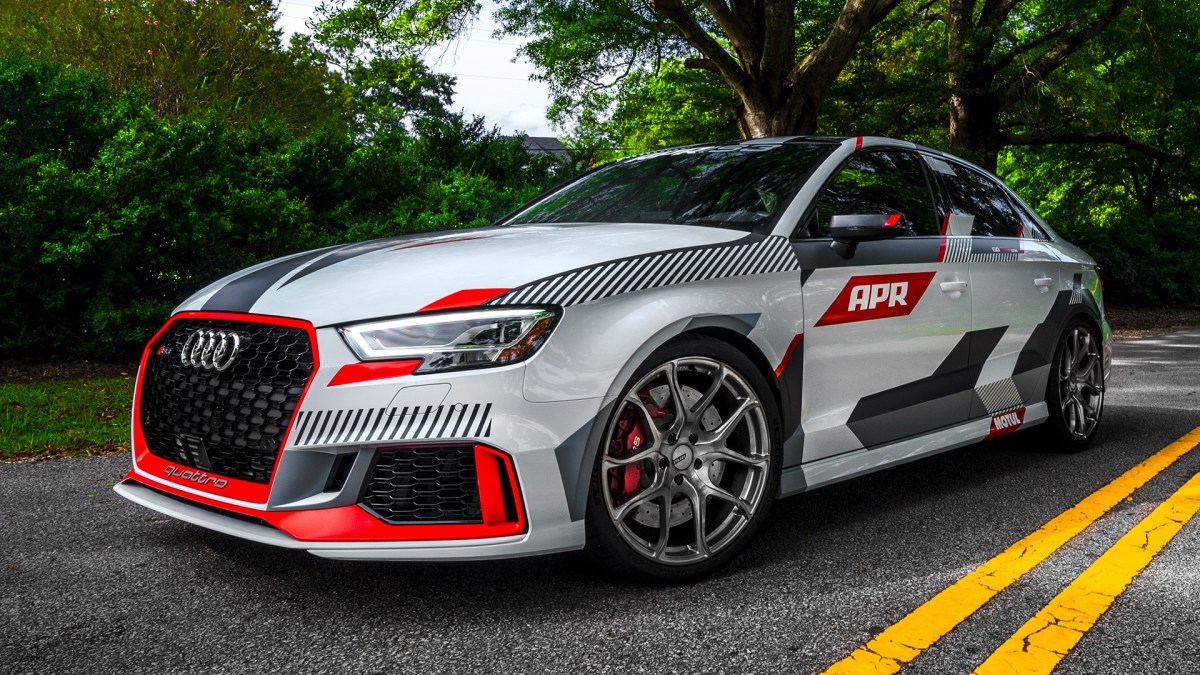
APR, a longstanding Volkswagen and Audi tuner based in Alabama, has released new software that optimizes the behavior of Haldex AWD systems for speed and performance in Volkswagen and Audi vehicles. This software, called the APR AWD Upgrade for Haldex, is designed to improve torque transfer, traction, and all-wheel-drive engagement for compatible vehicles. The idea behind this software is to help drivers put power to the ground more efficiently, resulting in faster launches and more consistent performance.
The APR AWD Upgrade is primarily designed for the Mk7 Golf R, 8V RS3, S3, and TTS, but it can also be used on other Volkswagen and Audi models equipped with Haldex systems. Haldex AWD is most often associated with transverse, front-drive-based platforms, and Volkswagen and Audi have been big adopters of this technology. In a Volkswagen or Audi application, Haldex relies on two main pieces of hardware to work: a power takeoff/angle drive at the back of the transmission, and the Active On-demand Coupling (AOC) at the front of the rear differential.
 View Price on Amazon
The AOC's hydraulic clutch comes into play and varies how much torque is sent to the rear axle. This system is designed to let the car have AWD when needed, but FWD otherwise to save on fuel. The APR AWD Upgrade tweaks settings for faster, more assertive clutch engagement, improved rear torque bias, and increased overall driveline responsiveness. It also lets you switch instantly between AWD Mode and a FWD Burnout Mode, which effectively replaces the old enthusiast trick of pulling a fuse or disconnecting the rear coupling to force front-wheel-drive behavior.
APR has also updated some other engine and transmission tuning products to work better with this newly available Haldex tune. The intended benefits of this mod are more consistent launch performance, enhanced traction, and a more dynamic driving experience without the complexity of standalone controllers. As for how quickly it would accelerate wear on your driveline, it's tough to say. APR is a well-established tuning house, and there's no indication this calibration is inherently unsafe when used as intended.
Source: thedrive.com