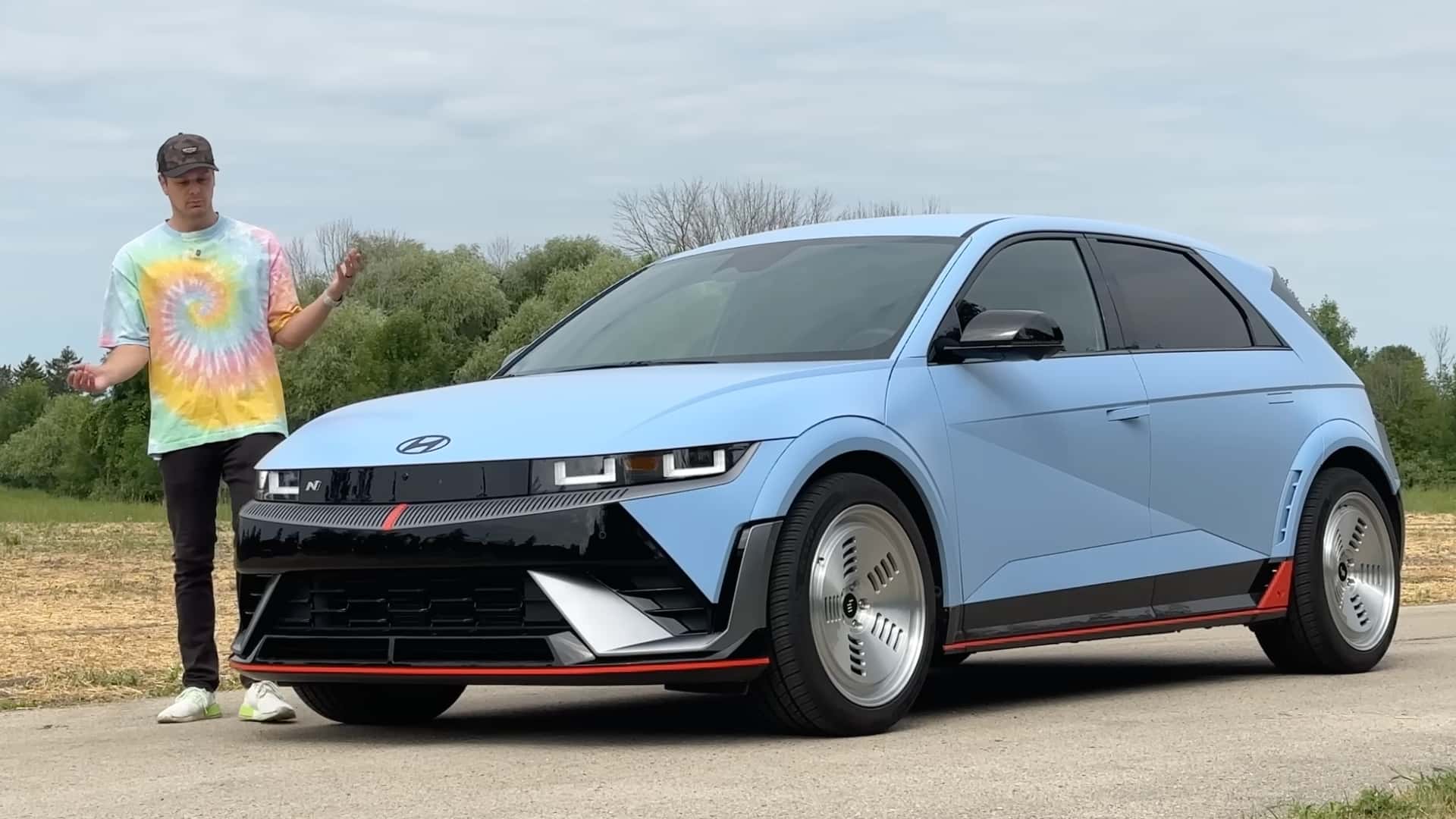
Wheels and tires play a significant role in an electric vehicle's efficiency. That's why manufacturers provide different range and efficiency ratings depending on the wheel size, as larger rims with grippy performance tires can reduce real-world range by dozens of miles. By equipping your vehicle with smaller wheels and more efficient, lower-rolling-resistance tires, you can increase its range. Matt from the Downshift YouTube channel decided to give his Hyundai Ioniq 5 N more range, as it only has an EPA-rated range of 221 miles.
This is significantly less than the non-N Ioniq 5 dual-motor all-wheel-drive with the same 77.4-kilowatt-hour battery pack, which gets an EPA rating of 290 miles. The difference is 69 miles, or around 24%, and part of the reason for this discrepancy is the N model's 21-inch forged wheels wearing wide 275-section sticky Pirelli P Zero tires.
 View Price on Amazon
Matt first changed the rubber, opting for a set of Kumho Majesty 9 EV tires designed for electric vehicles with a low-rolling-resistance profile to boost efficiency. He then tested the efficiency on a 30-mile mixed-driving loop and found it increased from 3.3 miles per kilowatt-hour to 3.6 miles per kilowatt-hour with the Kumhos. However, while these dedicated EV tires improved efficiency, they also dulled some of the sharp handling Matt bought the Ioniq 5 N for in the first place.
He went one step further, fitting custom 20-inch Demon Forged wheels with more performance-oriented Kumho Ecsta Sport all-season tires, and efficiency improved again. On the same 30-mile loop, the Ioniq 5 N returned 3.7 miles per kilowatt-hour, but he noticed a clear improvement while driving on the highway. At a steady 75 miles per hour, the stock 21-inch setup had previously returned 2.5 miles per kilowatt-hour, while the 20-inch wheels with the second set of Kumhos nudged that up to 2.8 miles per kilowatt-hour over a 120-mile test. That's a clear 12% improvement in highway efficiency.
Matt calculates that, with the 3.7-miles-per-kilowatt-hour result for the 77.4-kilowatt-hour battery, it could achieve a theoretical 310-mile range, which is nearly 90 miles higher than the EPA rating. However, the 310-mile figure isn't the result of an actual range test from 100% down close to empty, and Matt acknowledges that his mixed-driving route tends to boost electric vehicle efficiency.
More importantly, his car could already average 3.3 miles per kilowatt-hour on the same route, so the actual gain isn’t 90 miles. It's the roughly 12% efficiency improvement measured between the stock and modified setups on the mixed-driving loop. The smaller the wheels, the greater the efficiency gains. Switching a 2020 Tesla Model 3 Performance from its factory 20-inch wheels to a set of 18-inch wheels reduced energy consumption by roughly 16% to 23%.
Source: insideevs.com

