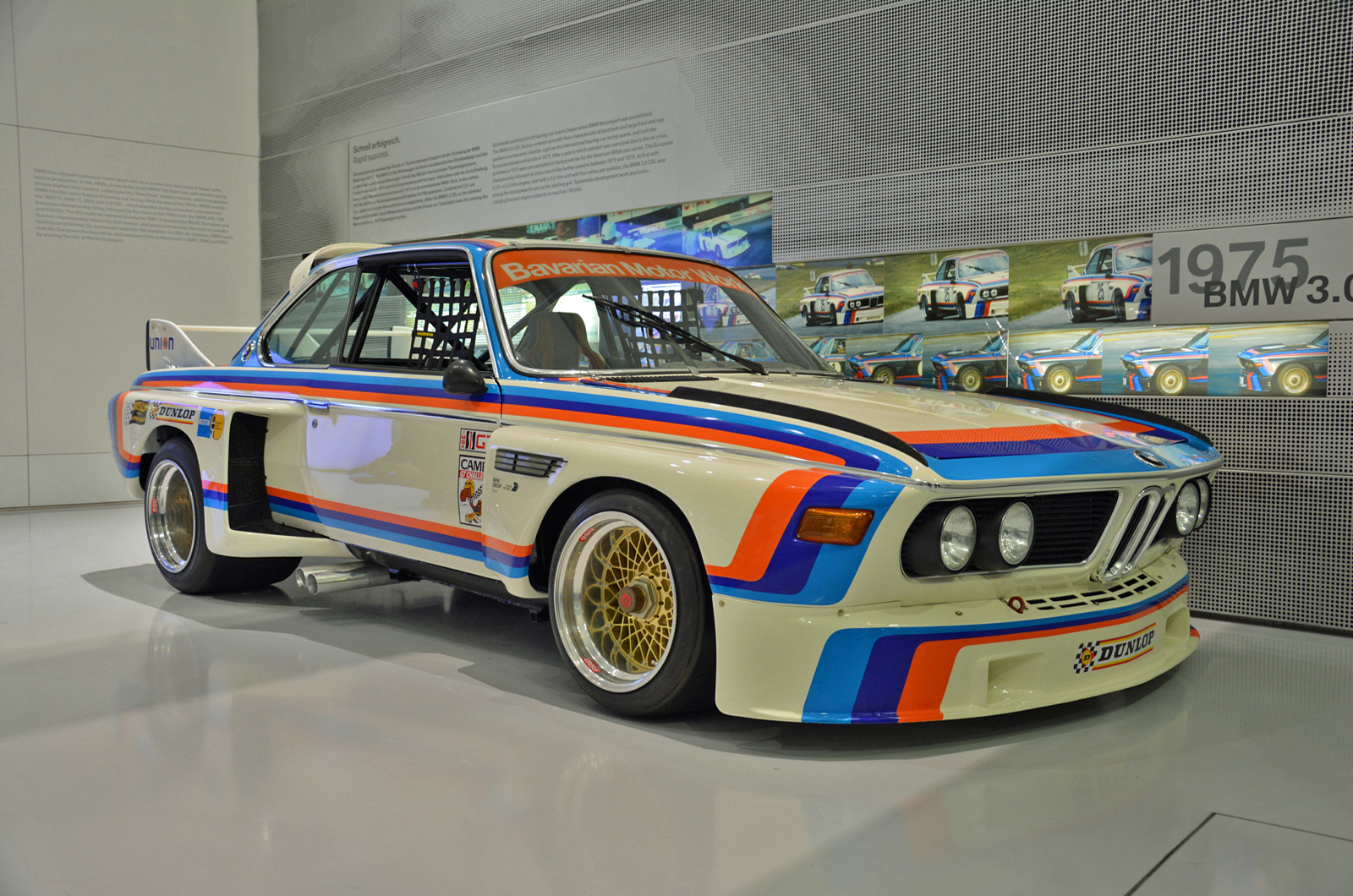
The BMW museum in Munich, Germany, isn’t where you go to learn about one-offs, concept cars or prototypes. Instead, it’s a neatly-arranged assortment of the brand’s most significant cars. All of the greatest BMWs have a spot in the collection, including the 2002, the Z1 and, of course, the original M3.
BMW’s first car, the Dixi, also became its first roadster. Introduced in 1930 and built under an Austin 7 license, the 3/15 DA-3 used a 738cc four-cylinder engine that made 18 horsepower. That’s not much on paper, but it was enough in a car that weighed just 902 pounds. BMW built 150 examples of the 3/15 DA-3. Ironically BMW would later own Rover, a successor company to Austin.
The 328 stands out as one of the most significant (and sportiest) early BMWs. Its 2.0-liter straight-six engine and state-of-the-art features like hydraulic brakes helped it win its class in countless motorsport events, including the Mille Miglia. It’s also a testament to how fast BMW evolved in the 1930s. The company went from building an Austin 7 under license to dominating races in just a few short years.
 View Price on Amazon
BMW built the lightweight Mille Miglia derivative of the 328 to conquer the racing scene. Its highly aerodynamic body put an equal emphasis on form and on function, an approach to car-building that paid dividends in motorsport events. Stylists haven’t forgotten about the 328 Mille Miglia. It’s ‘still a unique source of inspiration for BMW design,’ according to the company.
BMW remembers the 335 as its first-ever luxury sedan. Its relatively light body and its 3.5-liter, 91-horsepower straight-six engine helped it thrive on Germany’s then-new Autobahn network of roads. It could reach a top speed of 90 miles per hour.
The outbreak of World War II forced BMW to abruptly end production after building 400 examples, of which 233 were sedans. The rest were either two- or four-door convertibles.
Designer by Italian auto-maker Iso, the Isetta joined the BMW catalog to help the company exit a financial rut. The so-called bubble car was, to put it mildly, unconventional. It was wider in the front than in the back, the only way to access the passenger compartment was through a front-hinged door and its 250cc engine huffed and puffed until it delivered 12 horsepower. It caught on, somewhat surprisingly, and it helped BMW avoid laying off part of its workforce.
Like the Isetta, the 700 and its derivatives played a significant role in saving BMW from collapse. The brand leveraged its expertise in building motorcycles and fitted the 700 with a rear-mounted evolution of the R67’s air-cooled flat-twin engine.
The range included a two-door sedan and a two-door coupe with a fast-sloping roof line. Both designs were the work of Turin-based Michelotti. BMW sold the 700 alongside the Isetta for about three years. Think of the 700 as today’s 1 Series; a small, sporty car priced above comparably-sized mainstream offerings.
Source: autocar.co.uk