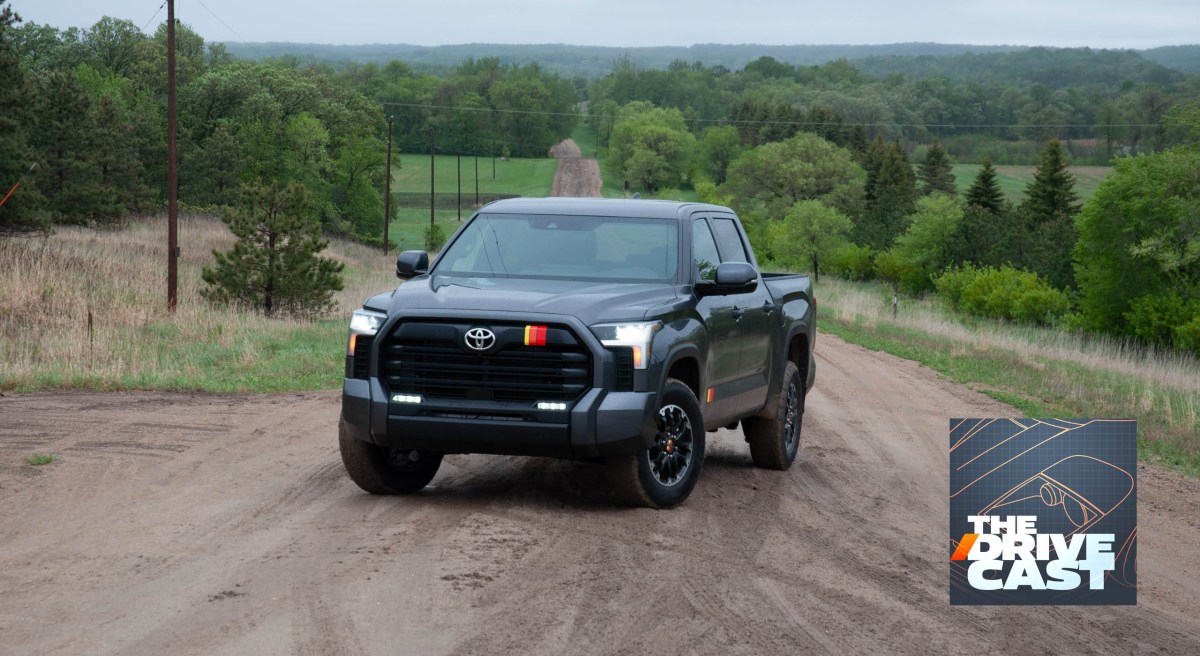
Toyota built its reputation on rock-solid reliability, but its full-size pickup truck, the Tundra, is starting to tear down that legacy. The issue lies with the twin-turbo 3.4-liter V6 engine that powers the Tundra, as well as the Sequoia SUV, Lexus LX, and Lexus GX. With over 270,000 trucks affected, this is not a minor problem. The engine has undergone countless recalls, resulting in engine replacements, all due to metal debris left in the engine during assembly causing sudden and catastrophic failure.
This isn't a precautionary move; the problem is real, and Toyota has had to replace engines for free. The Drive's podcast, The Drivecast, discusses Toyota's reliability crisis, how it ended up here, what's really happening beyond the headlines, and what might be next. The Tundra had a reliable V8 engine, but Toyota decided to move to a V6 powertrain, which has proven to be less reliable.
 View Price on Amazon
The decision to switch to a V6 engine has not aged well, especially considering that GM, Ram, and Ford still offer V8 engines in their trucks. The Tundra's V6 engine can still perform truck duties, but it's more complex and sounds different, especially with the cat-back exhaust. The irony is that Toyota made this decision to move to a V6 powertrain in the Tundra while its competitors were still using V8 engines.
Joel Feder, a journalist, recently spent time with the Tundra and a Lexus GX, both of which have the troublesome twin-turbo V6 engine. Fortunately, neither vehicle experienced any issues during his time with them. However, the Tundra did have a TRD performance package and a cat-back exhaust, which his wife found annoying.
Source: thedrive.com

