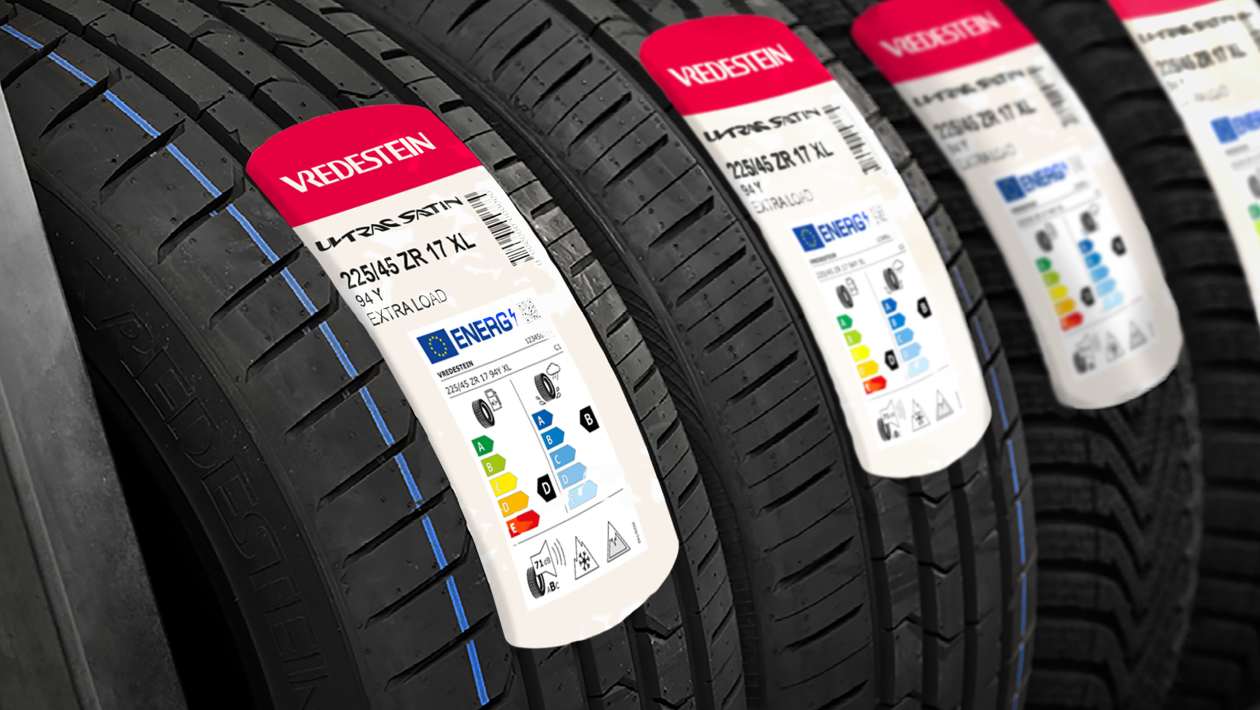
Tire testing is stuck in the past, but ECOLABEL's plan gives power to consumers by providing clearer and more representative information about tires. According to Dr. Piotr Mioduszewski, the lead investigator and project coordinator, tire labeling needs improvement as it is based on assumptions from the past century.
The ECOLABEL initiative, led by the Swiss-Polish Cooperation Programme, aims to provide consumers with clearer and more representative information about tires to help inform buying decisions. ECOLABEL stands for Environmental Consumer-Oriented Labelling Advancement for Better tire energy Efficiency and Lower external noise.
 View Price on Amazon
Dr. Mioduszewski explained that since the popularization of electric vehicles (EVs), tire rolling noise has become extremely important because in typical road conditions, this is the total vehicle sound. On current European tire labels, the volume of tires is displayed in decibels, alongside elements such as wet weather performance and rolling resistance scores.
In the case of rolling resistance, Dr. Mioduszewski stated that it is primarily talking about money for consumers, because if they buy tires with higher rolling resistance, they will spend more money on fuel or get a lower range in EVs. Currently, tire sound is recorded in a coast-by test in which the vehicle travels past a microphone at approximately 30 miles per hour on a road constructed of Dense Graded Asphalt (DGA) Concrete and at an ambient surface temperature of 68 degrees Fahrenheit.
This, according to the ECOLABEL researchers, is not at all representative of a typical US or European road. The majority of European roads, including those in the US, are instead constructed using much coarser, gap-graded asphalt. When testing on these surfaces as opposed to DGA, Mioduszewski said: "On average the difference is around five decibels, but it can be up to 10 or 11 decibels."
Source: autoexpress.co.uk

