The PHEV Paradox: An In-Depth Post-Mortem of the Kia Niro Plug-In Hybrid
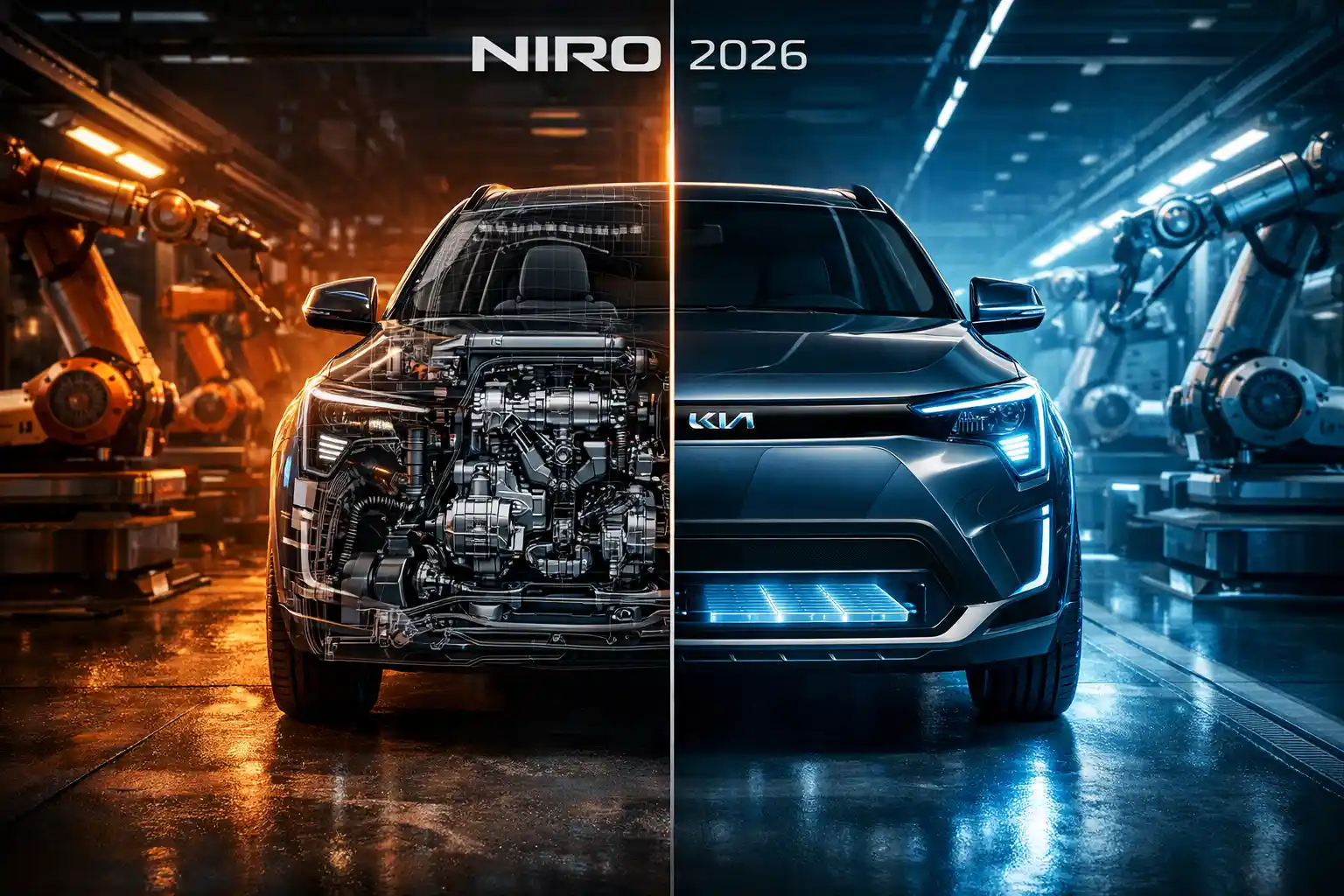
The discontinuation of the Kia Niro PHEV for the 2026 model year is not an isolated event; it is a clinical move by Kia to resolve the "complexity crisis" within its production lines. By removing the middle-child powertrain, Kia is betting that the market has matured past the need for "training wheels" electrification.
I. The "Complexity Tax": Manufacturing Realities
One of the primary reasons for killing the PHEV is the sheer mechanical complexity it required. A PHEV like the Niro had to house a 1.6L GDI engine, a high-voltage battery pack, an electric motor, and an external charging port with onboard converters. Maintaining three distinct assembly processes for one vehicle body was becoming inefficient.

Level 2 Portable EV Charger (40 Amp)
Don't be held back by slow charging. This NEMA 14-50 charger is the perfect companion for your transition to a full EV world.
View Price on AmazonII. The Technical Bottleneck: Slow Charging vs. Fast Expectations
The Niro PHEV suffered from a fatal technical flaw in a 2026 context: Slow Charging. For a mere 33-mile range, it could take nearly 3 hours to fully charge. As consumers become accustomed to the 800V architecture seen in the EV6 or the updated 2026 Volvo EX90, slow-charging PHEVs have lost their appeal.
Source: Car Junkies via YouTube
III. The Residual Value Problem
In the used car market, PHEVs have historically faced steeper depreciation. Buyers of used PHEVs often worry that the smaller battery has been cycled too many times, leading to faster degradation. Kia’s decision protects the brand's overall residual value by focusing on powertrains that hold their worth better.
IV. Kia’s "Plan S" and the EV3 Looming Large
The "elephant in the room" is the Kia EV3. As Kia rolls out dedicated electric platforms (E-GMP), the Niro EV and PHEV start to look like legacy transitions. Kia cannot justify selling a Niro PHEV for $40,000 when a superior, ground-up EV is available in the same showroom.

Premium Kia Key Fob Case
Protect your investment with style. This TPU soft cover is compatible with all modern Kia Niro and EV models.
View Price on AmazonV. Detailed Comparison of Efficiency Metrics
| Metric | Niro Hybrid | Niro PHEV | Niro EV |
|---|---|---|---|
| Powertrain Complexity | Moderate | High | Low |
| User Lifestyle | "Refuel and Go" | "Charge Daily" | "Weekly Charge" |
| Commuter Profile | High-mileage highway | Short-distance city | All-rounder |
| Cargo Space | Maximum | Minimum | High |
VI. The 2027 "Sheetmetal" Refresh: What to Expect
While the PHEV dies in 2026, the remaining Niro models will receive a massive visual overhaul for 2027. Expect "Star Map" signature lighting and a panoramic curved display inside, bringing it in line with the Sportage and EV6.
Final Verdict: Automotive Darwinism
The "bridge" to electrification has been crossed. By 2026, you either want the simplicity of a hybrid or the gas-free experience of an EV. The middle ground has simply evaporated.

Niro Tempered Glass Screen Protector
Keep your Niro's infotainment screen as pristine as the day you bought it. Essential for high-tech digital interiors.
View Price on Amazon