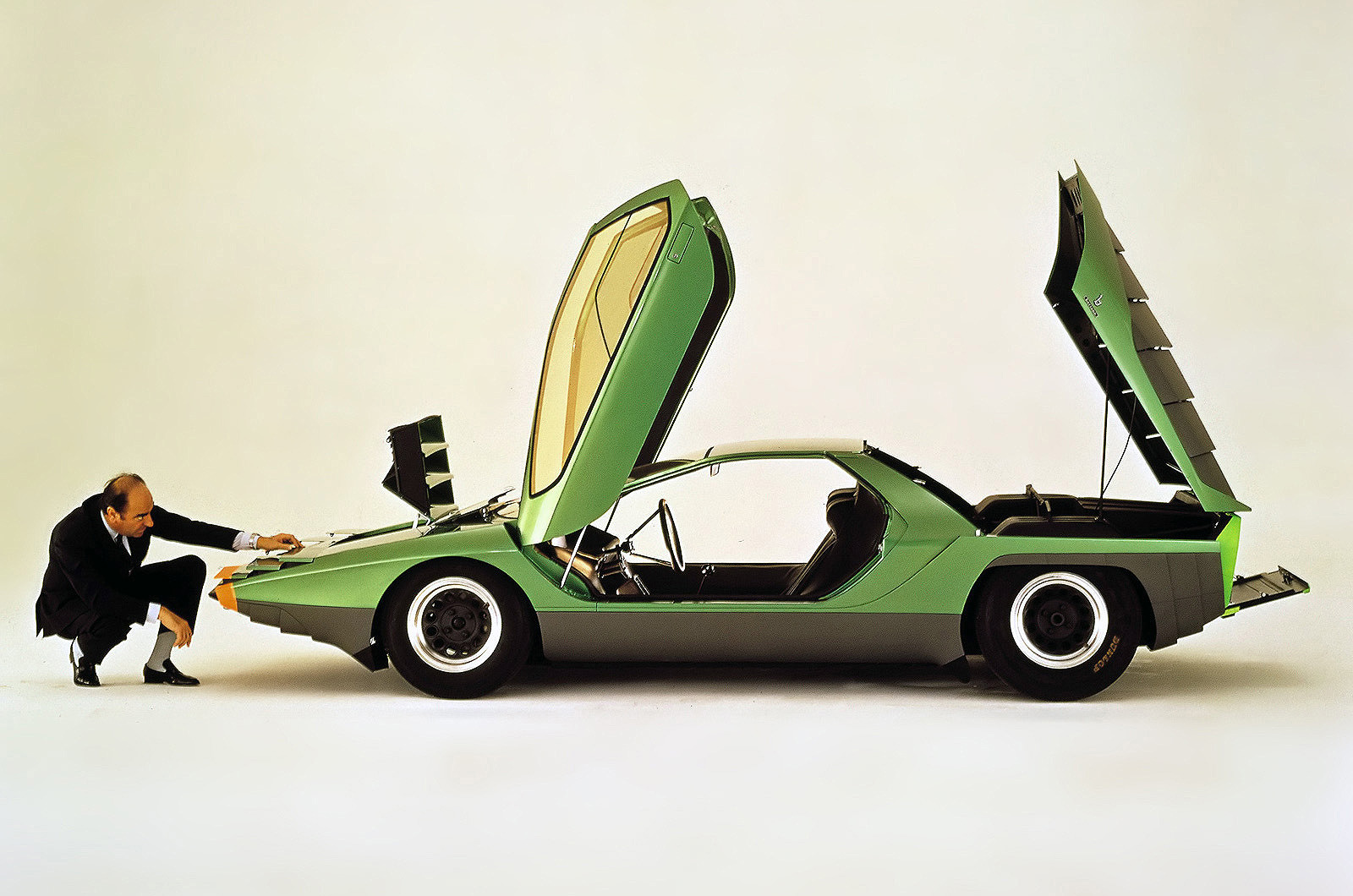
Too often, the term ‘concept car’ is now used to describe a thinly veiled production model that’s about to hit showrooms. But it wasn’t always like that; there was a time when the description was reserved for the most cutting-edge designs that showed just how fertile an imagination could be.
Here we take a look at more than eight decades of some of the most forward-thinking, influential concept cars ever created, but even with 10 times as many entries we could only ever hope to scratch the surface. Enjoy the ride:
General Motors’ Y-Job is now considered to be the world’s first concept car; it wasn’t, as that title going to the Volvo Venus Bilo of 1933. But the Y-Job did make GM’s design boss Harley Earl famous. Undeniably forward-thinking, the Y-Job featured hidden headlights, electric windows and a powered roof, concealed under a hard tonneau, and setting out overall design cues for American cars that would emerge after World War Two.
For an encore to his Y-Job, Harley Earl came up with the LeSabre, which perfectly captured the optimism of the jet age and America’s long post-war boom. Sitting a foot lower than contemporary production cars, the 335 horsepower V8-equipped LeSabre came with a wrap-around windscreen, hidden headlights and huge tailfins that set a trend for America’s Big Three throughout the 1950s. It also incorporated a powered roof that could be activated automatically in the event of rain.
 View Price on Amazon
The XL-500 was supposed to provide effortless driving with push-button automatic transmission. The goldfish bowl problem presented by all that glass would be resolved by the then emerging technology of air conditioning that it featured. Standard equipment also included a telephone and built-in jacks in the event of a puncture.
America didn’t have the concept car monopoly. Italian design house Bertone produced a range of groundbreaking concept cars during the 1950s, of which this is perhaps the most striking. The concept pursued extreme aerodynamics – it had a drag coefficient of just 0.23 - and light weight to move the envelope of the possible. It succeeded; despite a modest 100 horsepower engine, this 2,425-pound car could deliver a 120 mph top speed.
With its ‘flying-wing’ front end and glassfibre construction the Wildcat II was definitely a car of the future when it appeared in 1953 – the same year as the original Corvette. Focus on the centre section of this concept and you can see how similar it is to the earliest ‘Vettes.
Source: autocar.co.uk