The Digital Soul: Human-Centric AI and the Ethical Rebirth of the American Drive
Introduction: The Great Integration
By February 2026, the American automotive landscape has reached a definitive crossroads. The reckless "Beta Testing" era of the early 2020s—where consumers were often treated as test subjects for unfinished autonomous software—has ended. In its place, a new era of "Human-Centric AI" has emerged. This movement is defined by a refusal to replace the driver, focusing instead on augmenting human capability through unprecedented levels of Quality, mechanical Reliability, and proactive Safety.
The American consumer in 2026 is smarter, more skeptical, and more demanding than ever. They no longer want a car that "might" drive itself; they demand a partner that ensures they arrive at their destination with absolute certainty. For more insights on this shift, visit our master **tire guide**.
Chapter 1: The New Definition of Quality in the Age of Silicon
In the 20th century, Quality was measured by the gap between body panels and the softness of the leather. In 2026, while those physical attributes still matter, the definition of Quality has shifted into the realm of "Contextual Intelligence."
1.1 The Architecture of Perception
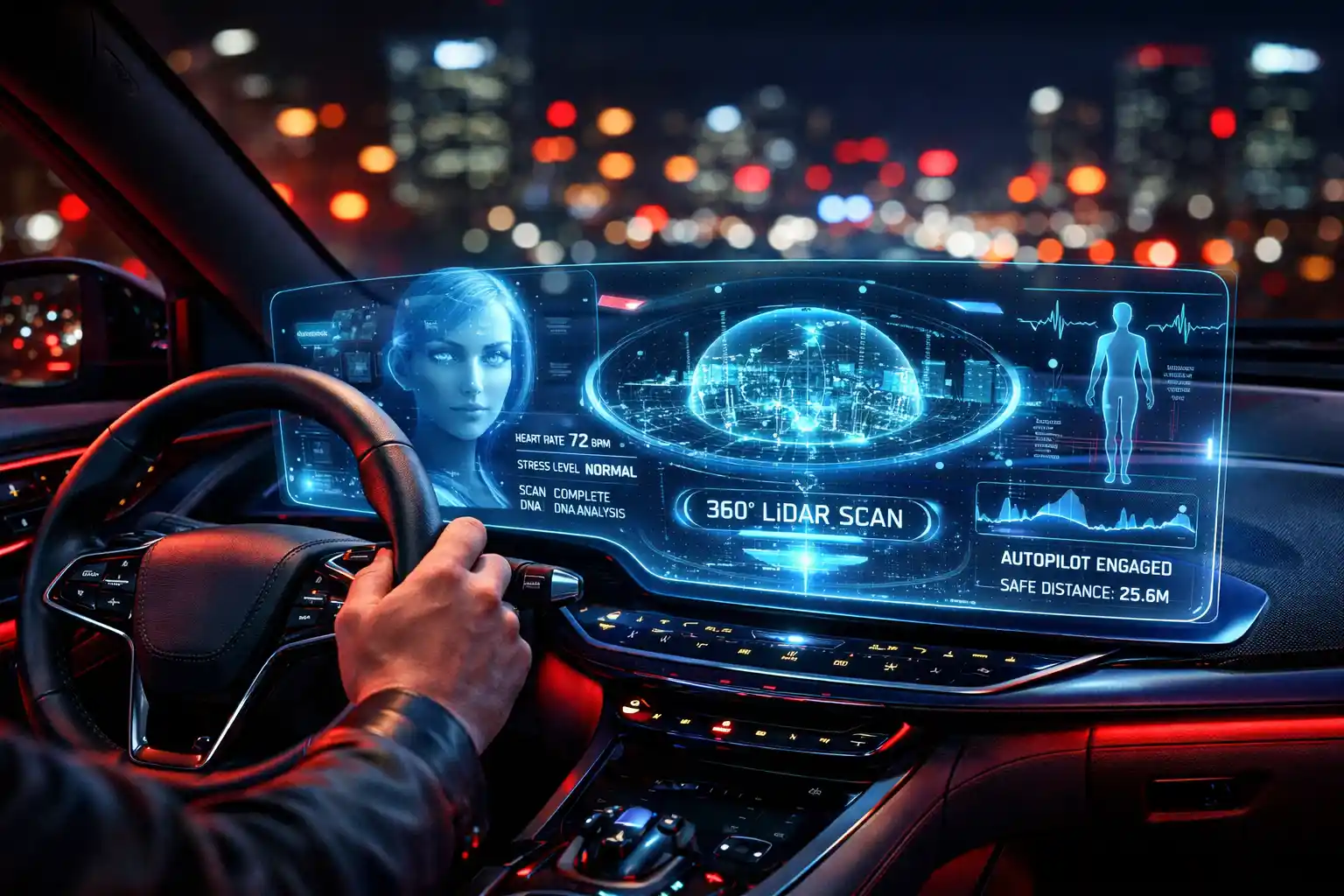
A high-quality AI system in 2026 is built on "Sensor Fusion 2.0." It doesn't just "see" via cameras; it "perceives" using a combination of solid-state Lidar, 4D imaging radar, and ultrasonic arrays. The Quality of this data allows the car to build a 360-degree, high-definition map of its surroundings in real-time, even in a blinding snowstorm.
This translates to a "Zero-Error" environment where the technology works as an invisible shield. Ensuring your vehicle is in peak condition, from the AI sensors down to the **tire pressure**, is the hallmark of the 2026 driver.

Augmented Sight: 4K Smart Sensor Dash Cam
Equip your own "Sensor Fusion" system. This 4K camera records in ultra-HD and uses AI to detect lane departures and forward collisions, providing an extra layer of Quality and Safety to any vehicle in 2026.
View on Amazon1.2 The User Experience (UX) of Trust
Quality is also reflected in the interface. In 2026, "Information Overload" is considered a design failure. The most prestigious American vehicles now feature "Cognitive Load Management." The AI knows when the driver is stressed and automatically simplifies the dashboard, highlighting only the most critical Safety data. This is the new luxury: a machine that understands your mental state.
Chapter 2: The Reliability of the Autonomous Mind
Reliability in 2026 is the bedrock of the automotive social contract. If an AI system fails once, it is a tragedy; if it fails twice, the brand is dead. For the American worker, "maybe" is not an option.
2.1 Redundancy as a Standard
To achieve 99.999% Reliability, the 2026 fleet has adopted "Aerospace-Grade Redundancy." Every critical system—steering, braking, and AI processing—has a "Shadow System." The driver can trust the Reliability of the vehicle because it has been engineered to be "Fail-Safe," a topic we frequently cover in our **knowledge hub**.
2.2 The "Sandboxed" Software Ecosystem
Reliability now comes from "Sandboxed Environments." Driving software is physically separated from the infotainment system. This "Firewall Architecture" ensures that every American driver is protected from digital interference and cybersecurity threats.

Digital Health: Professional Bluetooth OBD2 Scanner
Maintain your Reliability by monitoring your car's neural network. Read and clear codes before they become critical failures. The essential tool for the tech-conscious 2026 owner.
View on AmazonChapter 3: Safety and the Ethics of the "Black Box"
If Quality is the feel and Reliability is the trust, then Safety is the ultimate goal. In 2026, the US government has finally harmonized the rules for AI-human interaction.
3.1 The Ethical Algorithm
The "Transparent Ethics" requirement is the most profound shift of February 2026. US cars must have a "Safety Priority Protocol"—unhackable rules that dictate behavior in an unavoidable accident. Manufacturers are prioritizing "Life Preservation," a moral commitment to Safety that has already reduced traffic fatalities significantly.
3.2 The Guardian AI
Safety in 2026 is predictive. The "Guardian AI" monitors vitals through sensors. If it detects a medical emergency, the car takes control and drives to the nearest hospital. This is the pinnacle of automotive Safety.
🏁 The 2026 Standard
True Safety in 2026 requires more than software—it requires physical excellence. Never ignore your **tire pressure** alerts; AI can calculate the grip, but it can't create it if the rubber is neglected. Check your tires before every long-distance autonomous haul.
Chapter 4: The 2026 Market Paradox – Manual Control
The "Analog Resurgence" has forced a fascinating compromise. The 2026 "Safety Standards" now include the "Right to Manual Override." The American car community argued that intuition is vital for Safety. In 2026, the highest-rated cars for Quality are those that allow the human to step in. The AI acts as a "Safety Net," not a "Straightjacket."

Ultimate Autonomy: Portable Lithium Jump Starter
The ultimate backup for your high-tech rig. Ensure your Reliability in the wilderness or the city. Power your devices and jump-start your vehicle without needing another car. Absolute independence.
View on AmazonConclusion: The Legacy of the 2026 Drive
The 2026 automotive year is the most significant in a generation. By refocusing on Quality, Reliability, and Safety, the industry has moved beyond the "hype" and into a "Reality-Based" future. The American road in 2026 is where technology serves the human, and where every part is a promise. We have found the "Digital Soul" of the machine.
The Tire.Guide Ethics Board - Navigating the Future of Tech and Rubber Since 2026.