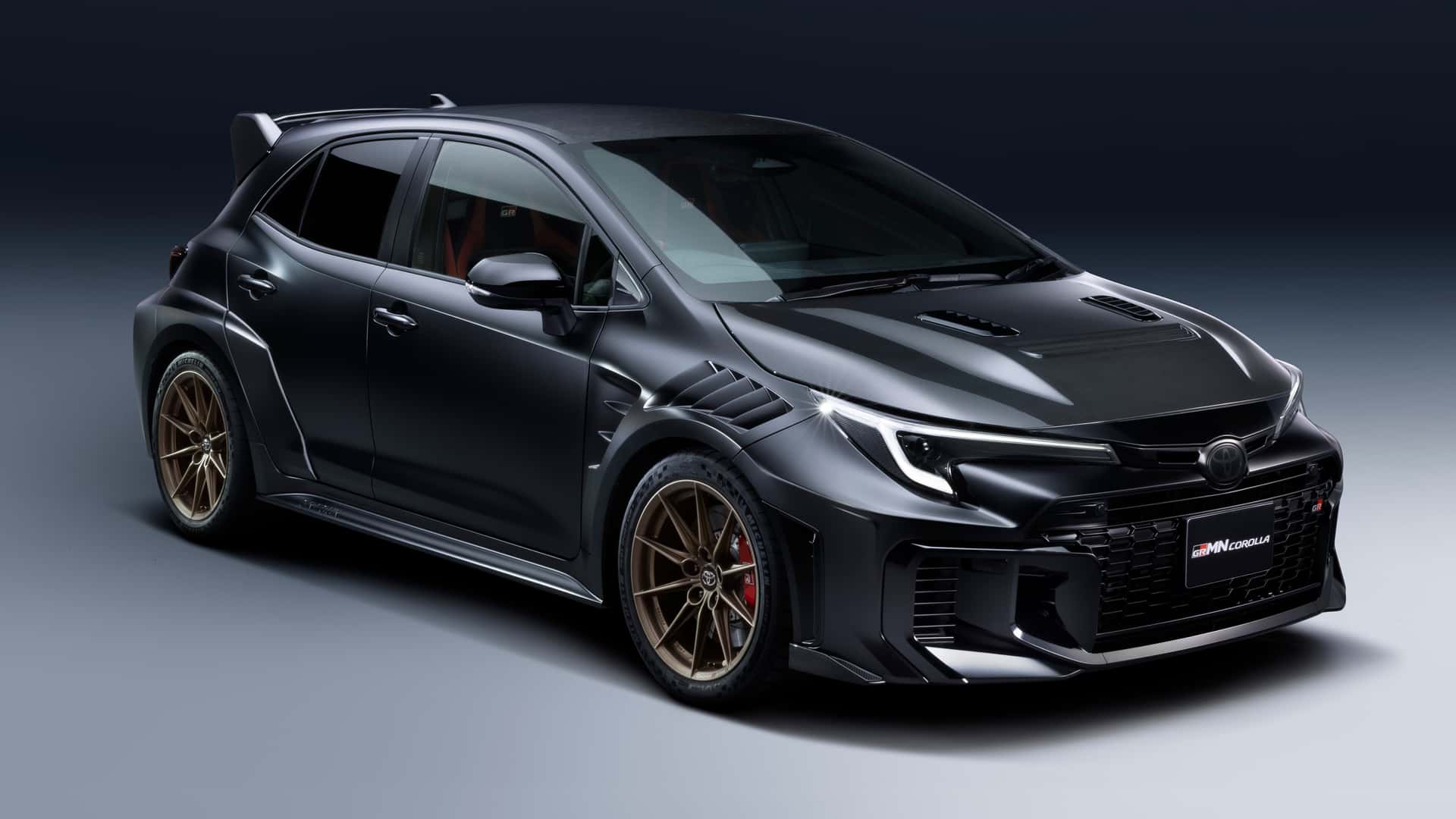
The steering wheel shudders, the turbo 3-cylinder buzzes past 6,000 rpm, and the Toyota GRMN Corolla squats into its Michelin Pilot Sport Cup 2 tires far harder than any commuter hatch has a right to. Then the number lands: $64,360 before destination for something that still wears a Corolla badge.
Toyota positions the 2026 GRMN Corolla as the most extreme and most expensive Corolla ever, a limited, track-focused evolution of the GR Corolla with just 730 units planned worldwide and late-summer deliveries. Output from the 1.6-liter turbo 3-cylinder stays at 300 horsepower, but torque rises to 302 lb-ft, the rear seats disappear, and the suspension, aero, and all-wheel-drive software all get motorsport-grade attention.
 View Price on Amazon
With a standard 2026 GR Corolla sitting in the low-$40,000 range, this special version asks roughly a $20,000–$25,000 premium, so the hardware and rarity have to carry a lot of weight. Toyota lists MSRP at $64,360, before destination and dealer fees. That makes the GRMN roughly 50 percent more expensive than a regular 2026 GR Corolla and almost triple the cost of a basic Corolla sedan.
In sticker terms, the hottest Corolla now swims in the same price waters as a GR Supra 3.0 or a well-optioned Ford Mustang Dark Horse. Every GRMN Corolla is hand-assembled at Toyota’s Motomachi plant in Japan, with allocations split between North America, Japan, Australia, and a few additional markets.
Production is capped at 730 cars globally, and Toyota expects demand to outrun supply, with an allocation-style process likely deciding which dealers see a car at all. Under the hood, the GRMN Corolla sticks with the familiar 1.6-liter turbocharged 3-cylinder and a quoted 300 hp, but torque edges up from roughly 295 lb-ft to 302 lb-ft.
For owners cross-shopping spec sheets, previous coverage of the 2026 GR Corolla lineup and the GR Corolla upgrade kits shows how much of this kit is unique to the GRMN versus available piecemeal. Weight savings and stiffness tell more of the story. The rear bench is removed entirely, turning the hatch into a two-seater with a substantial brace in its place.
Carbon-fiber front fenders and other composite pieces, plus forged wheels wrapped in Michelin Pilot Sport Cup 2 rubber, trim mass and add grip. Springs, dampers, and anti-roll bars are all revised for circuit work, and the brakes are upgraded for repeated hard stops.
Source: motor1.com