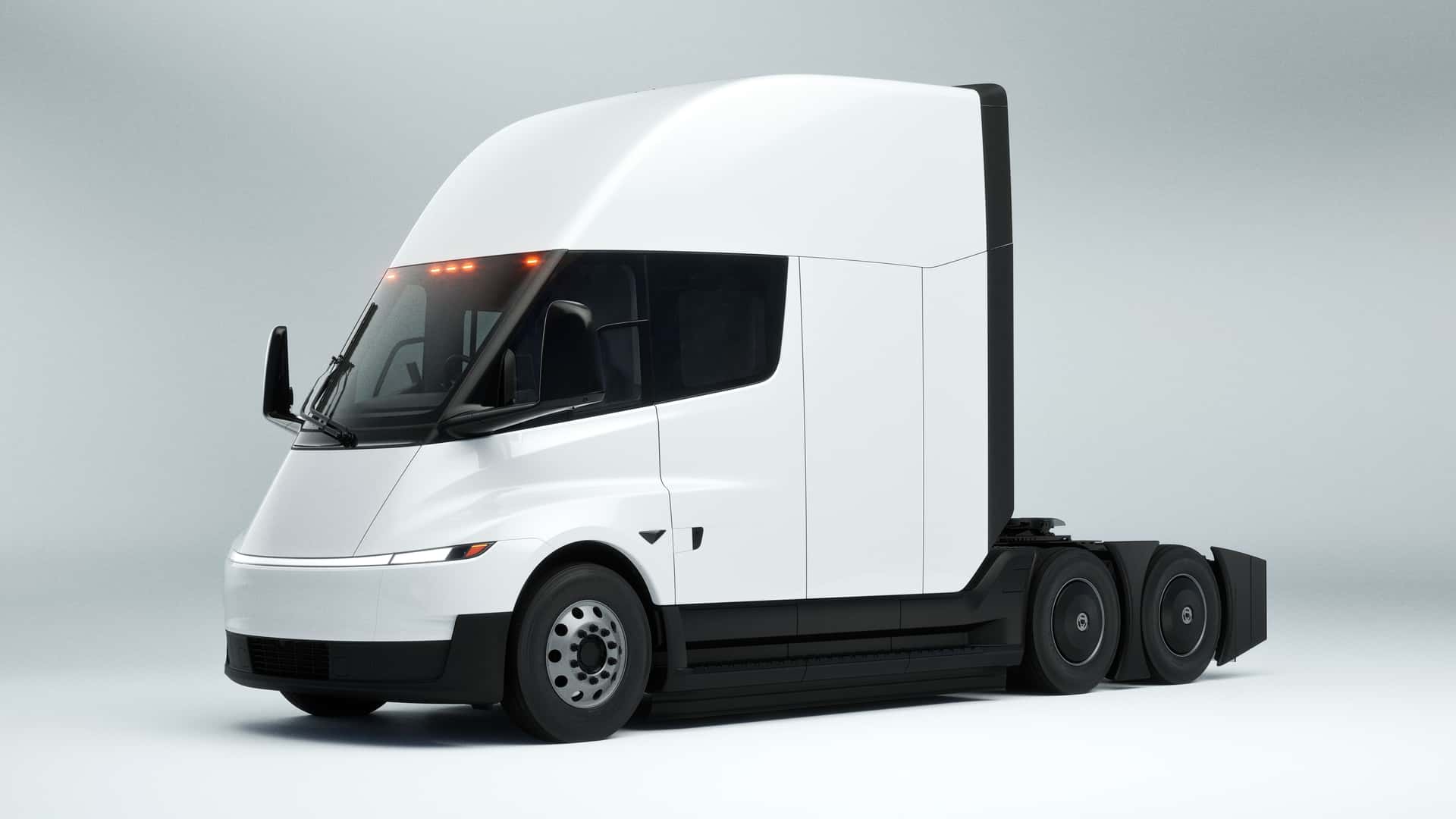
The Tesla Semi has huge batteries, capable of driving up to 500 miles on a full charge while carrying a full load. The Long Range model has an 822-kilowatt-hour usable battery capacity, which translates to a theoretical maximum driving range of 483 miles with an advertised energy consumption of 1.7 kilowatt-hours per mile. However, this range is only achievable if the driver sets off with a full battery and drives until the truck can no longer move under its own power.
The Semi Long Range weighs 23,000 pounds and has a gross combination weight of 82,000 pounds. Its maximum power output is 800 horsepower, courtesy of the three electric motors powering the rear axles. The Standard Range model can deliver up to 525 horsepower, although the company's website claims both versions can do 800 horsepower. Dan Priestley, the Semi's program chief, recently said that the company is offering both 525 horsepower and 800 horsepower options.
 View Price on Amazon
Battery-wise, the Semi Standard Range has a 548 kilowatt-hour battery pack. With an average energy consumption of 1.7 kilowatt-hours per mile, the maximum range comes out to 322 miles—on par with Tesla’s “approximately 325 miles” claim. The Standard Range version has a curb weight that slips under 20,000 pounds, but its gross combination weight is 82,000 pounds, the same as the Long Range model.
Both Semi variants use the same 4680 lithium-ion, nickel manganese oxide cells as the Cybertruck, and can accept a maximum charging power of 1.2 megawatts through an MCS 3.2 charge port. The battery packs are installed in the floor of the truck, keeping the center of gravity low. On the Long Range model, the tractor chassis is longer than on the Standard Range to accommodate the larger battery pack.
Tesla recently started mass production of the Semi, with customer deliveries expected to begin later this year. The company also introduced a 1.2 megawatt Megacharger designed specifically for fast-charging the Semi, getting it to 60% state of charge in 30 minutes. There’s also the new Basecharger, which delivers up to 125 kilowatts, but doesn’t need a dedicated power cabinet.
Source: insideevs.com