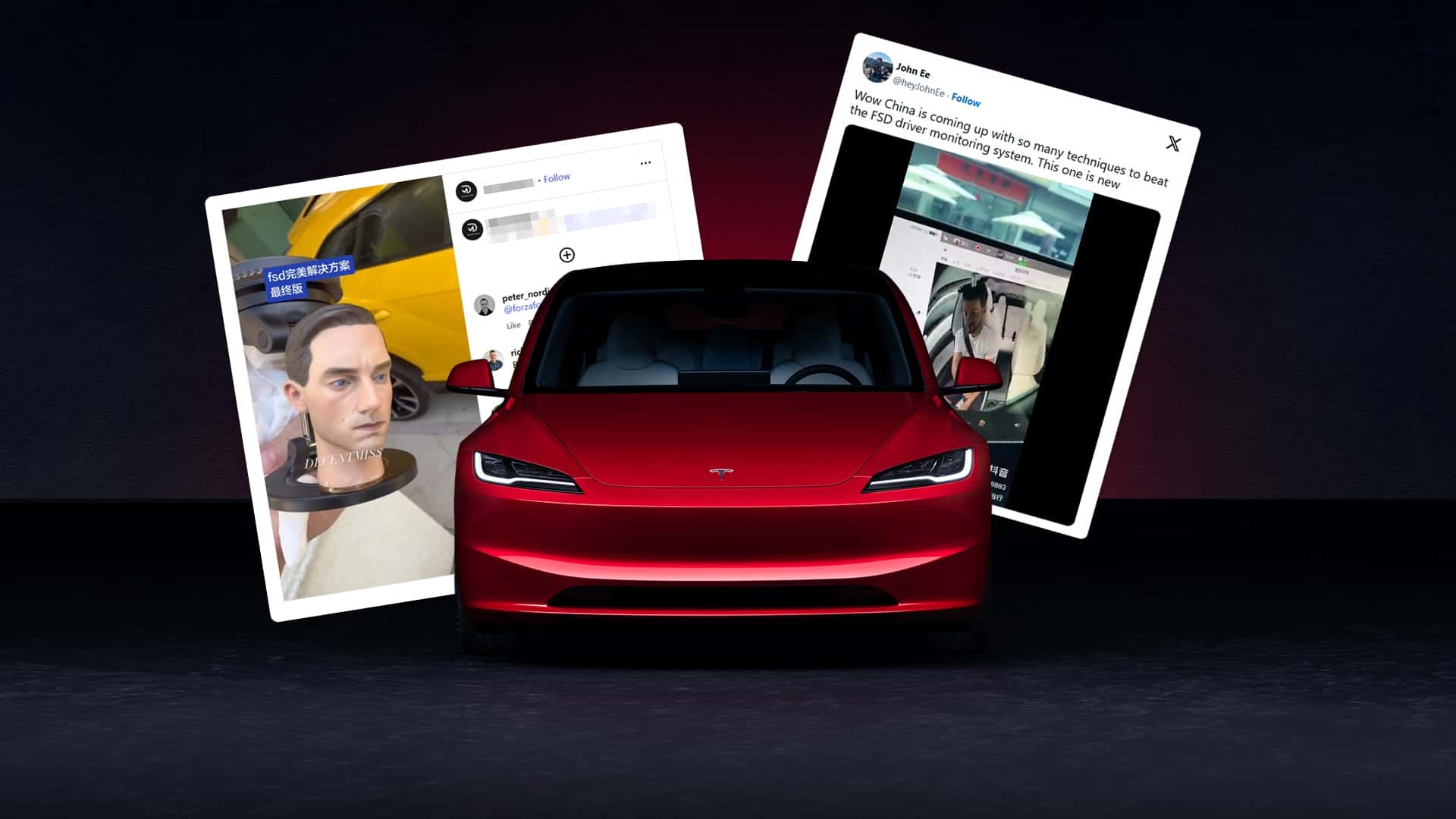
Some Tesla owners have found a way to fool their cars into thinking they are paying attention by using doll heads. The method involves affixing a doll head in front of the mirror, which is then detected by the car's cabin-facing camera as the driver's head.
According to Wired, Chinese eCommerce sites have started selling "travel companions" specifically designed for Tesla owners. These companions are small doll heads, some of which resemble celebrities like Dwayne "The Rock" Johnson. The idea is to stick them directly in front of the car's cabin-facing camera.
These companions have an ulterior motive - they are used to trick Tesla's Autopilot and Full Self-Driving into thinking that the car has the most attentive driver behind the wheel. The features, both of which are classified as Level 2 driver assistance systems, require that drivers pay attention to the road.
 View Price on Amazon
If the driver appears to be looking at a phone, a passenger, or even the car's infotainment screen, the system will alert the driver to pay attention. Tesla measures driver attentiveness by watching the position of the driver's head and eyes, which means that a carefully-positioned doll's head is enough to trick the car into thinking that the driver is looking straight ahead at the road.
One driver told Wired that he used the doll head method for 250 miles of a 400-mile trip. This allowed him to go 30 minutes without being interrupted, all while eating sunflower seeds with one hand and filming the interaction with the other.
This isn't the only way folks are fooling FSD. This has been a years-long game of cat and mouse. Some drivers tried using photos to trick the system after the camera-based monitoring system was first rolled out. There are other contraptions, and more doll heads, that people have worked up to trick the system.
Tesla's ultimate goal is to remove the need for driver monitoring altogether by having the cars drive themselves. But for now, it still needs to deal with the reality that a human is behind the wheel - or, in this case, a plastic approximation of one.
Source: insideevs.com

