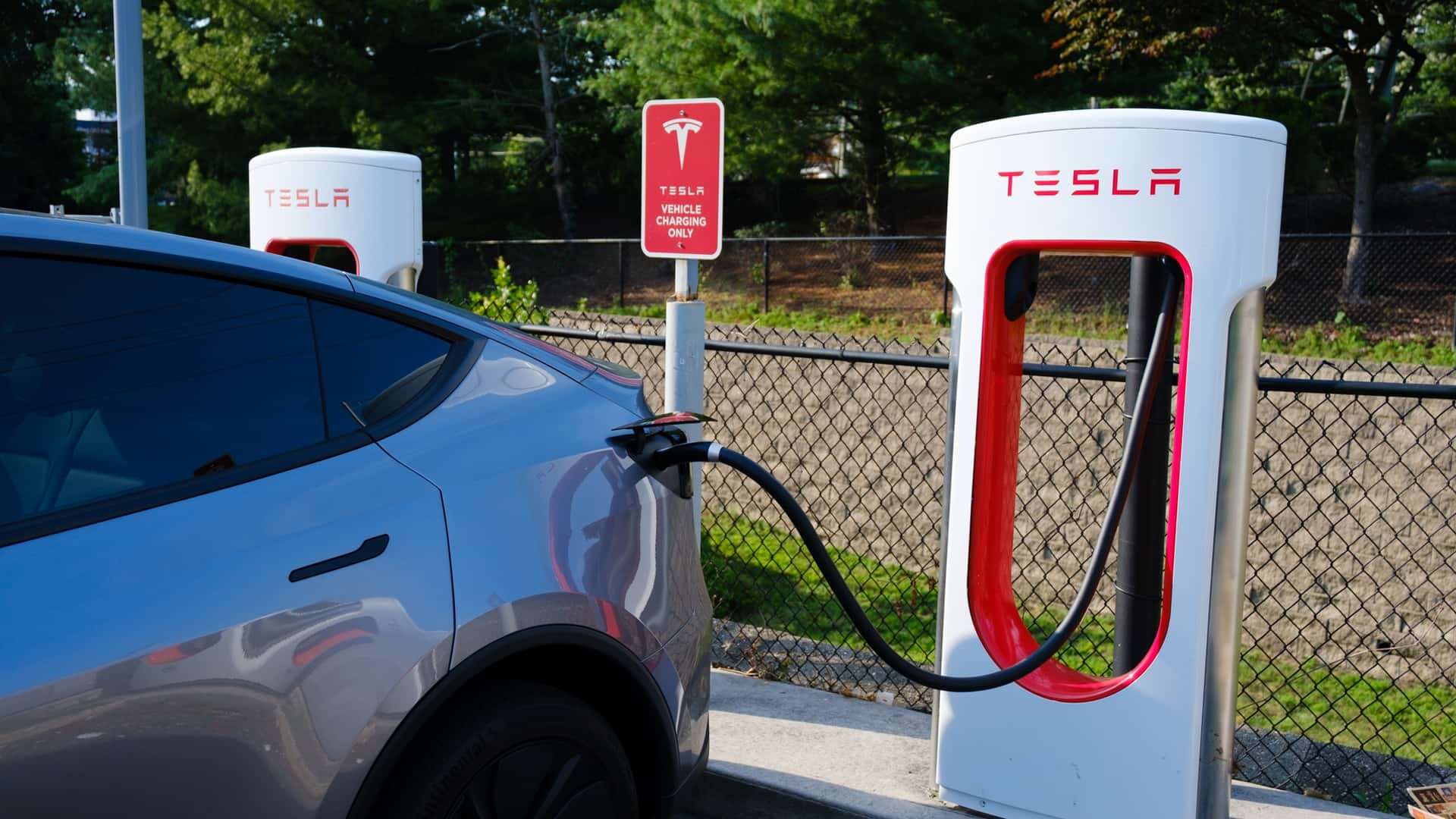
Frequent fast charging is a known way to accelerate electric vehicle battery degradation. However, you can mitigate some of its negative impact by not charging to 100% and never letting the battery run down below 20% state of charge. Battery degradation experts have also found that the rate at which an EV pack loses capacity is highest when it’s new, and then it gradually tapers off.
A six-month-old Tesla Model Y has been put to the test after covering 16,000 miles and seeing more fast charging than Level 2 home charging. The owner, BCTESLAGUY from Canada, posted the results of a battery health test on his Model Y. During the six-month period, the vehicle received 2,588 kWh of energy via AC home charging and 2,888 kWh through DC fast charging.
 View Price on Amazon
The owner didn’t believe the Tesli app he used to monitor his car, which showed the battery had no degradation, so they decided to perform the full battery test procedure. The test requires the car to be at 20% state of charge, plugged in to an AC connection that can provide at least 5 kW. It then runs itself down close to 0% and then back up to 100%, which takes around 20 hours.
The result surprised the owner, who said they expected it to show retention of around 96-97%. However, the overnight test revealed that the car still had 99% of its original capacity and displayed 326 miles of range when fully charged (the same as when it was new). They also note that the car’s nominal full-pack figure after the test was 82.8 kWh (indicating it's a Long Range pack with NMC chemistry), which was the same as after the previous test.
Although the cell imbalance increased from 16 mV in the earlier test to 30 mV, it did not seem to concern the owner. The owner credits two habits for the surprisingly high remaining capacity: always preconditioning the battery before fast-charging and limiting charging to 75%, while trying to never let it drop below 35%. They plan to continue the same mix of home and public charging and redo the test in another six months to see what’s changed.
This test shows you shouldn’t be afraid to fast-charge your EV, even if it has an NMC battery, since LFP is known to handle frequent fast-charging to 100% better. Setting a charging limit below 80% and avoiding very low states of charge seems to help, especially for owners who rely on DC fast charging more often than average.
Source: insideevs.com