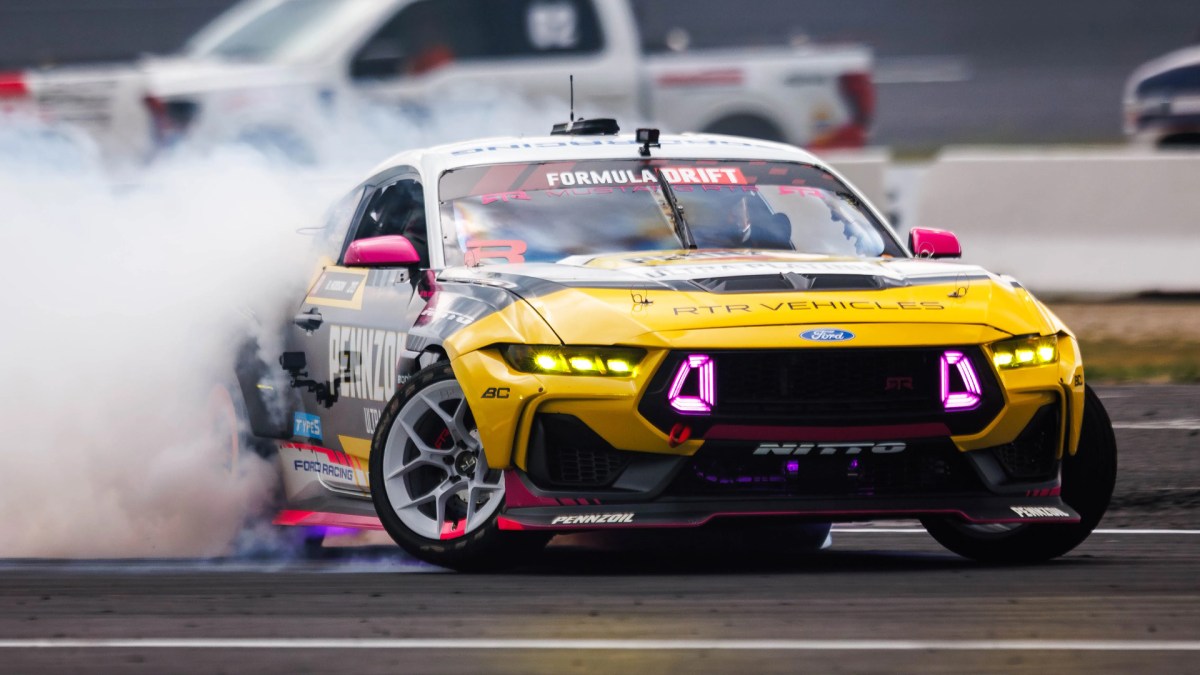
The biggest thing these cars struggle with is going slow, said Josh Stroud, Formula DRIFT crew Chief for RTR Mustang #213, as he walked me around Ben Hobson’s Pennzoil Ford Mustang RTR Spec 5-FD. There’s a lot more to a real drift car setup than negative camber and hydraulic handbrakes.
Drifting used to be just a grassroots motorsport, but Formula DRIFT (FD for short) has spent the last 20-odd years pushing the limits of drifting, showing the world a motorsport based on style and technique, not just speed. The RTR (aka “Ready To Rock”) team has been an integral part of the rise of drifting in the USA, bringing screaming V8s to a scene once dominated by imports.
 View Price on Amazon
Over the course of a weekend at Formula Drift “Battle at the Springs,” I shadowed the RTR Team to learn what it takes to build a state-of-the-art professional drift car, from the perspective of someone who has spent the last three years building and sliding my own grassroots drift car.
A professional drift car has a couple of key differences from normal racing cars, separated into three main areas: It’s obvious that any drift car is meant to go sideways, but this is a professional sport judged on how sideways you can go while still maintaining breakneck speeds of over 80 mph. This is done through steering, suspension forgiveness, and rear grip. The RTR Spec-5 FD Mustang is set up with a bottom ball joint farther away from the body than stock and extended tie rod ends to match.
This offsets the whole front knuckle and gives any drift car that famous “bulldog stance.” Pushing the bottom of the steering knuckle outwards allows the wheel to turn farther before hitting the body, great for achieving maximum angle. It’s important to understand that while the front wheel can turn more angle lock to lock, that does not actually change the number of turns the steering wheel can make. This means every degree of steering wheel adjustment translates to a greater degree of turning from the front wheel.
This can have the adverse effect of making a drift car incredibly snappy, because smaller inputs = bigger movement. This can be fun when you know how to handle a steering wheel that likes to spin back and forth in drift, but unnerving to the untrained individual. Alongside this custom steering setup is a laundry list of custom alignment adjustments.
I can’t tell you what I changed, but I’m trying to add more bite, said Shelby Crackston, crew chief of RTR driver James Deane. This means she was likely dialing the rear toe arms inwards toward the car. This forces the rear tires into a pigeon-footed position, spinning toward each other. This has the effect of forcing more traction (bite) into the tires when you hit the gas.
Source: thedrive.com