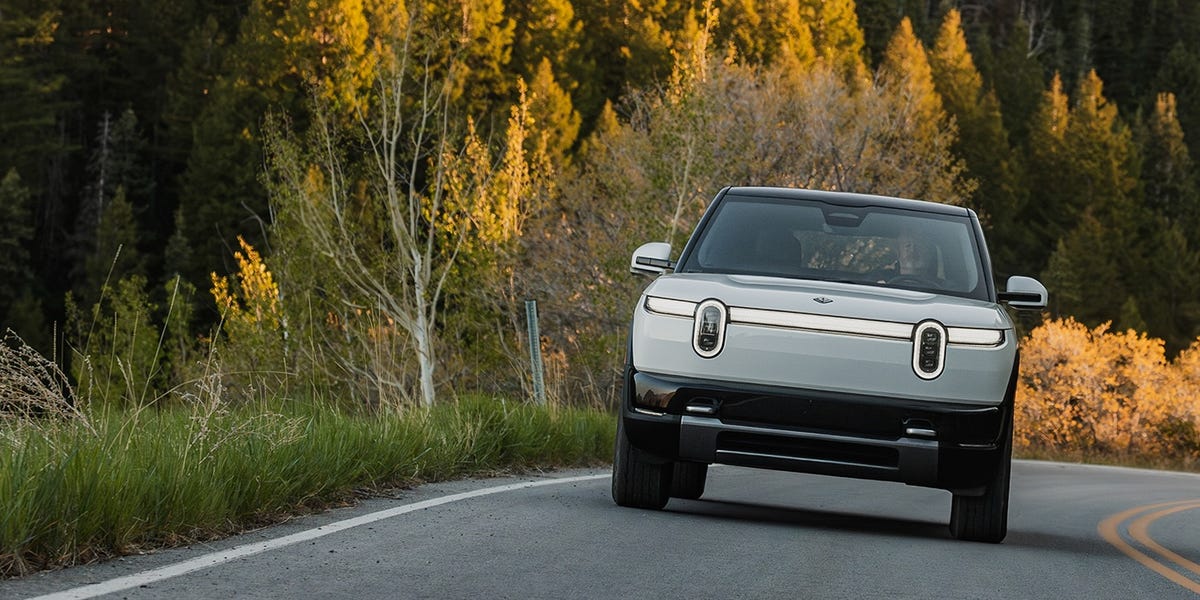
The new electric SUV arrives carrying the high expectations of founder and big boss RJ Scaringe. The Rivian R2 has maintained a relatively high level of interest ever since the automaker first showed it off back in March of 2024. Smaller and more affordable yet still well-equipped when compared with rival offerings, the R2 makes for a genuinely compelling offering whether or not you're in the market for an EV.
CEO and founder RJ Scaringe knows full well that the R2 SUV is capable of ticking a lot of boxes for those unfamiliar buyers, and the company is rapidly expanding production capacity to meet the expected upcoming demand. Road & Track sat down with the chief executive during the R2 first drive event to discuss these expansion plans and his confidence in Rivian's ability to start selling hundreds of thousands of units annually.
 View Price on Amazon
Up until this point, every Rivian vehicle has been produced at the automaker’s Normal, Illinois production facility, which originally built the Mitsubishi Eclipse, Plymouth Laser, and Eagle Talon. It will remain the birthplace of the larger R1 offerings, but the Normal plant will also build R2s until the brand’s future $5 billion factory is complete outside of Atlanta, Georgia. The Illinois facility has been set up with a run rate of 160,000 units annually as its maximum capacity, which far exceeds its current needs; in 2025, the automaker produced just over 42,000 units across both the R1 and commercial vehicle lineups.
Of course, the brand won’t start cranking out cars at a Toyota-like rate right when the plant fires up. Scaringe acknowledged the difficulties involved with scaling the supply chain to meet those levels, and the clear need to build more public recognition if that sort of demand is ever to appear. Existing buyers and early adopters are going to be a key part of that growth.
“There are a lot of people in the United States that still have not yet experienced our brand, and so one of the beautiful things about the way this is going to ramp. And because there's so much excitement for R2, and so much built-in demand, we don't have to be irrational or rushed in trying to create this instant brand awareness,” said Scaringe. “And so we can let it naturally unfold. We can let people discover Rivian through our own marketing and discussion of the capabilities of the vehicle, but [also] importantly and powerfully, through word of mouth, through friends, through seeing it and saying, ‘What the heck is that thing?’”
Given the regulation whiplash surrounding EVs since the R2’s first public showing, it felt right to press Scaringe on the general interest in electric cars here in the States. While admittedly a biased source on the popularity of electrified products, Scaringe has maintained a consistent stance on the matter for years: he doesn’t believe people aren't interested in EVs; he’s convinced instead that automakers have failed to deliver products that bring enough parity with existing machinery. That’s particularly true given the SUV obsession we're seemingly afflicted by in this country.
“It's not at all surprising that, if you're running a large car company and you just spent $20 billion launching a bunch of mediocre products that have not done particularly well in the market, that you wouldn't say, ‘Oh, well, we just whiffed it. We just launched a bunch of products that are duds,’” said Scaringe. “Of course you're going to say the market doesn't want EVs. You can sort of see why that would happen."
"And so," he continued, "we think that the market is very hungry for EVs. I shouldn't say very hungry for EVs, actually, I'd say it differently —very hungry for great cars. And I think the fact that R2 is an EV is secondary. It out-accelerates a Porsche 911, which is a pretty powerful statement," Scaringe said, highlighting the R2's impressive acceleration capabilities of 0-60 mph in just 3 seconds.
Source: roadandtrack.com

