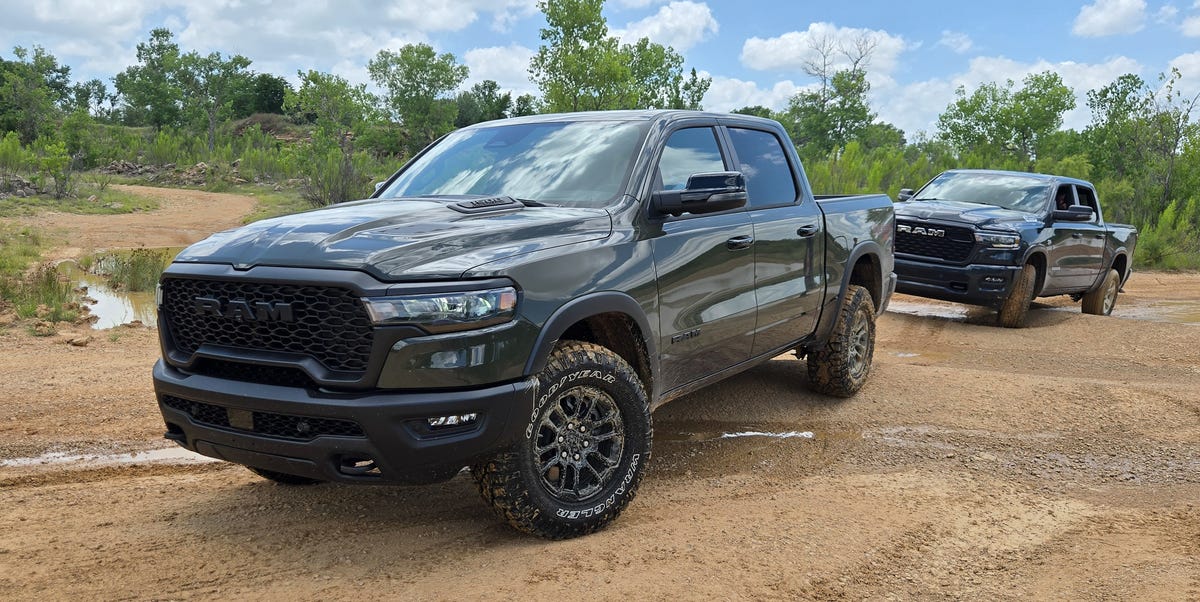
Ram will phase out its hybrid V-8s and automatic stop-start technology in 2027 half-ton trucks, though some hybrids will still be available.
The Hemi V-8 is still alive and well after its short-lived retirement from Ram's half-ton trucks, but the engine's 48-volt hybrid system and automatic stop-start function are getting the boot for the majority of 2027 models, as reported by Motor1 and confirmed by a Ram spokesperson.
Ram has long been associated with muscular V-8 power, but since 2019, the famed Hemi engine has been assisted by a hybrid system dubbed "eTorque" that replaced the traditional alternator with a 48-volt battery. This helped provide more torque at launch, better fuel efficiency, and smoother starts while keeping in line with the brand's V-8 heritage and grit.
 View Price on Amazon
In 2025, the Hemi enjoyed a brief year of retirement before customer demand brought it right back to work, still equipped with the hybrid system. Now, Ram is returning the Hemi closer to its roots. For the 2027 model year, most customers who want a V-8 Ram 1500 will get a nonhybrid version, though a Ram spokesperson shared the following statement with Car and Driver: "Starting early in the 2027 model year, Ram will phase out the 5.7-liter Hemi V-8 eTorque, replacing it with the nonhybridized version of the 5.7-liter Hemi V-8. A limited number of 2027-model-year Ram 1500s will be built with the eTorque powertrain during the production transition."
The exiting hybrid engine will take the truck's stop-start technology with it. If you're not familiar, it's a function that automatically turns off the engine when your car comes to a complete stop. The tech was meant to reduce emissions from idling vehicles at stoplights or in heavy traffic, but it's been generally unpopular among American drivers.
Though it was never required, the EPA encouraged automakers to add stop-start technology into new vehicles by offering off-cycle credits to companies that installed the feature. In February 2026, the federal government repealed several EPA policies, including the credits given to automakers that included stop-start technology in their vehicles.
Source: caranddriver.com

