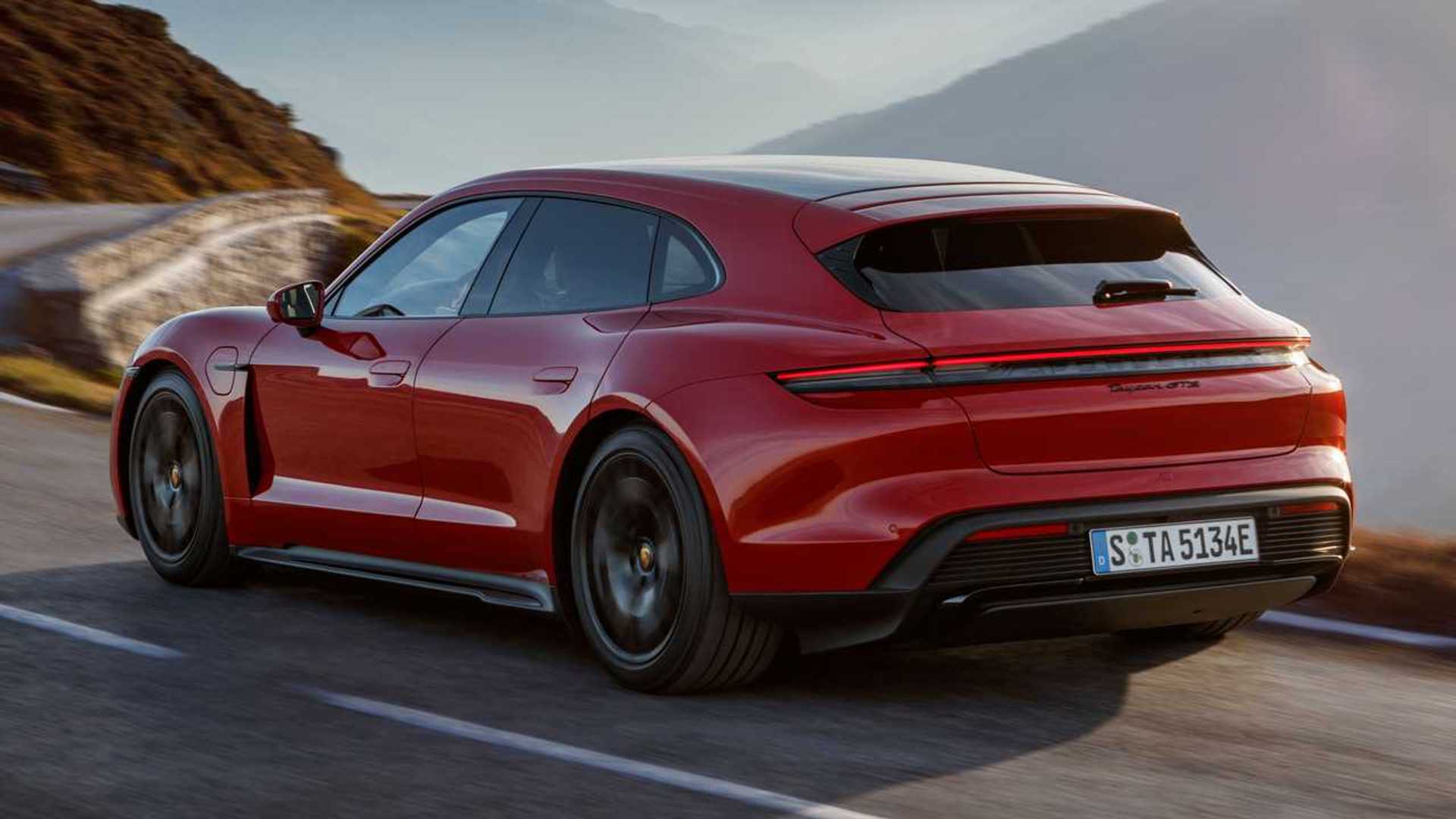
The Porsche Taycan Sport Turismo and Cross Turismo models may be discontinued in the US, but they will continue to be produced for other markets. This decision comes as a relief to fans of the long-roof Taycan models, which offer a more practical alternative to the standard Taycan sedan. In a statement to Motor1, a Porsche spokesperson confirmed that the factory in Stuttgart will continue to build these models.
Meanwhile, the Taycan sedan has achieved a range of over 435 miles on a single charge in Europe, thanks to a new low-rolling-resistance summer tire and a larger battery pack. This range is made possible by a rear-wheel-drive model with the larger battery pack and the new tires. However, it's worth noting that real-world driving range can vary depending on several factors, and the WLTP rating is generally more optimistic than the EPA standard.
 View Price on Amazon
The Taycan is one of Porsche's oldest models, having been launched in late 2019. Although the company has not announced a second generation, the new CEO has not ruled out merging the Taycan and Panamera lineups to cut costs. However, no decision has been made yet. The current-generation Panamera is sold exclusively as a five-door liftback, and Porsche blames the demise of the Taycan Turismo models in the US on weak sales.
As for the future of the Taycan, we may learn more in the coming months. This fall, Michael Leiters will outline any additions or amendments to the product portfolio. One thing is certain, though: combustion engines are not going away anytime soon. Porsche plans to continue selling gasoline-powered and hybrid vehicles well into the 2030s.
While the Taycan may not have been a huge success, the Turismo variants still have a following among buyers who need a more versatile EV without having to step up to an SUV. As for why the Taycan never really caught on, Michael Leiters suggested that it may have been a matter of timing, saying Porsche was "apparently too quick to embrace electric mobility." However, others argue that other factors were also at play, given that buyers already had plenty of EV options by 2020.
Source: motor1.com

