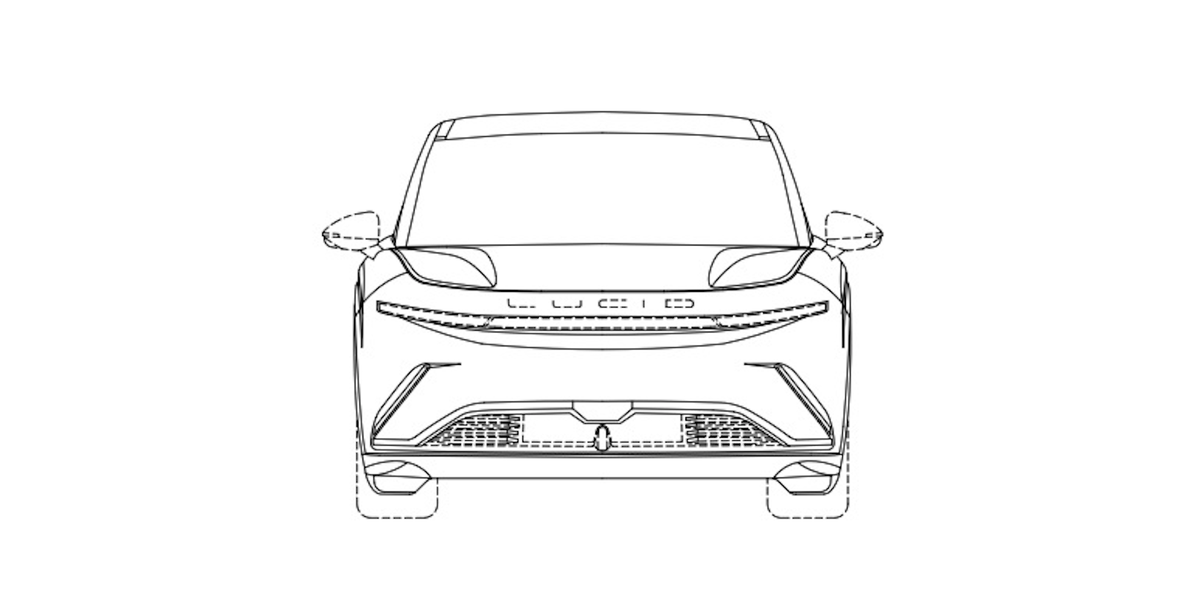
The American startup's third model, the Lucid Cosmos, is set to be revealed this summer and go on sale early next year as a competitor to the Rivian R2. Earlier this year, Lucid announced plans for three new SUVs, all of which will be built on its upcoming mid-size platform and will slot in below the large Gravity SUV. The first of these new models will be called the Cosmos.
Now we have our first idea of what the electric SUV will look like thanks to recently filed patent images. The patent images were filed with the European Union Intellectual Property Office under the company name Atieva Inc. Lucid was founded as Atieva way back in 2007, eventually rebranding as Lucid Motors in 2016.
 View Price on Amazon
The patent images show that the Cosmos doesn't appear to be a drastic departure from Lucid's current design language, with a sleek, futuristic silhouette. Up front, slim headlights sit beneath large "Lucid" branding, and there is a trapezoidal lower grille opening that also appears to house sensors for driver-assistance systems. The hood has a sculpted look, with two sections carved out on either side, and there look to be flowing character lines running along the side of the body.
The roofline dips dramatically behind the rear seats, and a spoiler hovers above the rear glass. The taillights are also incredibly thin and, unlike the Air and Gravity, don't connect across the rear end to form a light bar. Instead, there's another huge "Lucid" badge on the rear hatch. The overall look is incredibly aerodynamic; Lucid has previously said it's aiming for a very slippery 0.22 drag coefficient.
While Lucid refers to the platform as mid-size, we expect the Cosmos will actually slot into the compact SUV space, competing with the likes of the Tesla Model Y and Rivian R2. The Cosmos will feature an 800-volt architecture that will allow for rapid recharging, and the SUV should be capable of over 300 miles of range. The Cosmos is set to be revealed sometime this summer and is expected to go on sale in 2027 with a targeted starting price of less than $50,000.
Source: caranddriver.com

