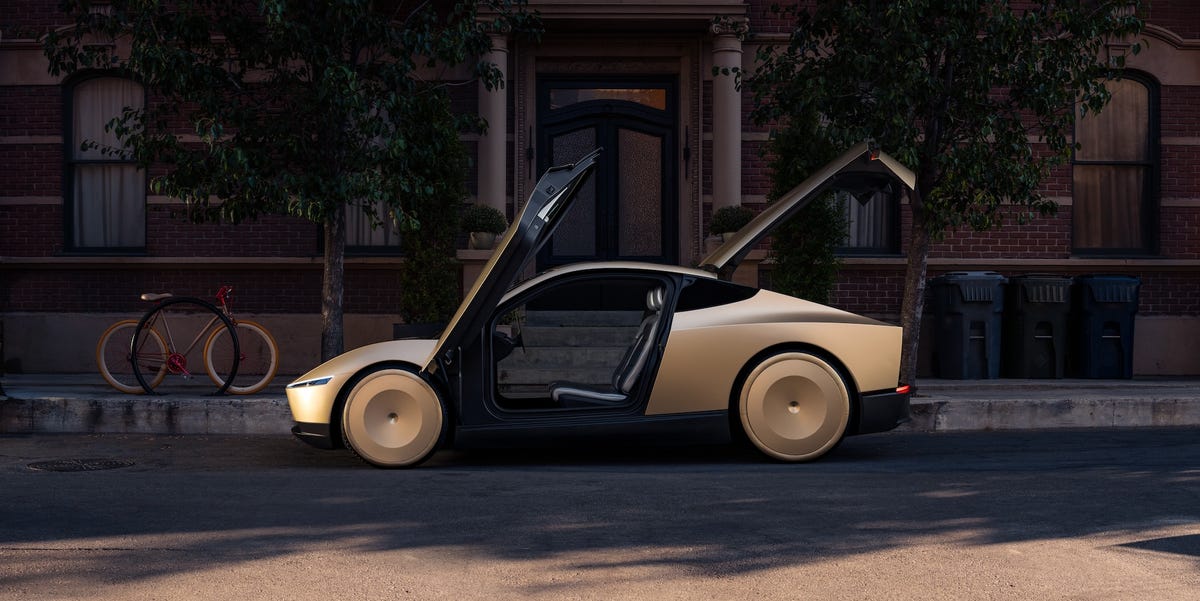
We've got the basic details on Tesla's supposedly fully autonomous two-seater. The upcoming Cybercab, also known as the Robotaxi, is expected to arrive without a steering wheel or pedals. However, we've learned to take Tesla's autonomous-vehicle promises with a grain of salt. For more than a decade, Tesla's CEO has claimed that the brand's properly equipped vehicles would offer an autonomous driving function in just a few years.
To its credit, Tesla does operate a handful of Model Y Robotaxis without drivers in Texas. While impressive, it's still not the privately owned autonomous vehicle that Musk has long implied was just around the bend. Whether the individual belted into the left seat of the two-person Cybercab gets to take on the role of driver or passenger remains to be seen.
 View Price on Amazon
The basic mechanical details of the Cybercab are no longer a mystery, thanks to documents submitted by Tesla to the Environmental Protection Agency (EPA). The Cybercab has a curb weight of 3,113 pounds and 219 horsepower, courtesy of a single electric motor that powers the front wheels. The vehicle also features a relatively small battery pack with around 50 kWh of charge capacity, which provides an estimated 280 miles of range on the EPA combined cycle.
Additionally, the published information indicates that the Cybercab relies on regenerative braking from the front wheels. The vehicle's drive mode was listed as all-wheel drive during testing, but it's likely that the Cybercab strictly sends power to the front wheels. We're not the EPA, so take those battery capacity and range figures as rough estimates.
Regardless of whether the Cybercab ultimately includes a steering wheel and pedals, we hope it does, because a 3,113-pound electric vehicle with 219 horsepower has the potential to be a real thrill on the right backroads.
Source: caranddriver.com