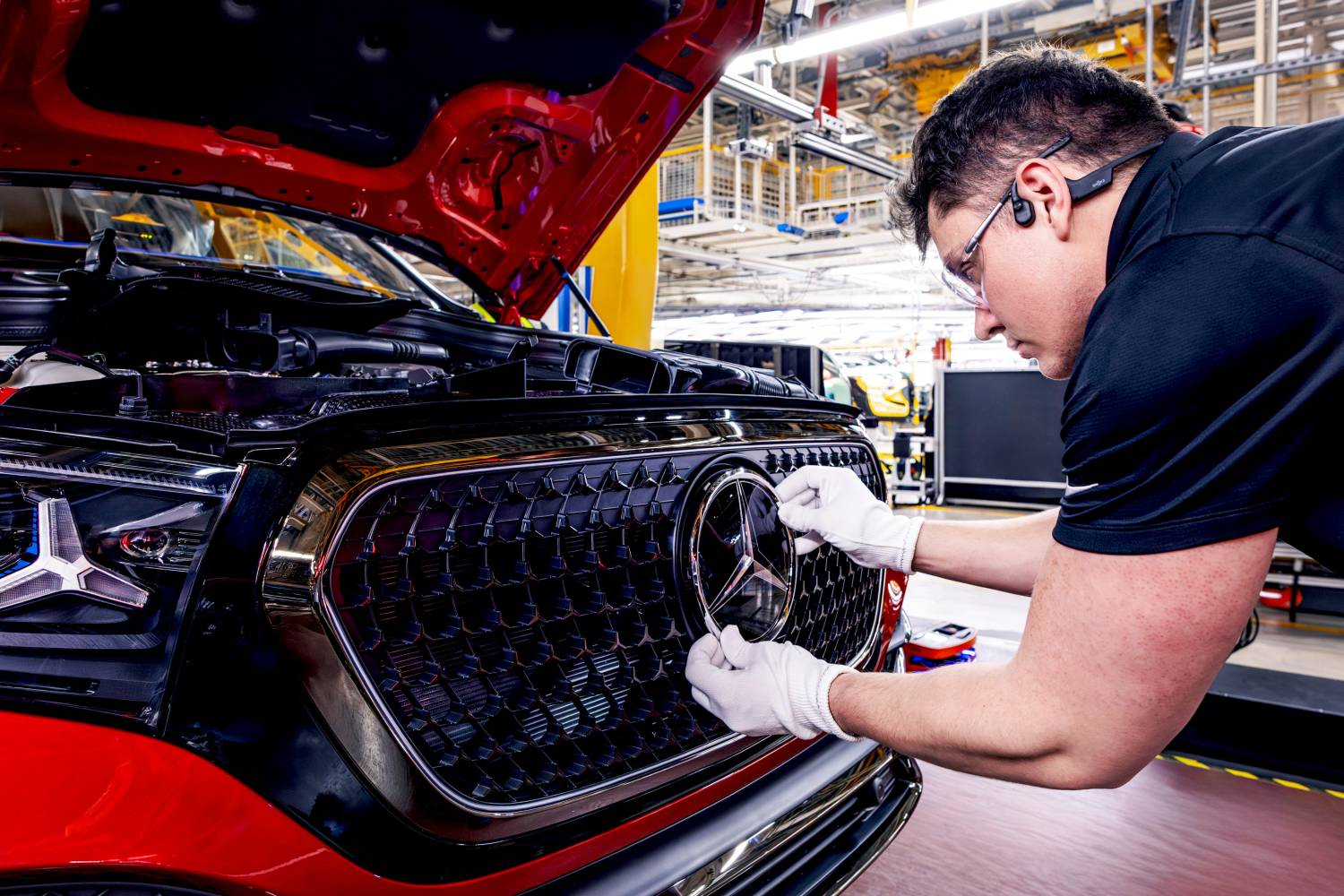
The United States is one of the most significant markets for Mercedes-Benz worldwide. For nearly three decades, the German premium manufacturer has been producing vehicles in the state of Alabama, continuously expanding its investments in the region. However, at this strategically important location, the company is facing increasing pressure. In addition to economic challenges, allegations of unfair labor practices are making headlines, with far-reaching implications beyond the US borders.
The Mercedes plant in Tuscaloosa is at the center of the current debate. Employee representatives accuse the company of hindering unionization efforts by its employees. The criticism has recently reached a new level: The international union federation IndustriALL announced that it would terminate its cooperation with Mercedes, citing alleged violations of fundamental labor rights. "Mercedes-Benz has broken every rule it has signed," said IndustriALL General Secretary Atle Høie in a statement.
 View Price on Amazon
A key issue is a 2024 vote on whether the United Auto Workers (UAW) union should represent local employees at the plant. According to reports, Mercedes allegedly intimidated employees instead of remaining neutral. The company supposedly threatened to relocate production lines and jobs to Mexico. Additionally, it is claimed that Mercedes paid over $650,000 to consulting firms to position employees against unionization.
Mercedes denies these allegations, emphasizing its respect for the legal rights of its employees and its commitment to open dialogue within the workforce. Nevertheless, the conflict has drawn the attention of unions and worker organizations worldwide.
The Tuscaloosa site holds significant importance for Mercedes. In Alabama, the company produces numerous SUV models for the North American market and for export to many countries. The plant is considered one of the most important manufacturing facilities outside of Germany and is a crucial component of the company's international production strategy. The public controversy surrounding labor rights is thus particularly significant.
The labor dispute comes at a time when Mercedes is already facing economic uncertainties. The company is struggling with a more challenging market environment, rising costs, and weaker demand in key sales regions. The business in China, in particular, has developed more slowly than expected, impacting the company's financial performance. Geopolitical tensions and new trade policy hurdles are also increasing the pressure on manufacturers to optimize their production and supply chains efficiently.
Despite these challenges, Mercedes is sticking to its long-term plans in North America. The company continues to invest billions in production capacity, battery technology, and the electrification of its model range. By strengthening local production, Mercedes aims to mitigate potential trade barriers and secure its competitiveness in the important US market.
Source: mbpassion.de

