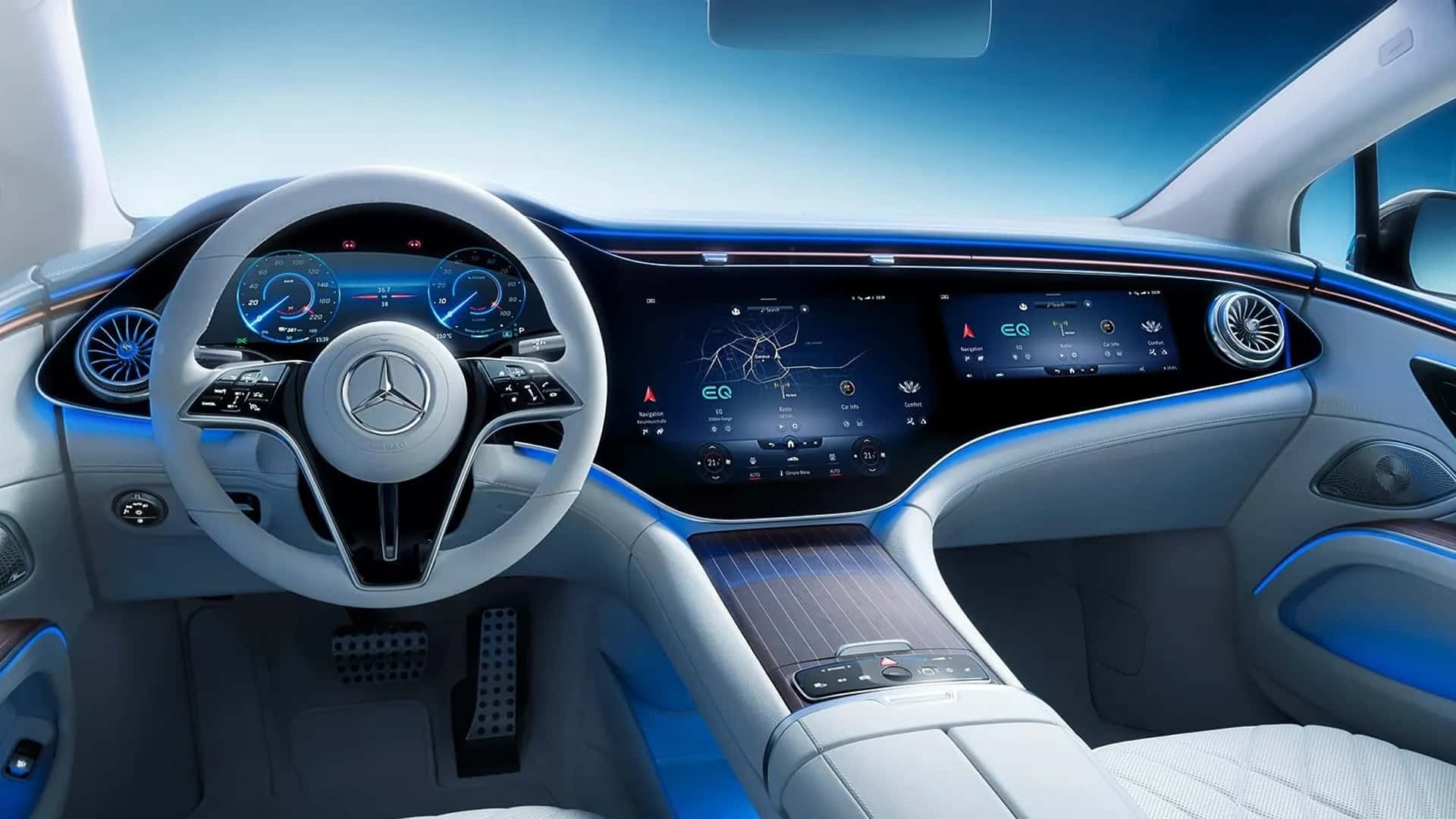
There have been two related design trends in recent years that have irked customers more than maybe anything else: giant tablet-sized displays in the center of the dash and the removal of physical buttons. The Germans were no stranger to this trend. Brands began racing to see who could fit the largest screen in a dashboard while also integrating usable controls into it.
Mercedes-Benz may have won that race from a pure screen-size perspective, but its CEO also acknowledges that it may have gone a bit "too far." Not with screen size, but in removing physical buttons and replacing them with on-screen controls. "The industry as a whole might have gone a little bit too far" towards digital controls, Mercedes-Benz CEO Ola Kallenius said in an interview with AutoCar.
 View Price on Amazon
He said Mercedes was already working on introducing more buttons. The new CLA has a physical volume knob on the steering wheel, instead of a touch-sensitive slider. "Sometimes you get a bit ahead of yourself and do technology for the sake of technology and maybe forget a little bit about the customer," Kallenius said. "So from now on, you will see us reintroduce the most sensible buttons."
Safety advocates are getting behind the trend too, with testing programs like Europe's New Car Assessment Program (NCAP) penalizing automakers for ditching certain physical controls. Now the Germans are pledging to bring back at least some knobs, levers, and dials. This doesn't mean that everything is going back to looking like the tactile interior found in a classic car.
Mercedes is still working to improve its voice control systems, which is a route that many automakers like Tesla and Rivian are focusing on today. Sure, there's a futuristic look to Tesla's minimal interface—or Mercedes-Benz's large hyperscreen—that makes sitting in the driver's seat feel like boarding a spaceship.
Source: insideevs.com