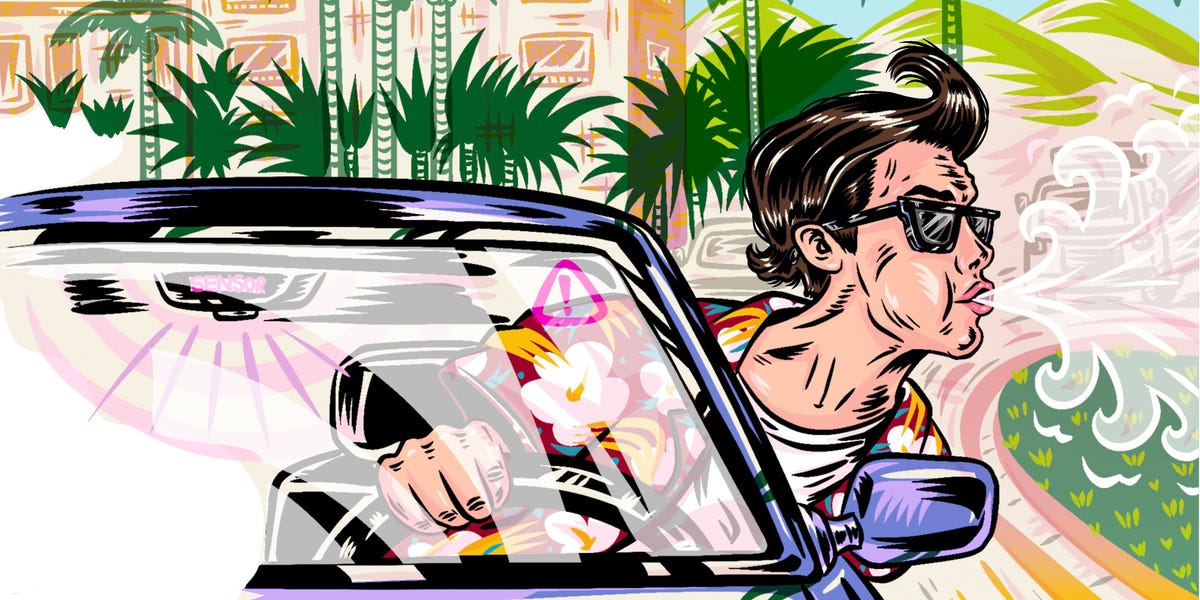
Mandating automakers to implement ignition interlock devices in future vehicles is good in theory but has the potential for trouble in practice. Stopping a drunk driver from starting a car sounds like a great way to reduce fatalities. That's why the 2021 Infrastructure Investment and Jobs Act (IIJA) ordered that new vehicles come equipped with advanced technology to prevent impaired driving. There's just one problem: The technology doesn't exist.
True, there are ignition interlock devices (IIDs), typically installed for drunk-driving offenders as required by law or court order. But the new rule calls for technology that can passively determine impairment, unlike the IIDs that operate with the aid of a breathalyzer, and then prevent or limit vehicle operation. Possible approaches include measuring alcohol concentration through the skin via a sensor in a typical driving touch point, taking readings from in-cabin exhalations, or tracking steering inputs and eye motions to detect drowsiness, distraction, or other impairments.
 View Price on Amazon
There has been pushback in Washington, D.C. The automaker lobbying group Alliance for Automotive Innovation fears that even occasional false readings from a nascent system could stymie law-abiding motorists. Several lawmakers oppose the directive. Among the most vocal is U.S. Rep. Thomas Massie, R-Ky. Earlier this year, the House voted down his amendment to defund the section of the IIJA that mandates the technology. He has also cosponsored a bill to overturn the rule. Massie argues that the required system would "infringe on civil liberties," and he has repeatedly raised questions about the consequences after your car decides you're unfit to drive.
Other opponents, somewhat hyperbolically, have jumped to the conclusion that the next step is your car summoning law enforcement. In actuality, NHTSA hasn't settled on a plan. The response, be it a warning or an intervention, could depend on what kind of impairment is detected, and it could be issued before or while the vehicle is moving. According to the original timeline of the IIJA, automakers were due to fit vehicles with the technology by the 2028 model year.
There's a near-zero chance IIDs end up in any 2028 vehicles, though. In the meantime, NHTSA will need to explain the delay in implementation via an annual report. It's a provision that stands for the 10 years following the enactment of the IIJA in November 2021. At the rate things are progressing, it seems the odds of your next car including a built-in IID are about as low as the alcohol content of a bottle of kombucha.
Source: caranddriver.com