In the world of work, the debate is not “gas versus diesel.” Instead, what I hear most people fighting about is engine layout. Some manufacturers swear by “V” cylinder configurations, and their loyalists follow suit; others, however, stake their claim on inline engines. So, which is best?
Former Caterpillar engineer and longtime semi truck dealer Jim Coles is a red-blooded believer in the inline-six. He began his career at Caterpillar in 1966 before opening a Peterbilt store in 1973, and over the next four decades, his network grew to 18 locations.
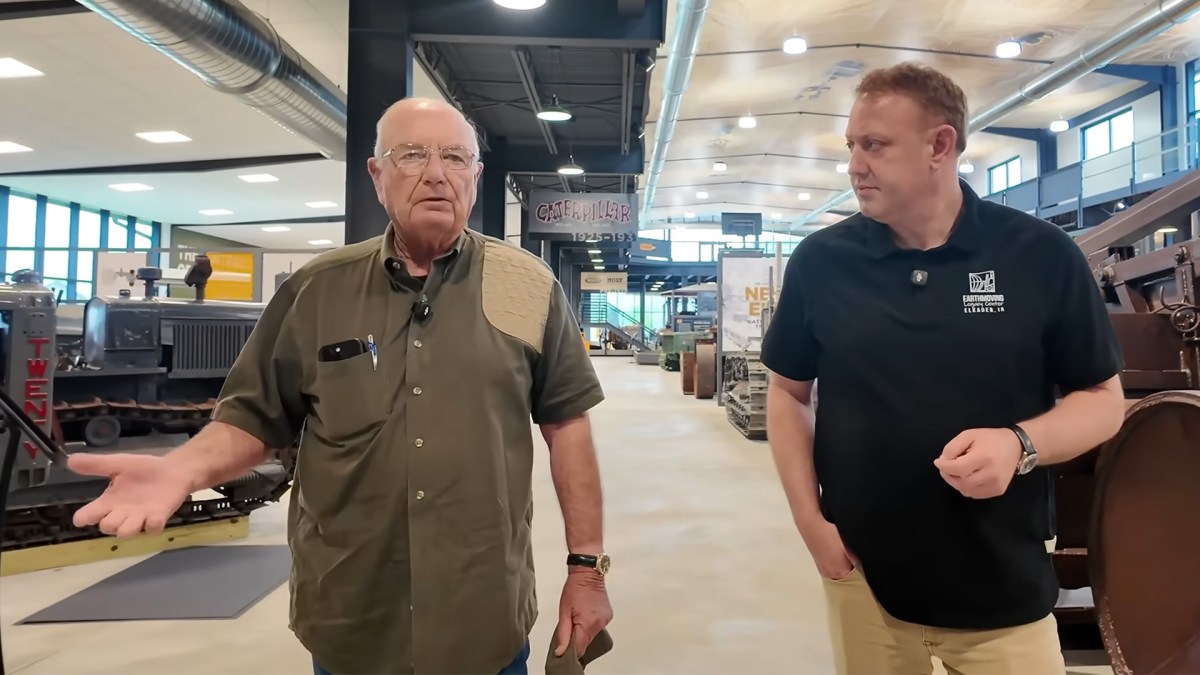
Coles recently visited the Earthmoving Legacy Center in Elkader, Iowa, which then uploaded a 25-minute interview to its YouTube channel. In the video, he reminisced about his early years at Caterpillar in which they were developing purpose-built engines—many of them for off-highway use. The manufacturer prized the inline-six because it was naturally balanced, not to mention simpler to cool.
 View Price on Amazon
Specifically, Coles went on about the Caterpillar 3406, a 14.6-liter engine family that lasted more than 30 years in production between 1973 and 2007. It was internally referenced as the VITEL, standing for “vehicle industrial truck engine line.” Whether it was being deployed in earth-moving equipment, stationary applications, marine environments, semi-trucks, or whatever else, it was a rockstar.
“Caterpillar and everyone else did go into V-type engines,” Coles pointed out, mentioning the 90-degree RM180 and the 3408. “But V’s versus sixes were always more of a compromised design.”
“If you’ll notice today, sixes are all the way up to covering 1,100 horsepower,” Coles continued. “All the other V’s that were in the market—whether it be the 903 Cummins, the 555 Cummins, the 3208 Caterpillar, the 8V71 and 8V92 Detroits—all those V engines are gone. Nobody’s in the V business today, and rightfully so.”
Source: thedrive.com

