In today's automotive landscape, concept cars are a staple of the industry. They serve as a way for manufacturers to generate excitement among their fans, showcase new technologies, and test the waters for upcoming models. However, this wasn't always the case. For the first half of the 20th century, concept cars as we know them did not exist. Prototypes were built to test engineering developments, but purely aesthetic designs were seen as frivolous.
The genesis of the concept car can be traced back to the 1930s, when Detroit began to recover from the Great Depression. During this time, car manufacturers started to focus on designing cars that would appeal to the emotional needs of consumers, rather than just their rational needs. This led to the development of more streamlined and futuristic designs, such as the Chrysler Airflow of 1934, which was the first car to be developed using a wind tunnel.
 View Price on Amazon
The Chrysler Airflow, although a commercial failure, sparked a new trend in streamlining. Cars began to feature swooping curves and bold noses, as seen in the Graham-Paige Model 97, also known as the Sharknose. This design language would go on to influence the development of future concept cars.
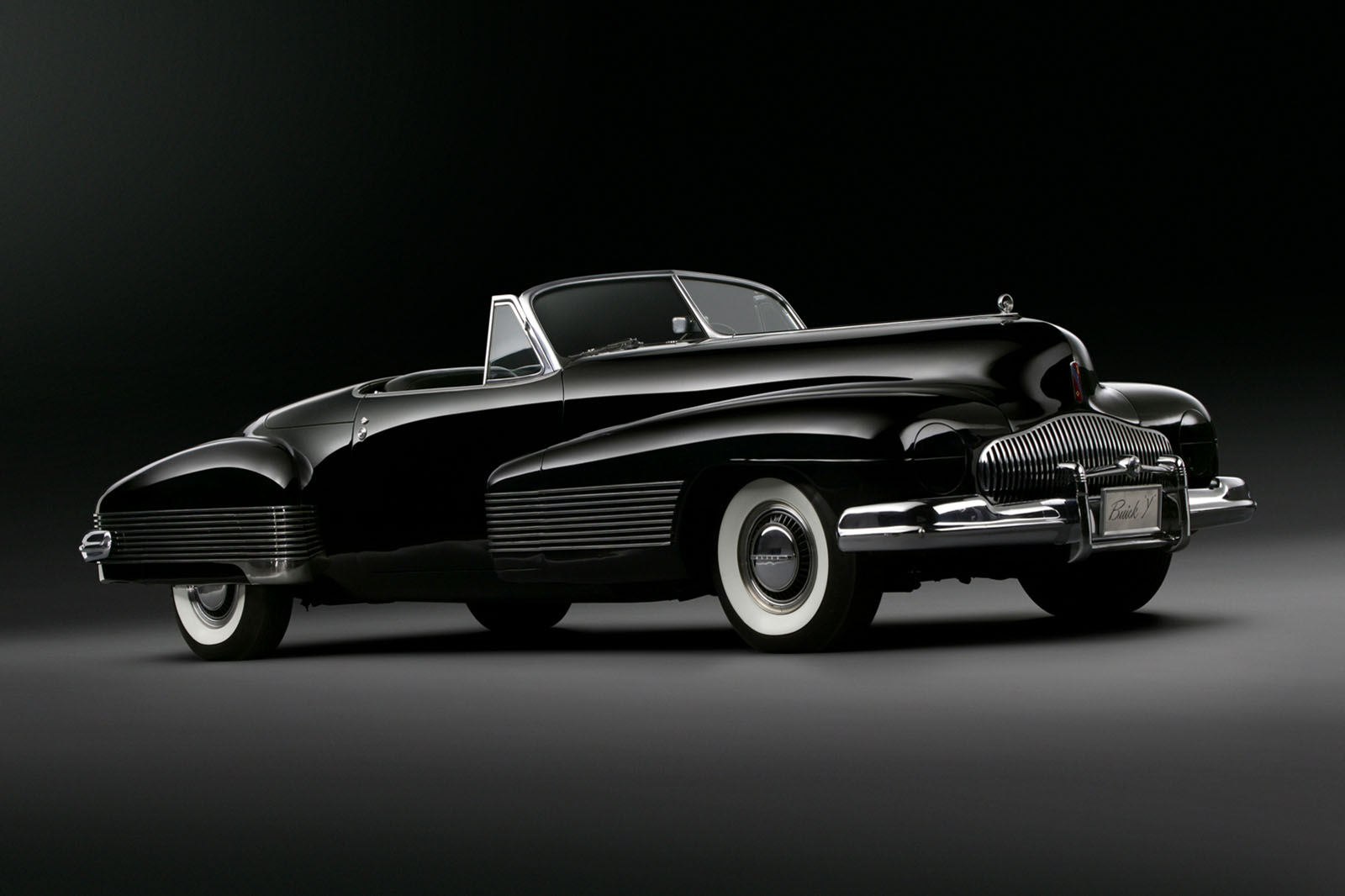
One of the key figures in the development of concept cars was Harley Earl, the head of General Motors' Art and Colour division. Earl was a pioneer in the field of car design, and his work on the Buick Y-Job, a concept car that was never intended for production, laid the foundation for the modern concept car. The Y-Job was finished in 1938 and featured a number of innovative design elements, including an electrically operated hood and a unique instrument panel arrangement.
The Y-Job was a groundbreaking vehicle that pushed the boundaries of car design. It was the first car to be designed using clay modeling, a technique that is still used today. Earl's use of clay modeling allowed him to create a three-dimensional representation of his design, which was a major innovation at the time. The Y-Job's design was also notable for its emphasis on aesthetics, with a focus on creating a visually striking vehicle that would turn heads on the road.
Source: autocar.co.uk

