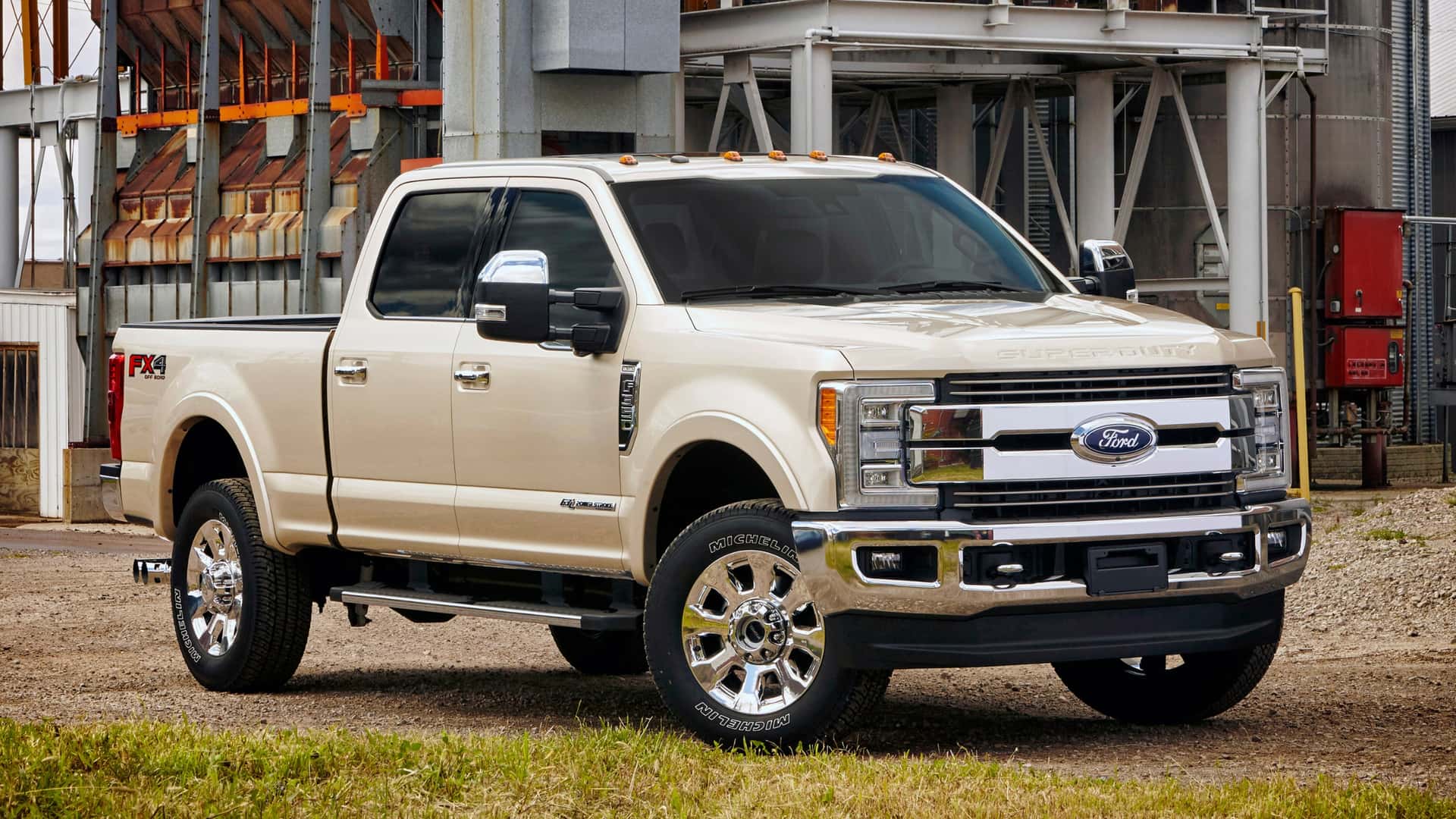
Imagine a heavy-duty pickup that tows a trailer all day, then quietly keeps an entire outpost lit up overnight. That's the role Ford is chasing with the F-Series Super Duty in the US Army’s new Heavy Infantry Squad Vehicle program, turning a familiar work truck into a mobile generator and troop hauler.
This is not a concept for an auto show stand. Backed by Pentagon funding, the Army wants a medium tactical truck that can haul soldiers and gear over bad roads while feeding power-hungry drones, sensors, radios, and command gear.
The builder that nails range, exportable power, and durability could land a sizable production deal, and Ford’s Super Duty-based entry hints at where the next generation of hard-use trucks might be headed.
 View Price on Amazon
Ford has moved beyond slide decks and into hardware with a prototype contract. The Defense Department picked Ford, GM Defense, and BC Customs to each deliver three Heavy Infantry Squad Vehicle (ISV‑H) prototypes, all spun from their full-size pickups.
Ford’s approach starts with a Super Duty ladder frame, existing engines and transmissions, and a cab and bed reworked for military tasks rather than weekend towing or jobsite hauling.
The payoff could be big. The Army is eyeing a potential buy of more than 600 ISV‑H trucks, which would be Ford’s largest US military truck order in years if the Super Duty wins. GM Defense shows up with a hybrid Silverado HD-based ISV‑Heavy that can creep around in quiet electric mode, so Ford arrives as the challenger, betting that its heavy-duty hardware can match or beat that blend of range and low-noise operation.
The Army’s wish list is tight and specific. Every ISV‑H has to travel 250 miles on three‑quarters of a fuel tank, then separately cover 62 miles in eight hours on a defined mission profile, which forces engineers to squeeze efficiency out of fuel capacity, gearing, and engine tuning. The program also bakes in right‑to‑repair and data access, calling for open diagnostics and field-friendly service instead of locked-down software that only the manufacturer can touch.
On top of hauling infantry and cargo, the truck has to double as a mobile charging station. Requirements call for up to 60 kilowatts of continuous high‑voltage DC export, plus roughly 15 kilowatts of continuous 28V DC and about 4.8 kilowatts of continuous 120V AC to power battlefield electronics and unmanned systems. In practice, each truck becomes a tactical power bank, a concept that lines up with the generator-style systems Ford already offers on civilian Super Duty models.
Every Ford ISV‑H build starts with the F-Series Super Duty pickup, a truck already engineered for big trailers and heavy payloads. With stout frames, serious axles, and proven gas and diesel engines already in production, Ford’s defense team can concentrate on suspension tuning, crew protection, and power export hardware instead of creating an all-new platform.
Starting from a high-volume civilian truck also helps with logistics. Like the 2023 Super Duty you can buy, the ISV‑H can draw on an existing supply chain for engines, transmissions, sensors, and service parts. That plays nicely with the program’s repairability rules and should make life easier for Army maintainers long after the trucks leave the factory.
Source: motor1.com