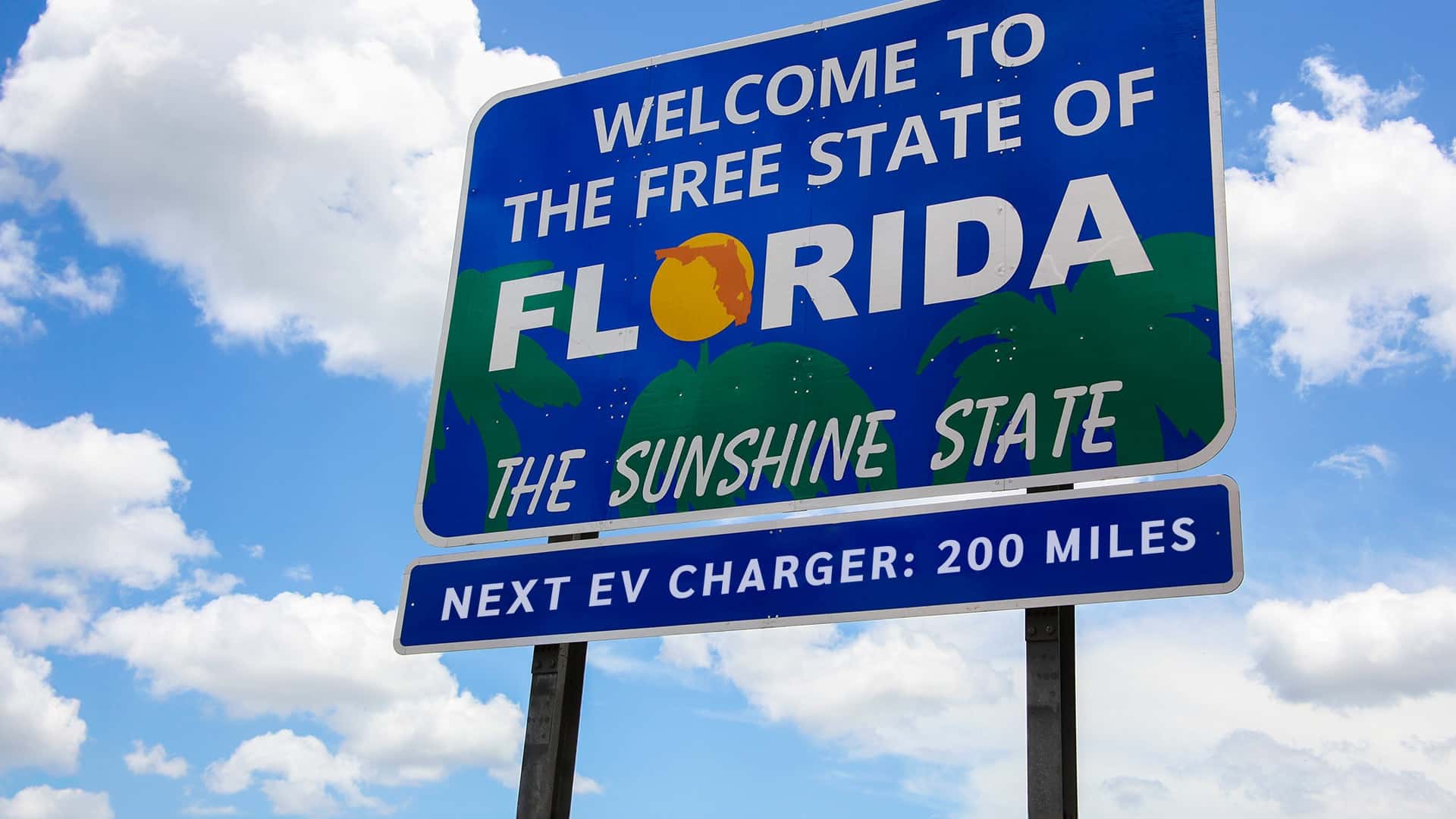
Florida received $198 million from the Biden administration's National Electric Vehicle Infrastructure (NEVI) program to build out federally funded public fast chargers across the state. Now it wants to spend that money on infrastructure for electric air taxis instead, according to a new investigation by the Miami Herald.
These aircraft, known as electric vertical take-off and landing vehicles, or eVTOLs, would form what the Florida Department of Transportation (FDOT) is calling an Aerial Highway Network. The agency says the network would complement the state's existing transportation system and could help ease congestion and improve connectivity. But eVTOLs are still in an early stage of development and haven't been commercially deployed as air taxis anywhere in the U.S. Joby Aviation, one of the frontrunners in the space and backed by Delta Air Lines, ran week-long test flights in New York City this April.
 View Price on Amazon
FDOT's plan calls for charging infrastructure that could recharge eVTOLs at 32 "vertiports," where the vehicles take off from and land, according to documents obtained by the Herald. Each site would cost roughly $5.6 million. They'd go up in places like luxury apartment buildings, golf courses, military bases, and airports.
"The Florida Department of Transportation will not waste taxpayer dollars and spend it on everyday passenger vehicles," a document laying out FDOT's NEVI funding plans that was published by the Herald reads. "Instead, FDOT’s proposal for implementing the NEVI Program takes an innovative and strategic approach to offer the greatest benefits to Floridians by supporting a new emerging mode of transportation that provides passenger service and fulfills the transportation needs in our state."
The state's justification for skipping EV chargers is that private companies have already built out much of America's public fast-charging network. That's certainly true to an extent. The bulk of the country's chargers have come from the likes of Tesla, Electrify America, and ChargePoint among others. Newer entrants like Ionna and Walmart are further accelerating that growth. The state noted in the document that the number of EV charging ports in Florida has doubled in the last four years, and that it has 452 fast-charging stations.
But that doesn't make NEVI funding redundant. The federal program was designed to fill gaps that private companies can sometimes overlook, such as rural communities where charging stations may not turn quick profits.
In New York, for example, some Evolve NY public fast-charging stations were built using NEVI-funds and have propped up in rural parts of the state where charging had long been sparse. I roadtrip often in Upstate New York, and these Evolve NY chargers have been a lifesaver. I've come across fast and reliable Evolve NY stations in the middle of the Adirondacks and in the Finger Lakes, areas that used to be charging deserts a few years ago.
Source: insideevs.com