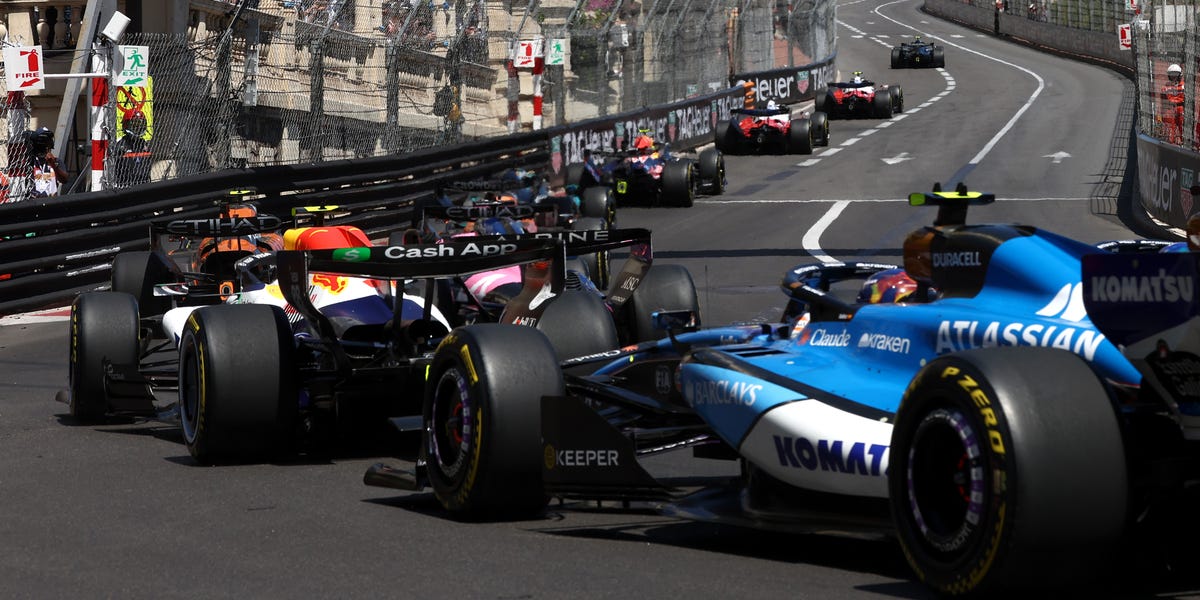
The parties involved have settled on a gradual approach to the shift in power strategy. After debate, Formula 1 finally agreed on Wednesday to move to a 60:40 power split between the powertrain's internal combustion V-6 and the MGU-K electrical element. However, it won’t happen as many had hoped for 2027. Instead, the move will be staggered, with the first step taken next season before the transition is completed in 2028.
To recap, the much-vaunted original “50:50” split between internal combustion engine (ICE) and electric planned for this season (which is actually closer to 53:47) was too ambitious. That became apparent over the last couple of years as teams ran virtual cars and power units in simulators, but despite the warning signs, nothing was changed; the rules had been decided, manufacturers had signed up for them. F1 felt at times like the Titanic heading for an iceberg with no one able to steer it away.
 View Price on Amazon
It took the inevitable collision, in the form of pre-season testing and the first few races with the 2026 machinery, for the truth to hit home, as drivers made clear their frustration at having to focus on energy recovery and being unable to run flat out. While the sport isn’t just about the drivers enjoying themselves, the fact that most were clearly unhappy could not be ignored. But the bigger picture was the impact on the show, after a decade of effort by Liberty Media and the teams to build up global interest in the sport.
To their credit, the FIA, Formula 1, and the teams accepted that something had to be done. Pending a change to V-8s that can’t happen before 2031 (or, possibly, a year earlier), they had to work with what they have. The obvious solution was to change the balance between the ICE and the MGU-K, and—stuck working with the technology that F1 is committed to until at least 2029 or 2030—the way to do so was to increase power by throwing more fuel at the V-6. That was agreed in principle at a meeting on May 8, and the FIA announced that a move to 60:40 for 2027 was in hand, pending agreement of the details.
The problem was, the devil was in those details. On the team side, one issue was that higher fuel flow means more fuel in the car at the start of the race; hence, a bigger tank was required. Some teams are planning to carry over their chassis into 2027 for cost-saving reasons, and squeezing a bigger fuel cell in wasn’t possible. That was addressed by chopping a couple of laps off the races where consumption is marginal, among other tweaks. The real issue was the reluctance of some power unit manufacturers—most notably Audi—to agree to a major change for what will be only the second year of the formula. Mercedes and Red Bull/Ford were supportive, but the others were not so keen, and four of the five current manufacturers were needed to push the change through.
Around the time of the Montreal Grand Prix, the idea of a staggered change began to take shape, and that was what was agreed to Wednesday. Formula 1 will thus go from a 53:47 power split to 58:42 in 2027, and then to 60:40 in 2028. Here's how that's being done: in 2027, the maximum ICE power will rise from 536 horsepower to 563 horsepower via a 5% increase in fuel flow, while MGU-K power will decrease from 469 horsepower to 402 horsepower. Then in 2028, ICE power will rise to 603 horsepower, with a 13 percent fuel flow increase compared to 2026, while MGU-K power will stay at 402 horsepower. Meanwhile, maximum harvesting power will go from the current 469 horsepower to 503 horsepower in 2027 and 536 horsepower in 2028.
Source: roadandtrack.com

