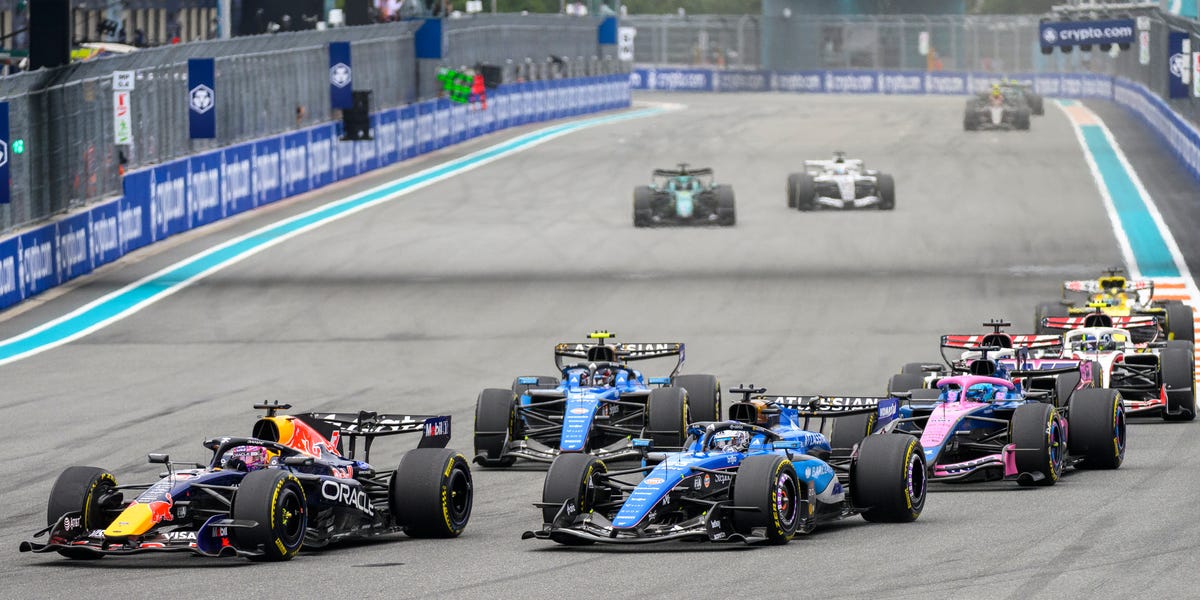
Starting in 2027, the gas-powered part of the power unit in Formula 1 can contribute 67 more horsepower, while the electric side will contribute the same amount less. This change aims to improve racing and address issues that have arisen over the first four race weekends of this season.
Formula 1 is set to undergo further changes to the power unit regulations in 2027, with a greater focus on the combustion engine and less on electrical deployment. The plan was agreed upon in a virtual meeting involving the FIA, F1, the teams, and the power unit manufacturers.
 View Price on Amazon
In a statement, the FIA said that there was “unanimous commitment to introduce changes which further enhanced fair and safe competition, that were intuitive for drivers and teams and were in the best interests of the sport.” The measures agreed upon in principle for 2027 would see “a nominal increase in Internal Combustion Engine (ICE) power by approximately 67 horsepower with a fuel-flow increase, and a nominal reduction of the Energy Recovery System (ERS) deployment power by approximately 67 horsepower.”
Fuel flow has long been touted as the easiest way to boost ICE power. However, it could not be done within 2026 due to hardware considerations—for example, the requirement for a larger fuel tank capacity within the chassis. Now that the principle has been agreed upon, the technical details will be discussed further by the teams and power unit manufacturers, and the final outcome will have to be rubber-stamped by the World Motor Sport Council.
The 2026 F1 regulations have also been adjusted to allow struggling Honda to spend more on development in an effort to close the gap to those ahead. Under the rules, the power unit manufacturers now run under their own cost cap; however, a process called ADUO (Additional Development and Upgrade Opportunities) was built in to allow a struggling manufacturer more spending power, based on analysis after the upcoming Canadian race.
Source: roadandtrack.com

