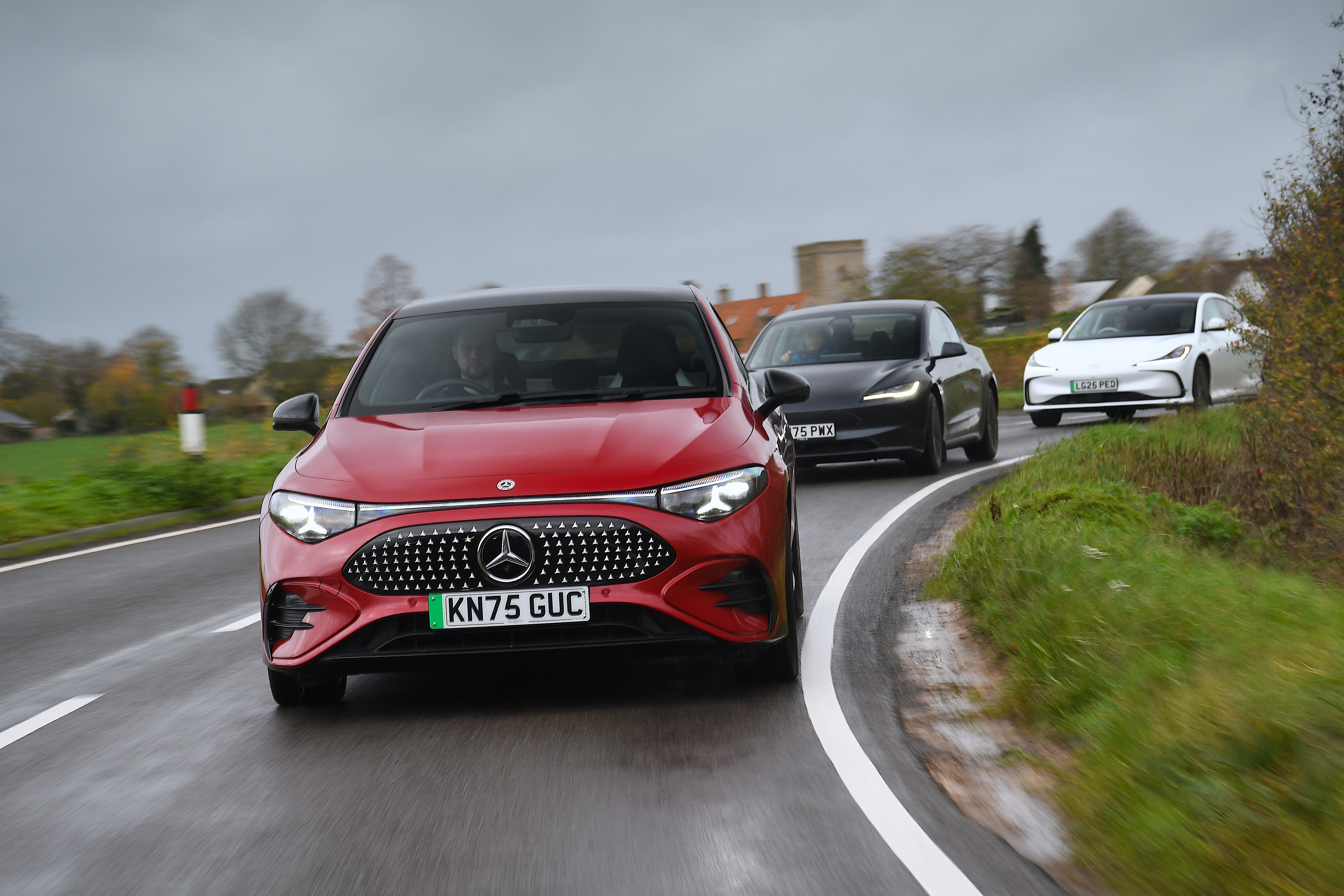
Electric company cars have reached a market share beyond the government’s 80% ZEV mandate target for 2030, according to leasing firms. However, they warn that weak retail demand and shifting policies pose longer-term risks for a sector that now owns more than a third of the country’s electric vehicles.
Demand for company cars has surged since ultra-low tax rates for electric cars and plug-in hybrids were reintroduced in 2020. All company cars are assigned a ‘taxable value’, which is a percentage of the list price weighted on its CO2 emissions, and drivers pay benefit in kind (BIK) on that value at the same rate as their income tax – typically 20% or 40%.
As EVs are rated at 0g/mi CO2, they get the lowest tax rates – currently 4%, compared with at least 25% for the most efficient non-plug-ins. The resulting five-fold reduction in tax bills has made it increasingly attractive to opt back into a company car.
 View Price on Amazon
With 75% now driving a PHEV (24%) or EV (51%), the average taxable value of a company car has halved since 2019/20, contributing a combined $3.07 billion in tax revenue – 43% less ($2.36bn) than before the low rates were introduced.
As most of those cars are leased, members of the British Vehicle Rental and Leasing Association (BVRLA) are claiming 90% of company car orders and 47% of their combined business contract hire (BCH) fleet – comprising 948,000 vehicles, and 6.1% larger than in the first quarter of 2025 – are now electric vehicles, according to the industry body’s latest Leasing Outlook report.
Salary sacrifice schemes are also booming, up 165% year on year to 266,816 cars and overtaking personal contract hire (PCH) to become the most popular way for individuals to lease a car. These enable drivers to lease vehicles through their employer, funded by their pre-tax salary and – if it emits 75g/mi or less – to pay low-rate BIK on top of the monthly rentals.
However, BVRLA members are increasingly concerned about the relative lack of support for retail channels. Only 20% of PCH cars are electric, while the organisation says firms are “haemorrhaging” money when three-year-old electric vehicles are remarketed due to weak second-hand demand, exacerbated by aggressive discounts on new cars to meet ZEV mandate targets.
Source: autocar.co.uk