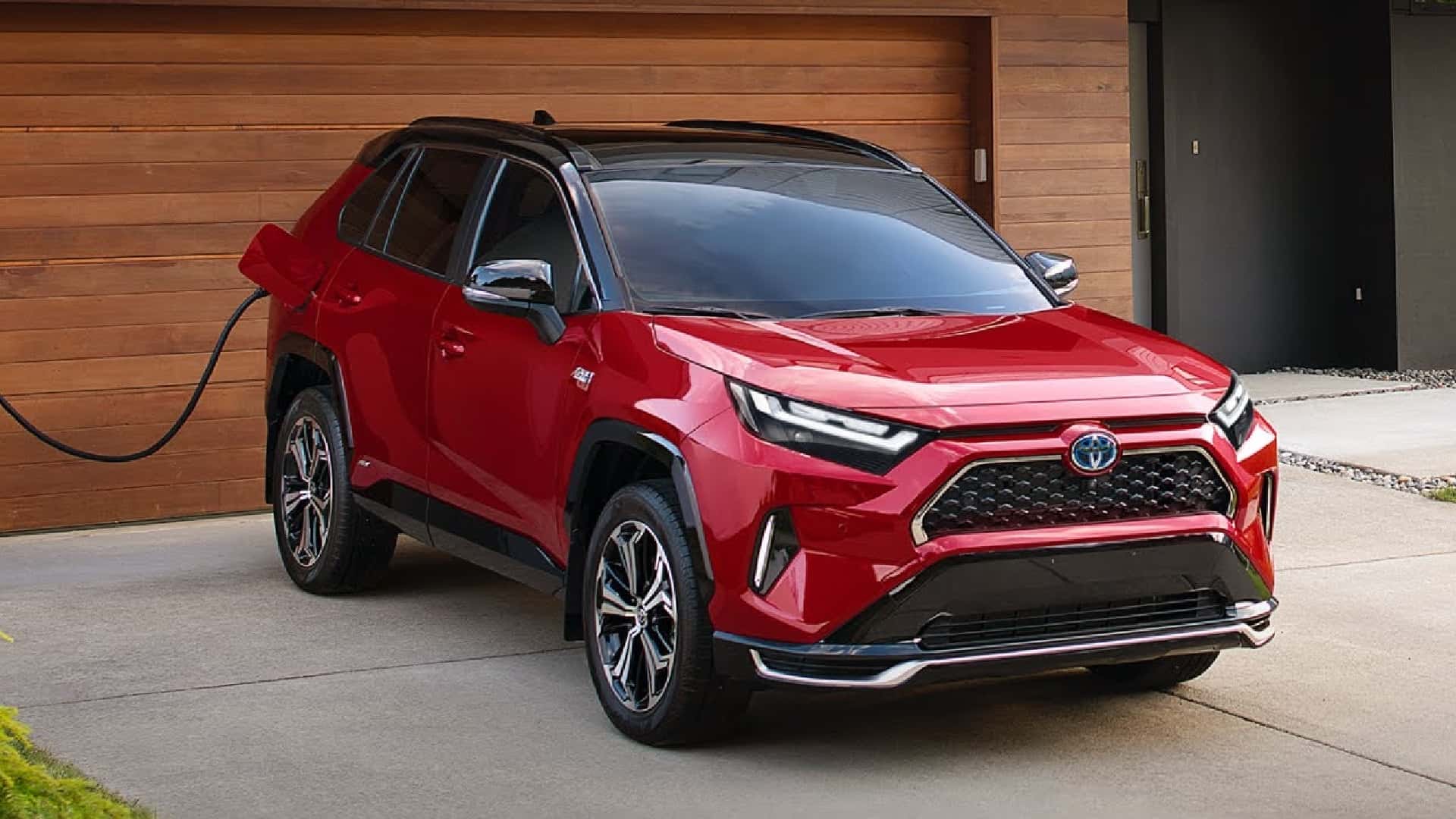
We’ve all heard the story. Plug-in hybrids are inefficient because people don’t actually plug them in at home or at the office, making them less efficient than a conventional hybrid. However, that’s not the case—at least not in the United States and a few Canadian provinces.
A new peer-reviewed study published by Karim Hamza and Ken Laberteaux from Toyota Research Institute North America (TRINA) analyzed the charging habits of more than 6,000 PHEV owners in the US and Canada, and found that the vast majority take advantage of their cars’ electric driving abilities.
Traditionally, automakers avoid answering questions about their PHEVs’ charging statistics, but Toyota is now the outlier. The two TRINA researchers looked at anonymized data from Toyota RAV4 Prime and Lexus NX 450h+ vehicles, and the data is clear.
 View Price on Amazon
On average, Toyota PHEV owners plug in seven out of 10 driving days, while Lexus owners charge between eight and nine times per 10 driving days. Percentage-wise, that’s 70% for Toyota RAV4 PHEV drivers and between 80% and 90% for Lexus PHEV owners. Meanwhile, just 9% of Toyota drivers and 4% of Lexus drivers from this sample rarely plug in their electrified crossovers.
That’s a huge difference from European plug-in hybrid vehicle drivers, who rarely top up their cars’ batteries, according to several studies and statistics. It’s worth noting, however, that in Europe, some governments offer incentives for companies buying PHEVs, and these company cars ultimately end up in the hands of people who didn’t necessarily want to drive a plug-in hybrid and may not have where to charge it or any motivation to do so.
While the number of Toyota and Lexus PHEV drivers in North America who rarely plug in was quite low, the researchers still want to find out the reasons behind those figures. Currently, the TRINA researchers have two hypotheses, and if they look familiar, it’s because they’re the same reasons why some people are hesitant to buy an EV.
The authors said that some PHEV drivers may not have convenient home charging, or the cost of electricity can make it more expensive to plug in than to fill up with gas. As a PHEV owner myself, I can relate to both these issues, especially when traveling long distances—I charge every day at home, but on roadtrips, the cost of recharging the battery is often much higher at hotels or public stations than filling up with gas.
Still, my plug-in hybrid wagon has so far saved me thousands in gas costs compared to my old diesel Land Rover, so a PHEV can be the perfect solution for the right person. If you can charge at home for cheap and the daily commute is shorter than the car’s all-electric range, it’s a great choice.
Source: insideevs.com

