The biggest car news and reviews, no BS. Our free daily newsletter sends the stories that really matter directly to you, every weekday. Terms of Service & Privacy Policy.
Bottom line: The 2027 Chevy Bolt offers notable improvements but also several drawbacks, making it a mixed bag compared to the older model. In a perfect world, General Motors would have kept building the Chevrolet Bolt over the last two years, and into the future. But for a variety of boring, depressing, and cynical reasons we won’t get into here, the compact, entry-level EV is guaranteed to only come back for a single model year, with production currently slated to end midway through 2027.
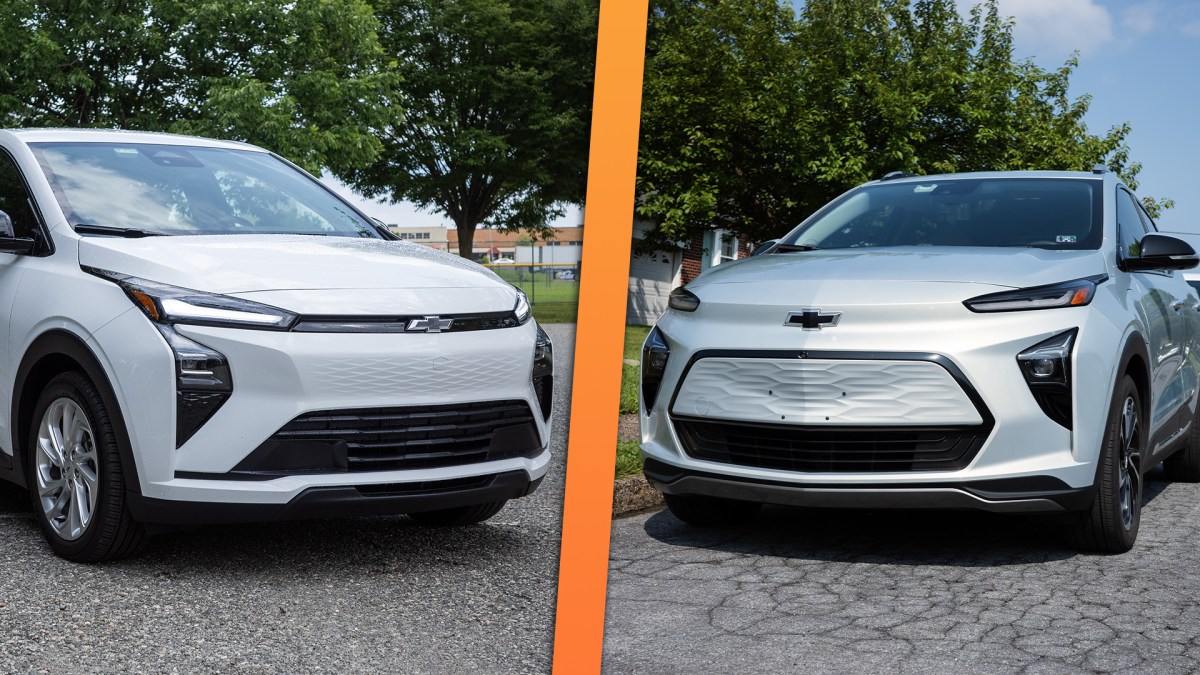
This is not an all-new Bolt, but a heavily revamped version of the Bolt EUV that temporarily left us after 2023; the even smaller, non-EUV version is a thing of the past. Given the similarities between a lightly used Bolt and this brand-new one, I thought it useful to compare the two. To do this, my good friend Forrest handed me the keys to his 2023 Bolt EUV, which I drove back-to-back with this white, almost completely base example I was loaned for review a couple of weeks ago.
 View Price on Amazon
What I found was that while the latest Bolt does have some advantages over its predecessor, it also makes a number of frustrating concessions that keep it from being the obvious choice. In fact, to potentially spoil the verdict here, I’d go so far as to say that if I already owned an older Bolt, I wouldn’t automatically go out of my way to upgrade. Let’s start with what the new Bolt brings over its predecessor. While its battery is rated at the same 65 kWh as before, the new CATL-developed pack uses a lithium-iron-phosphate chemistry, unlike the nickel-cobalt construction of before.
The upside is that the LFP battery should retain its charge for many more cycles. The downside is worse theoretical cold-weather performance, though the new Bolt also has a heat pump that the prior model didn’t, which should give back some miles in such conditions. Additionally, the new battery material makes the pack heavier, but for a car like the Bolt, that doesn’t bother me too much.
The 2027 model also gets a NACS port, and can DC fast-charge at up to 150 kW, a three-fold increase over the old one. The combination of greatly increased throughput and the ubiquity of the charging port on this side of the Atlantic is, frankly, the biggest boost the revitalized Bolt has going for it. None of this means a significant improvement in range, which is EPA-estimated at 262 miles on a full charge—about 15 miles more than before.
Also, while the new Bolt is up 10 horsepower on its predecessor, to 210 horsepower, torque is weirdly way down, from 266 lb-ft to just 169 lb-ft. Fortunately, this isn’t nearly as bad in practice as it sounds on paper, because GM engineers ratcheted up the final drive ratio to pair with the car’s smaller, higher-RPM motor. The end result is that A/B testing foot-to-floor acceleration in both Bolts, the new one actually feels noticeably quicker, even though raw numbers might indicate the opposite.
One more thing: The new Bolt supports bidirectional charging, meaning it can power your home, but only if you’re a GM Energy customer; there’s no 120-volt outlet in the trunk, for example. I should say that my friend Forrest really seems to like his Bolt, and I can understand why. Whether you spring for an older secondhand car or a new one, it is a great little short-trip runabout. Both have excellent visibility in the cabin, light and easy steering, and accelerator pedals tuned not to dump a ton of torque on initial press, which can be jarring in EVs.
Source: thedrive.com

