Our car experts choose every product we feature. We may earn money from the links on this page. We test a lot of tools and gear, so our hands take plenty of abuse. We use and evaluate five types of work gloves to see which ones are best at improving grip and protecting hands.
Wrenching on cars, if you do it enough, will eventually lead to a complicated relationship with your hands. Cuts across knuckles become routine, grease settles permanently into fingerprints, and after enough winters spent wrenching in the cold, your skin starts to resemble old leather. A good pair of gloves makes all of that slightly less miserable, at least in theory. Too bulky, and you lose the dexterity needed for tight spaces. Too thin, and they’ll fall apart at the slightest inconvenience.
The best gloves let you maintain enough tactile feedback to handle delicate components, tiny fasteners, and interior trim clips while still protecting your hands from sharp edges, hot components, chemicals, and endless grime. For enthusiasts and professional mechanics alike, a good pair is as essential as a quality ratchet or flashlight.
 View Price on Amazon
For this test, I evaluated several different categories of gloves commonly used by enthusiasts and professional mechanics alike, including disposable nitrile gloves for fluid work and detailing, insulated gloves designed for wrenching in cold weather, heat-resistant gloves for exhaust and engine-bay work, and heavy-impact gloves intended for fabrication, suspension jobs, and harsher shop environments. Some prioritized dexterity above all else, while others focused on durability and protection. I spent hands-on time using them across a variety of real garage tasks, evaluating grip, comfort, breathability, touchscreen compatibility, durability, and how well they held up after repeated abuse.
The biggest takeaway will come as no surprise to seasoned wrenchers: there’s no single perfect glove for every job. The same lightweight nitrile glove that feels ideal during an oil change becomes useless when wrestling with seized suspension hardware in freezing temperatures. Likewise, bulky impact-resistant gloves may save your knuckles during undercar work, but make interior trim work feel like performing surgery in ski gloves. The best setup is usually a small arsenal of purpose-built gloves, each suited to a different kind of mechanical misery.
Expert Tip: Always choose mechanic's gloves based on the specific job. Thinner gloves with tactile fingertips are ideal for precision work like electrical or interior trim, while thicker reinforced gloves with knuckle protection are better suited for heavy-duty wrenching. If you're only buying one pair, look for a balance of dexterity and durability; synthetic leather palms and breathable backs are a good place to start.
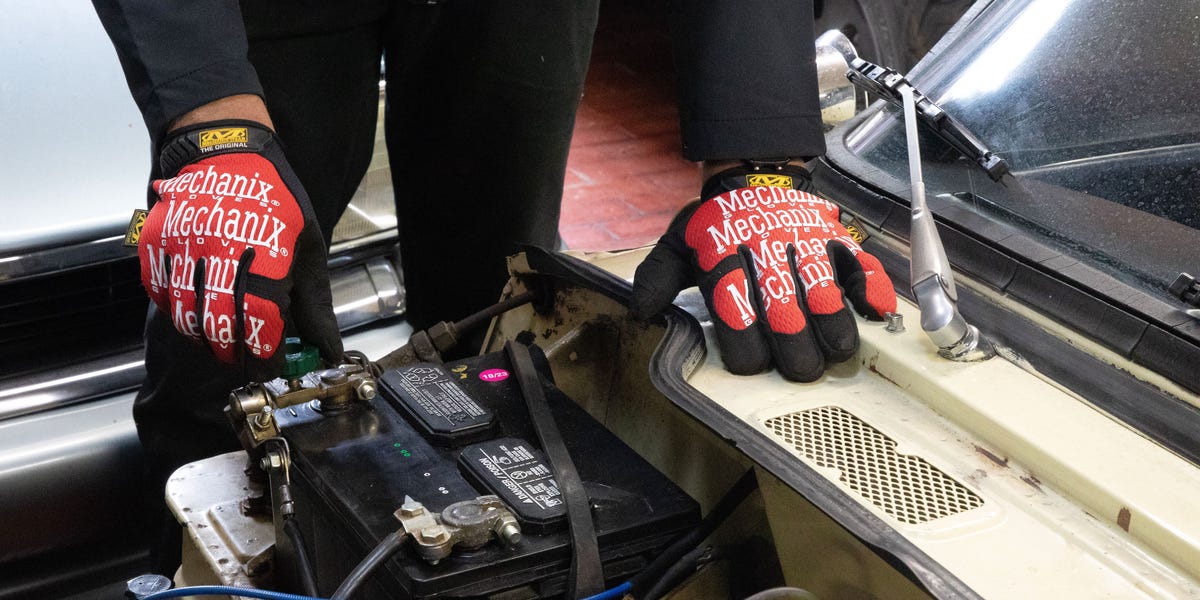
Mechanix Wear's The Original Work Gloves are the stalwart of mechanic's gloves. They're not flashy, and they don’t pretend to be anything more than they are: reliable, utilitarian hand protection. I've owned a few pairs over the years, and while they've always been the glove I grab when I need to wrench on something greasy or awkward, for this test I put a fresh pair through its paces to see if they still hold up when compared to gloves with more sophisticated features.
Out of the package, The Originals feel familiar. The TrekDry fabric is snug but breathable, and the hook-and-loop wrist closure secures without fuss. They're form-fitting without feeling constrictive, with just enough stretch.
Source: roadandtrack.com