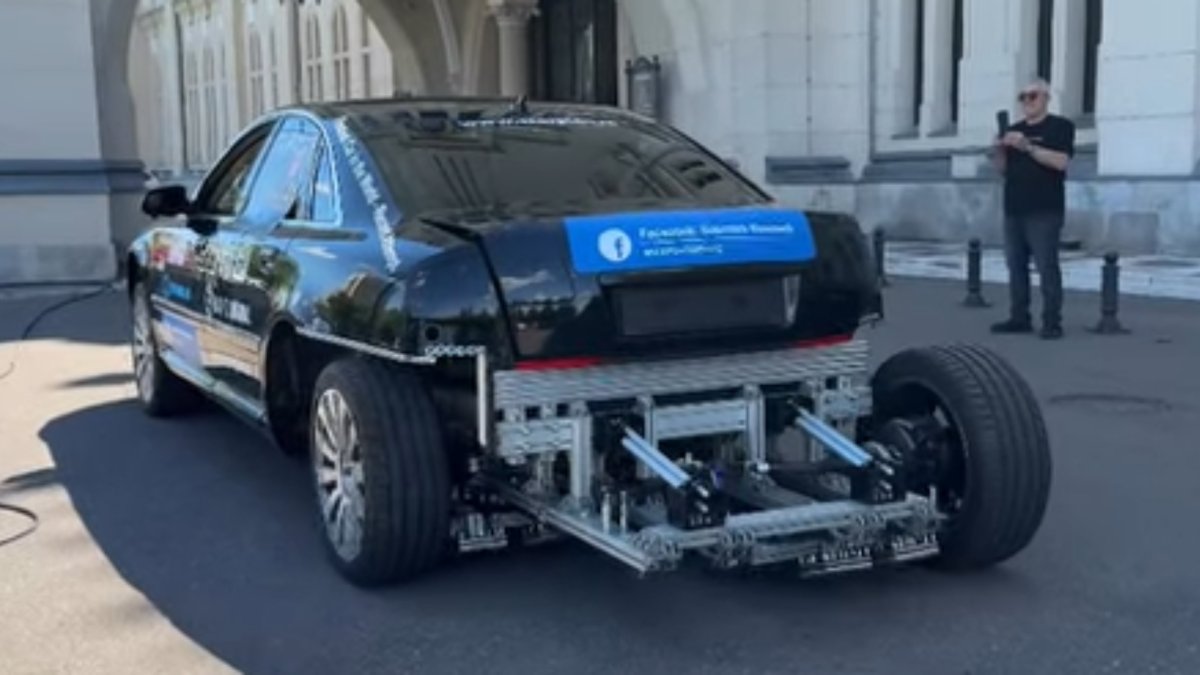
Byron Hurd recently reported on an unusual Audi prototype that utilizes compressed air for propulsion. This innovative concept, developed by Romanian firm Rosmar H, has sparked both fascination and skepticism within the automotive community.
The idea behind this technology is to harness the energy stored in compressed air to propel the vehicle. According to Rosmar H, their Audi prototype can accelerate from 0 to 60 mph in 0.3 seconds and reach a top speed of approximately 373 miles per hour. While these claims seem impressive, many experts remain dubious about the feasibility of such a system.
 View Price on Amazon
The Rosmar H system relies on longitudinal pistons that release compressed air sequentially, effectively pulling the car forward. Theoretically, the car's inertia could be used to recuperate energy on the return stroke, similar to regenerative braking in hybrid or electric vehicles. However, this process would likely result in significant energy losses due to parasitic losses and the conversion of motion from one type to another.
The initial energy required to get the car moving is stored in a compressed air tank, which can be replenished using an external compressed air source. This raises questions about the practicality of such a system, as the amount of energy that can be stored in a compressed air tank is limited. Furthermore, the weight and size of the tank, as well as the complexity of the system, may pose significant challenges for widespread adoption.
Source: thedrive.com

