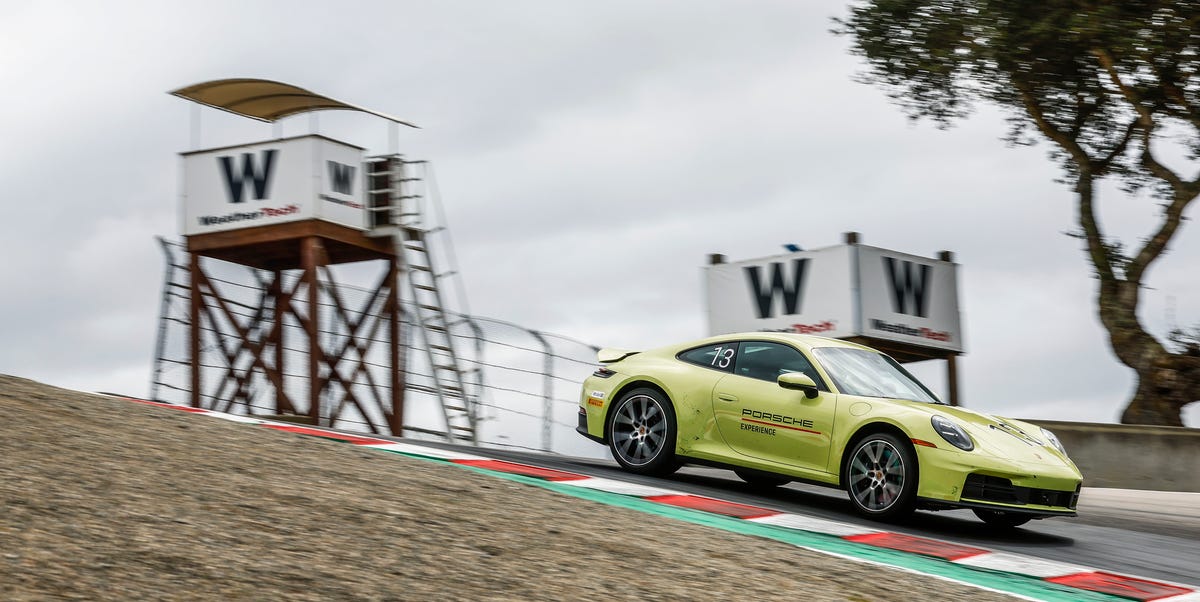
Laguna Seca is one of the West Coast’s most famous race tracks, but it’s also a great place to drive at lower intensity. Porsche is launching its track program at the legendary circuit, under the same PTX or Porsche Track Experience branding it already uses at Barber Motorsports Park in Alabama. The PTX events are more like a conventional high-performance driving experience, longer and sometimes even multi-day events that involve a major teaching element in addition to plenty of on-track time in 911s.
PTX Laguna Seca offers five courses, ranging from introductory programs all the way up to an advanced event that features extensive time in a current 911 GT3. The PTX 911 S fleet is made up of otherwise-identical cars in four colors, all of which seemed to feature heated and ventilated seats but not the Sport Chrono package.
 View Price on Amazon
The 911 S is the most popular version of the 911 by sales volume, making up about a third of the total in the U.S. That makes it a representative car for a wide variety of 911 owners who would run in a PTX event. For those of us without a 911, it makes a good fit because it is predictable, balanced, and solidly poised with a bit of understeer dialed in.
My day began in the classroom, going over the basics of performance driving and some of the ways to approach specific corners on the track. Two big focuses here were on weight transfer and the contact patches of individual tires, two factors that play a major part in what the car is doing after any given input. Instructors showed a series of diagrams illustrating when and where to balance steering, braking, and acceleration, emphasizing how a measured sequence of inputs maximizes lap time and where over-exuberance would lead to trouble.
The on-track action started with extensive lead-follow, learning the line behind instructors. The rest of the day was spent slowly picking up speed in groups until the entire line of cars was running full speed for a full lap. My instructor, watching from the front of the group, radioed advice and instruction on how to adjust lines and optimize speed.
Source: roadandtrack.com

