The Definitive Ford F-150 TPMS Master Guide: Maintenance, Reset, and Troubleshooting (2015-2026)
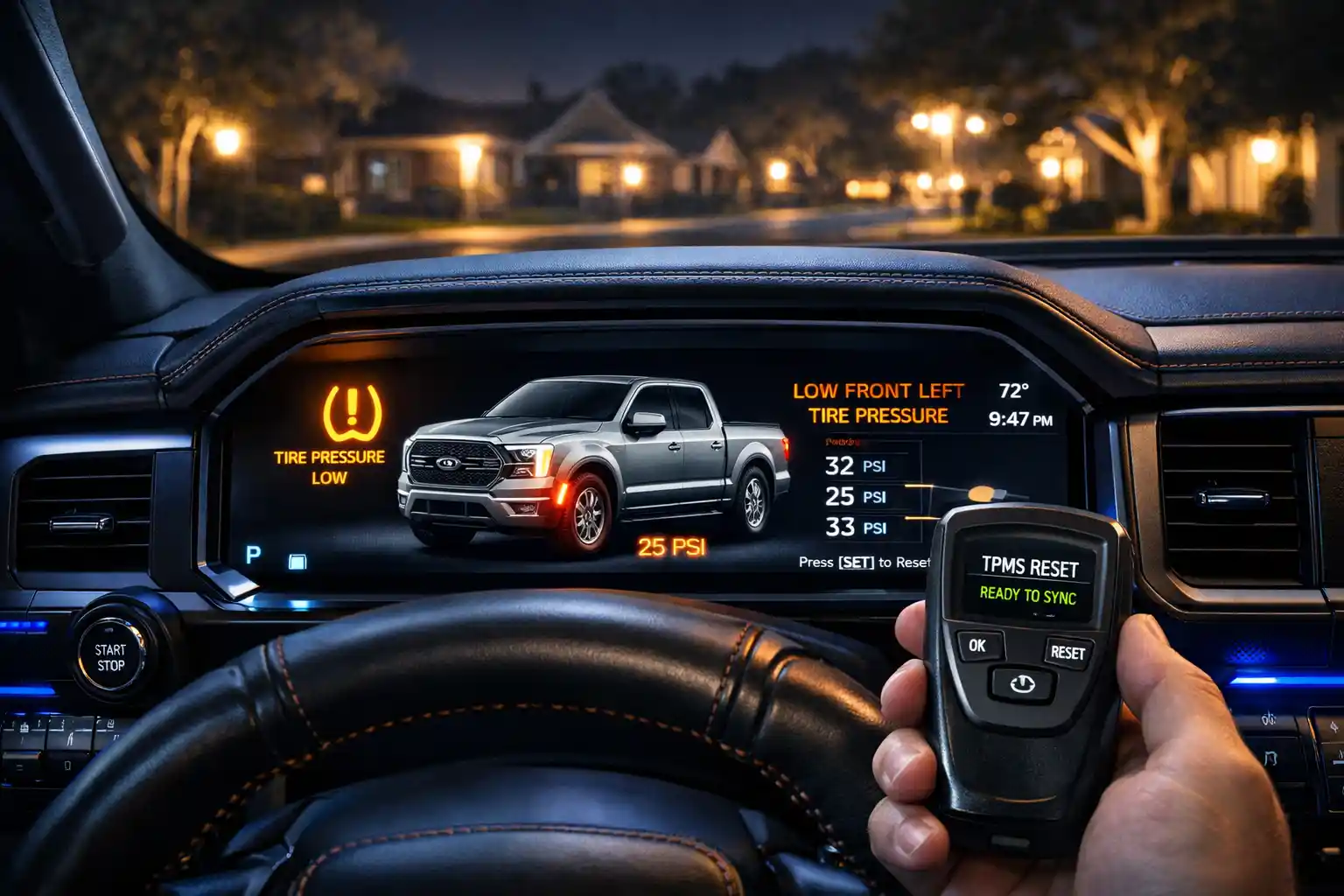
Introduction: The Silent Guardian of Your Drive
As of February 6, 2026, the Ford F-150 continues to define the American trucking experience. While we celebrate its massive towing capacity and advanced AI co-pilots, the most critical component for your everyday Safety is often the most overlooked: the Tire Pressure Monitoring System (TPMS).
A glowing TPMS light isn't just an annoyance on your digital dashboard; it is a direct communication from your truck regarding its Reliability and performance. Whether you are navigating the frozen passes of the Rockies or the scorching deserts of Arizona, maintaining the correct PSI is the foundation of vehicle Quality.
Chapter 1: Understanding the F-150 TPMS Ecosystem
Before reaching for the reset tool, one must understand the Quality of the hardware involved. Since 2015, Ford has utilized a "Direct TPMS" system, which uses physical sensors mounted inside each wheel to provide real-time data to the truck’s central nervous system.
In the newest 2026 models, the TPMS is no longer a standalone system. It is integrated into the Omni-platform, meaning your tire pressure data is cross-referenced with your suspension tuning and braking distance calculations. This level of Safety integration is why keeping the system calibrated is non-negotiable for the modern driver.
Chapter 2: Method 1 – The Standard Drive-Reset
Ford’s engineering team has prioritized Reliability by making the system as autonomous as possible. For most minor pressure adjustments, a manual reset is unnecessary. Cold Inflation is the first step: using a high-quality digital gauge, inflate your tires to the exact specification found on the driver-side B-pillar sticker. Quality matters here; do not guess.
Drive your F-150 for at least 10 minutes at speeds consistently above 20 mph. The 2026 sensors use a "Motion-Triggered Wake" feature. Once they detect consistent rotation, they broadcast updated data to the Receiver Module, and the light should extinguish automatically.
Chapter 3: Method 2 – The Manual "Training Mode"
If the light persists after a rotation or a sensor replacement, you must enter the Manual Training Mode. This is a sequence designed to ensure the Safety of the data transmission—ensuring the truck knows exactly which sensor is at which corner.
The "Pedal Dance" Sequence: Turn the ignition to the OFF position, press and release the brake pedal once, then cycle the ignition from OFF to RUN three times, ending in the RUN position. Press and release the brake pedal again, then cycle the ignition three more times. The horn will honk once when successful.
Chapter 4: The Essential Tool – Why Manual Triggers are Mandatory
While the "Pedal Dance" gets you into the mode, the 2026 F-150 often requires a physical trigger to complete the handshake between the wheel and the computer. This is where the Reliability of professional tools comes into play. Manual air-letting is slow and can be inaccurate; a dedicated tool ensures your systems are synced in seconds.

The Essential Tool: TPMS Programming Trigger
This tool is the bridge between your truck and its sensors. For 2015-2026 F-150s, this pocket-sized device ensures that your Safety systems are synced in seconds, preventing the frustration of failed manual attempts.
View on AmazonChapter 5: Troubleshooting Persistent Failures in 2026
In February 2026, we are seeing a rise in "Ghost Warnings." TPMS sensors are powered by non-replaceable lithium-ion batteries. After 7 to 10 years, these batteries lose their Quality and begin to broadcast intermittently. For owners of 2015-2019 F-150s, a persistent light is almost always a sign that the sensor has reached the end of its reliable lifespan.
Additionally, external radio frequency interference can "mask" the TPMS signal. If your light flashes for 60-90 seconds before staying solid, this indicates a "System Fault"—usually meaning the module has lost contact with one or more sensors.

Reliability Alert: Pre-Programmed TPMS Sensors (4-Pack)
When Reliability fails, replacement is the only option. These pre-programmed sensors are designed for the F-150 Omni-platform, offering automotive-grade Quality that matches original factory specs.
Check Price on Amazon📈 2026 Efficiency Insight
Maintaining your TPMS isn't just about Safety; it’s about economy. In a 2026 F-150, a 5 PSI drop can reduce your MPG by 2% due to increased rolling resistance. Proper pressure is the cheapest performance upgrade you can perform.
Conclusion: Maintenance is a Commitment to Quality
The Ford F-150 is a masterpiece of American engineering, but it relies on the owner to maintain the integrity of its systems. By understanding the TPMS reset process and investing in the right tools, you are ensuring the Safety of your passengers and the long-term Reliability of your vehicle.
📋 Summary of Key Points for the 2026 Owner:
- Always Cold-Inflate: Check pressures before driving for the most accurate Quality check.
- Use the Tool: The manual "air-release" method is outdated; use a digital trigger for 100% Reliability.
- Check the Date: If your truck is more than 8 years old, expect sensor battery failure.
- Omni-Platform Awareness: Remember that your TPMS affects your truck’s AI-driven Safety features.
The Tire.Guide Technical Team - Documenting Automotive Legends Since 2026.