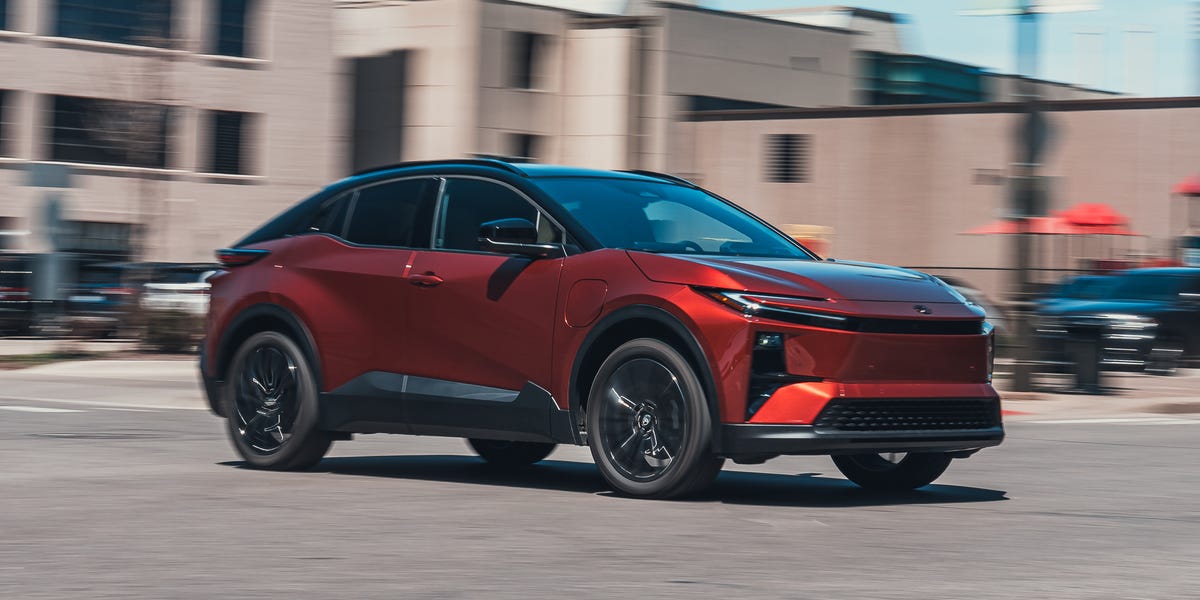
The 2027 Toyota C-HR is a subcompact electric crossover that resurrects a Toyota nameplate from the recent past, but this new EV is unrelated to the previous gasoline-powered compact crossover. The body shape is somewhat similar—a tallish four-door hatchback with hidden rear door handles that help it masquerade as a two-door coupe. However, this latest C-HR is basically a shortened version of the Toyota bZ.
The C-HR has a simpler lineup than the bZ, with just one battery size, two trim levels, and one rather potent powertrain that drives all four wheels. Expert Tip: This same car is sold at Subaru dealers as the Uncharted, but unlike Toyota, Subaru also offers a single-motor, front-wheel-drive variant at a lower price point.
 View Price on Amazon
The C-HR features two electric motors on the front and rear axles, granting it standard all-wheel drive. The combined output is 338 horsepower, which is an impressive figure for such a small subcompact crossover. That's 128 more horsepower than you get in the Chevrolet Bolt and 124 more than in the Nissan Leaf, both of which have single-motor drivetrains. This setup makes the C-HR very quick off the line; we enjoyed its responsive acceleration when we drove it, but it starts to run out of steam past 60 mph or so.
In Comparison: The C-HR's twin, the Subaru Uncharted, recorded a 4.3-second 60-mph acceleration result in our testing. The steering and handling don't match the speedy drivetrain, however. There's a fair amount of body roll, but the ride is comfortable, which should please most drivers.
Unlike the larger bZ, which offers two different battery pack options, the C-HR is only offered with one battery size. The EPA estimates the C-HR will deliver 287 miles on a charge in SE form, while the estimate for the XSE model is a bit lower, at 273 miles, due to its larger wheels. In our real-world 75-mph highway range test, the C-HR XSE achieved 230 miles. The C-HR uses an NACS (North American Charging Standard) port, allowing it to charge at Tesla Superchargers. In our fast-charging testing, the C-HR took 32 minutes to charge from 10 percent to 90 percent. It also has an 11-kW on-board AC charger.
Source: caranddriver.com

