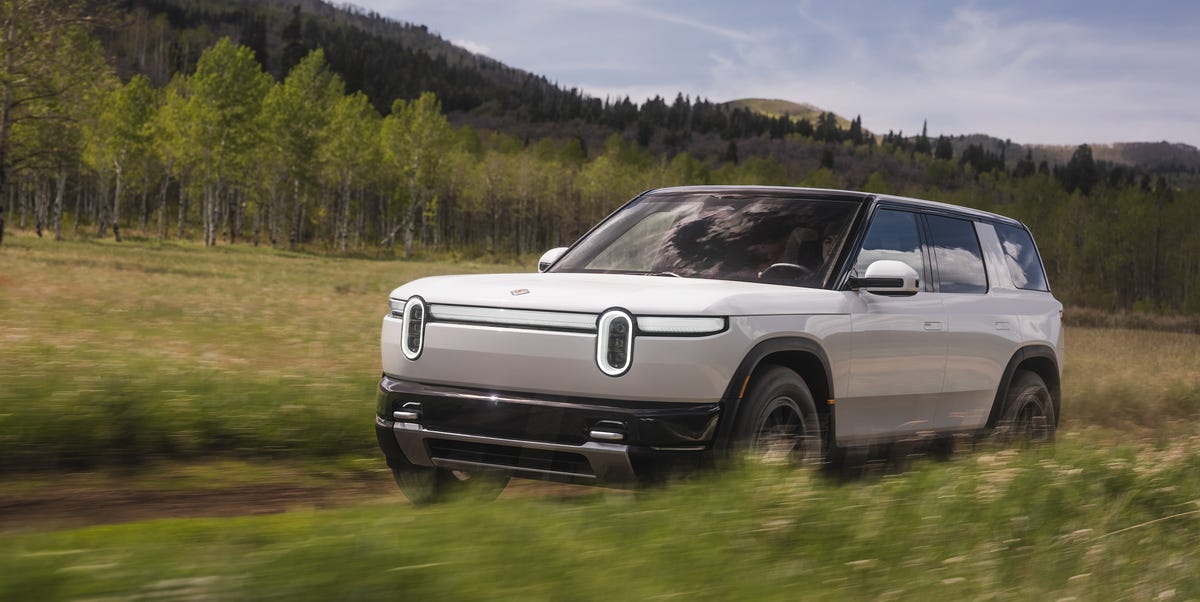
Whether or not you want an electric vehicle, the Rivian R2 can't be ignored. The Rivian R2's arrival comes at a difficult time for electric cars. They're more politically polarized than ever, and legislation around the world has shifted away from their rapid ascension. And yet, the R2 might be exactly the car the market needs if electric vehicles are going to continue to grow in popularity here in the United States.
From the moment that the brand highlighted the R1T concept at the 2018 Los Angeles Auto Show, it was clear that Rivian wasn’t like other startup automakers jumping on the opportunity presented by the electric vehicle push. Like Tesla, the company is massively software-focused and takes a huge amount of pride in the sheer amount of vertical integration that it has achieved. Rivian makes its own components, writes its own software, and has even developed its own zonal architecture in place of traditional domain-based ECUs. It’s an approach that has required an immense amount of engineering talent and labor (as well as capital expenditure), but one that has truly come to define the brand’s existing products.
 View Price on Amazon
The R2 rides on a bespoke unibody platform that forgoes some of the “overbuilt” elements of the extremely robust R1 platform. The SUV is much more compact than its range-topping sibling, measuring around 15 inches shorter in length and over 10 inches shorter in height than the three-row R1S. The cabin itself is still spacious in both the front and back seats, helped along by that flat floor provided by the battery tray. Every R2 comes equipped with an 87.9 kWh pack composed of high-density 4695 cells, which is managed by an all-new in-house controller informed by the previous rework of Rivian’s low-voltage electrical systems. Rivian says that the pack should provide R2 Performance customers with up to 330 miles of range, while being able to charge from 10-80 percent in under 30 minutes at a DC fast charger.
The R2 also sees the debut of Rivian’s new Maximus motors, which are smaller and cheaper to produce than the units found in the R1, but are no less impressive. This Performance model packs a drive unit at either axle, providing all-wheel drive, as well as 656 horsepower and 609 lb-ft of torque. While not quite as extreme as the Tri- and Quad-Motor R1 trims, the R2 is more than capable of ripping off a 0-60 mph sprint in 3.6 seconds. Wheel sizes range from 19 to 21 inches, depending on your trim and package selection, with either a bespoke Pirelli All-Season or BF-Goodrich A/T tire wrapped around them.
Source: roadandtrack.com