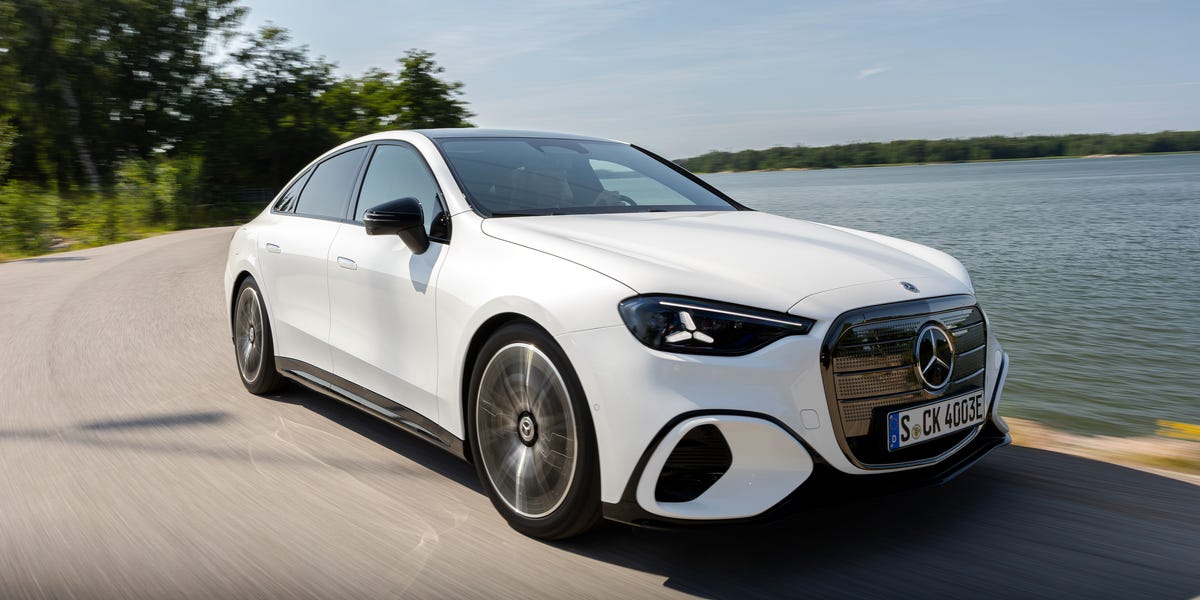
The 2027 Mercedes-Benz C-Class EV is a significant improvement over its predecessors, offering a more refined and enjoyable driving experience. Unlike the EQS and EQE electric sedans, which were designed to be distinct from their gas-powered counterparts, the new C-Class EV takes a more subtle approach. It shares a dedicated EV architecture with the GLC EV, resulting in a wheelbase of 116.6 inches, which is about four inches longer than the regular C-Class sedan. The overall length of the electric C-Class is also around five inches longer than its gas-powered sibling.
The exterior design of the C-Class EV is more conventional than the EQ models, with a prominent grille and a relatively long hood. However, as you move towards the rear, the body shape begins to take on some of the EQ form language, with a rising, rounded shoulder line, a fastback roofline, and a bobbed tail. The interior features a sleek, all-screen dashboard with a digital gauge cluster and a central touchscreen. The optional Superscreen adds a 14.0-inch front-passenger display, while the next-level Hyperscreen provides a single background image across the three displays.
 View Price on Amazon
Inside, the C-Class continues Mercedes' march towards an all-screen dashboard, but the design is not as jarringly unconventional as some of its competitors. The layout mirrors that of the GLC EV, extending from air vent to air vent and incorporating a digital gauge cluster and a central touchscreen. The touch points for operating the climate controls are small, but you can drag your most-used apps into the lower band for easier access. The optional large head-up display could be considered another screen, and its floating indicators assist with navigation. An interior-facing camera enables in-car Microsoft Teams meeting functionality, although the visual of other participants disappears when you shift into gear.
The C-Class interior is fittingly upscale, with plenty of brushed-metal accents, interesting contrast stitching, and matte-finished wood. A fully vegan interior is also available. The new steering-wheel design reduces the number of annoying four-way touchpads to just one, which you use to operate the display in front of the driver. Audio volume and cruise-control set speed are now physical controls. Sitting behind the wheel, the driver's seat feels wide and concave, and a more upright windshield and a lower cowl mean that the view out is far better than in the larger EQE or EQS.
Underneath the center console is a large open storage area, and the rear seat is comfortably shaped with adequate headroom and decent legroom. However, foot room under the front seats is limited due to the underfloor battery. Overall, the 2027 Mercedes-Benz C-Class EV is a significant improvement over its predecessors and a strong contender in the EV segment.
Source: caranddriver.com

