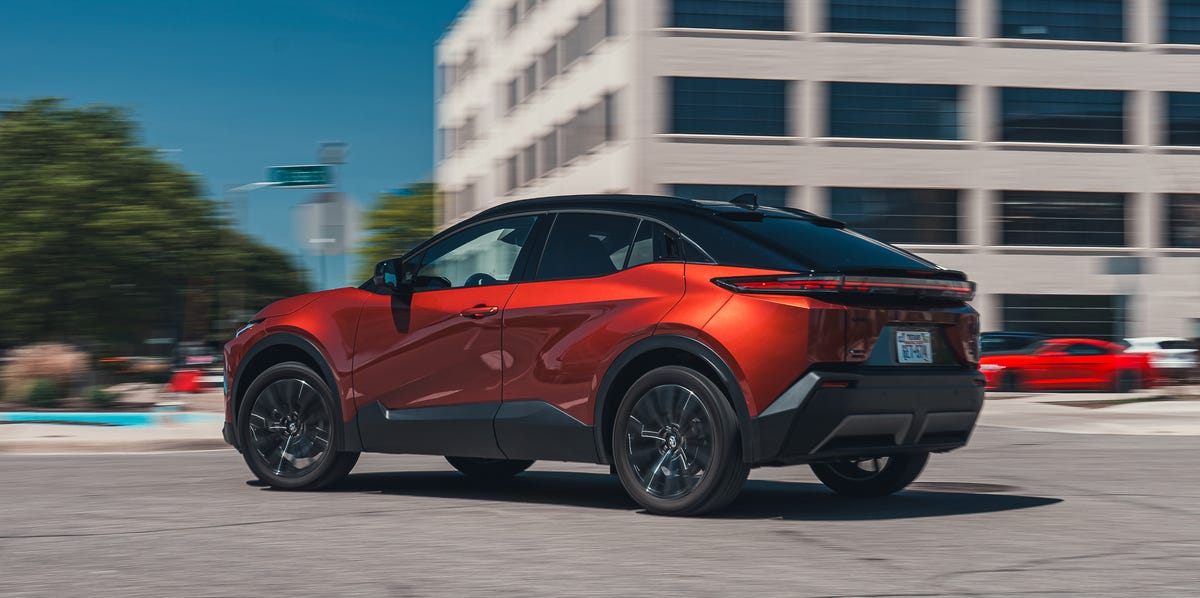
The 2026 Toyota C-HR returns with sharper looks and a potent electric powertrain, but its claim of being Toyota's sportiest EV SUV is questionable. After a brief hiatus, the C-HR is back with a 3.9-inch-shorter wheelbase than its bigger brother, the bZ, and measures 6.7 inches shorter overall. The C-HR is closely related to Toyota's other EVs, the bZ and bZ Woodland, but it has a more compact design.
The C-HR doesn't quite live up to Toyota's promise of being its sportiest electric SUV, but it's still quick, comfortable, and filled with modern amenities. The C-HR's cabin also follows the same formula as the bZ and bZ Woodland's interiors, featuring a 14.0-inch touchscreen and a digital gauge cluster. Toyota's infotainment boasts a clean interface and is sufficiently intuitive, but this vehicle also still has plenty of physical controls, both on the steering wheel and center console.
 View Price on Amazon
At the test track, the C-HR zipped to 60 mph in 4.4 seconds, and it feels pretty quick in the real world despite a curb weight of 4447 pounds. No surprise, it was neck and neck with the closely related Subaru Solterra, a twin to the larger bZ. The 'Yota gradually runs out of steam past 60 mph, taking 7.2 seconds to reach 80 mph from a standstill, but it's powerful enough to make overtaking or on-ramps a nonevent. The C-HR's dual-motor, all-wheel-drive setup produces 338 horsepower, making it a potent electric vehicle.
While its powertrain is peppy, the C-HR doesn't really shine on dynamic roads. The steering, while accurate, doesn't provide much feedback. There is also a decent amount of body roll (8.0 inches of ground clearance doesn't help with that), and it's pretty easy to get the tires to yelp as the C-HR understeers; it recorded just 0.82 g on the skidpad. Still, most drivers won't push their subcompact crossover's handling envelope, and in normal driving, the C-HR's responsive powertrain is accompanied by a comfortable ride and a quiet, isolated cabin.
Along with being a composed daily driver, the C-HR offers a decent amount of range from its battery, which we approximate at 67 kWh of usable energy. Toyota says the C-HR can travel 287 miles on a charge in its base SE spec, with the XSE trim landing at 273 miles thanks to its larger 20-inch wheels. That's not bad, but the C-HR didn't fare as well in the real world, with the XSE model managing an underwhelming 230 miles in our 75-mph highway range test. Like Toyota's other electric offerings, the C-HR has a NACS port, and the charging rate peaks at just 150 kilowatts on a DC fast-charger.
Source: caranddriver.com

