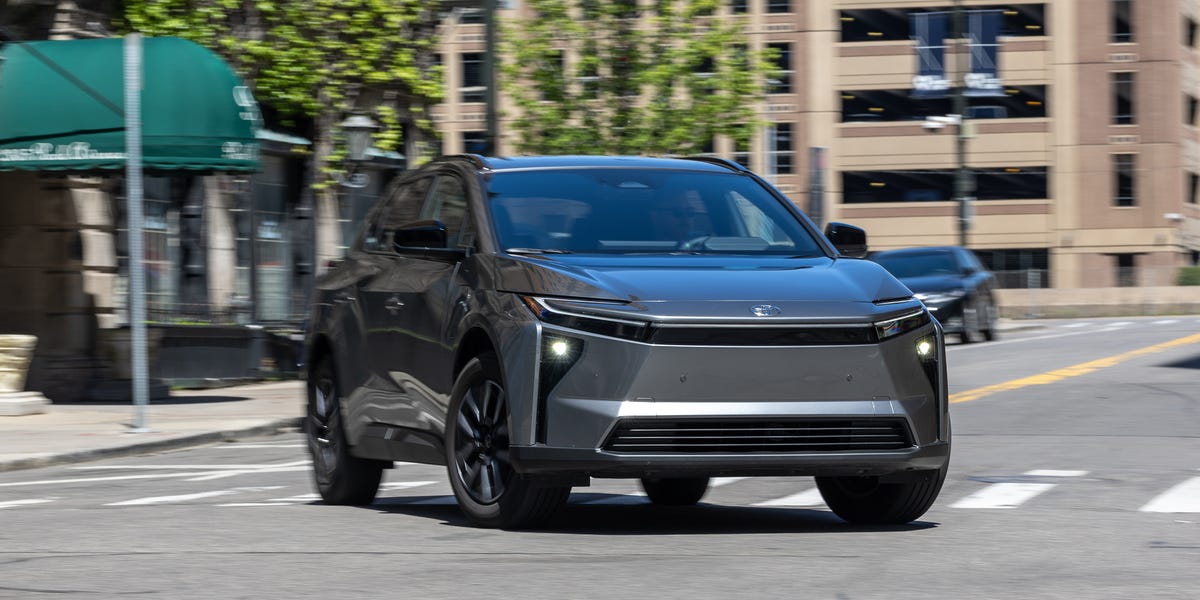
Improvements to Toyota's compact electric SUV bring it closer to the competition in terms of driving range, charging capabilities, and acceleration. At this point, year-by-year changes to electric vehicles are starting to follow a familiar template. You squeeze a bit more power out of the electric motors, you juice up the battery pack, you improve the charging system, and boom—you've got a more appealing product. Toyota is following this script with the 2026 bZ, a compact electric SUV that replaces the previous bZ4X, becoming a far more competitive model within the segment.
The name change itself is the first notable tidbit, as it shows that Toyota is no longer committed to following an EV-specific naming pattern. The bZ moniker, which stands for "beyond Zero," is applied only to this model—now sans 4X—and the bZ Woodland, a longer and more outdoorsy SUV sibling built on the same platform. Otherwise, the U.S. arm of the company is abandoning this global naming scheme that, in China for instance, includes a whole range of bZ-badged products such as bZ3 and bZ7 with numbers and suffixes denoting size and body style.
 View Price on Amazon
Regardless of what it's called, the bZ remains twinned with the Subaru Solterra. This latest version undergoes a wholesale upgrade to its powertrain and other mechanical tidbits that addresses the previous bZ4X's biggest shortcomings: limited range, uncompetitive charging times, and low power output. Range estimates are improved on most models, thanks to a slightly more powerful battery pack with an estimated capacity of 67 kilowatt-hours. Maximum range climbs from a previous high of 252 miles to 314 miles for the new front-wheel-drive XLE Plus model. And charging improvements come courtesy of a more powerful onboard charger (11.0 kilowatts, up from 6.6) and a new NACS (North American Charging System) port that allows the bZ to use Tesla Superchargers, though its max draw rate on a DC fast-charger is still capped at 150 kilowatts.
We had the chance to drive the new bZ back to back with the old bZ4X, and the new model feels more sprightly and lighter on its feet. The new dual-motor, all-wheel-drive configuration is particularly quick. It's not every day that you see a vehicle's power output jump up by over 50 percent, but the new 338-horsepower setup absolutely embarrasses the outgoing 214-horsepower dual-motor configuration. We got the old AWD car to 60 mph in 6.3 seconds, and the new one is in a different league: a mechanically identical Solterra Touring XT hit 60 mph in 4.3 seconds in our testing.
The improvements to the driving experience are not just because of the extra power either. We also drove the new base front-wheel-drive XLE model, which makes do with only a 168-horsepower motor and a smaller battery with only 52 kilowatt-hours of estimated capacity. Although it's certainly slow, it illustrated that the updated bZ also rides and handles better than before. The steering effort is lighter and the suspension tuning firmer, leading to a more composed feel, despite our test car's modest 0.82 g of grip on the skidpad and lengthy 183-foot stop from 70 mph.
Source: caranddriver.com