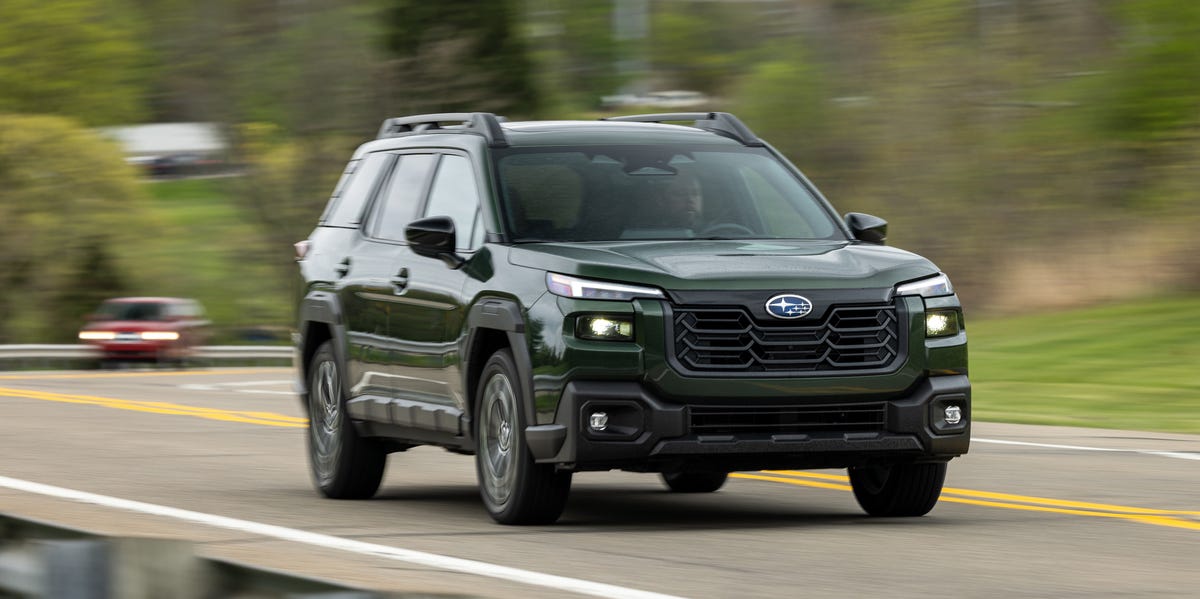
Once a lifted station wagon, the redesigned Subaru Outback is now a mid-size SUV. As it celebrates its 30th anniversary, this once-quirky SUV-ified wagon has maintained a loyal fan base. Since the Outback name first appeared on a modified version of a Legacy station wagon in the 1990s, that fan base has grown dramatically, and the Outback is now a remarkably popular model in the wider marketplace.
The outgoing model is now the only wagon to sell in any significant numbers in the United States, and it has in fact outlasted its donor car, as the Legacy sedan has disappeared from the Subaru lineup. But has the 2026 Outback forgotten where it came from? The redesigned, seventh-generation model represents a shift in the Outback ethos.
 View Price on Amazon
Much of this is down to its radical new look, which capitulates to many industry design trends but loses the wagon-like proportions of previous Outback generations that helped it distinguish itself from other mid-size SUVs. The front end adopts the split-headlight design seen on many modern crossovers, with thin horizontal lighting strips housing turn signals and daytime running lights that look like eyebrows above the squared-off headlight units.
The new Outback is also boxier than ever before, with a blunt front end, tall fenders, and an upright C-pillar. Though the Outback has been too tall to really be considered a wagon for some time now, the elongated and slightly swoopy wagon proportions that were present on previous Outbacks are only barely hinted at here. The length, width, and wheelbase are virtually unchanged, and the biggest dimensional change is the 1.4-inch-taller height.
That pays dividends inside, where headroom is increased and accommodations for front and rear passengers feel airy. We measured the height of the new model's driving position at 1.4 inches higher than before too, which will please those who prefer the tall seating position of an SUV. There's also an extra two cubic feet of cargo space behind the rear seats, and we were able to fit more carry-on suitcases in there compared with the old model: one more case with the seats up, and five more cases with the seats folded.
The Outback is a versatile vehicle, and its friendly interior is its best aspect. Subaru talks at length about how much time it spends designing practical elements such as cupholders, cargo hooks, and roof-rack crossbars, and there are several nice touches such as door-panel bottle holders that can hold a Nalgene, a clip by the device chargers to organize your cords, and a cargo cover that can zip and fold in multiple configurations, including a hammock-style pouch.
The infotainment display switches from the outgoing model's vertically oriented touchscreen to a new, 12.1-inch horizontal setup running improved software. We found it to be more responsive and easier to use than before. In a welcome change, Subaru has removed many controls that were in the touchscreen in the previous model and replaced them with hard buttons and knobs.
Source: caranddriver.com

