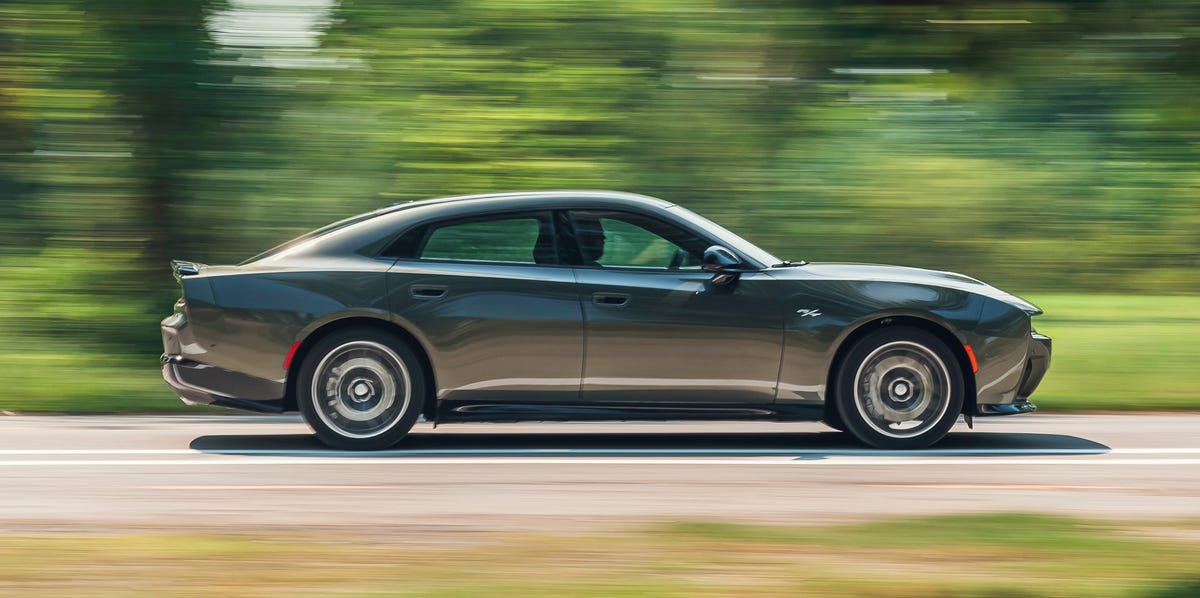
The Dodge Charger has had a rough patch. After over a decade without a redesign, Dodge finally revamped the model, but the new battery-electric powertrains didn't quite resonate with fans. The result? Sales plummeted from 75,920 in 2023 to just 9,562 last year. For 2026, however, gas-engine Chargers have joined the lineup, bearing the Sixpack designation and packing turbocharged inline-six Hurricane engines. This move might just be the model's best hope for redemption.
The Sixpack Charger comes in two flavors: the top-of-the-line Scat Pack with 550 horsepower and the base R/T with 420 horsepower. While the Scat Pack is the image maker, it's usually the base engine offering that sells the most. The R/T can be dressed up in full plumage, with options like dual racing stripes and 20-inch wheels. Our test car in New York wore these stripes, embossed with the resurrected Fratzog logo, and it certainly turned heads.
 View Price on Amazon
Both the four-door and two-door Chargers are the same size, and that size is substantial. The latest Charger rides on a 121.0-inch wheelbase, which is slightly larger than before, but the body is over eight inches longer, nearly five inches wider, and an inch taller than the old car. The gas-engine Charger shares its platform and body with the EV version. The R/T's 420 horsepower and 468 pound-feet of torque may be the lowest in the lineup, but they still represent a healthy increase over the previous Hemi-V8-powered R/T.
The new car's weight has ballooned, however, with our 2026 Charger R/T tipping the scales at an SUV-like 4,921 pounds. That's 540 pounds heavier than a previous-gen 2015 V-8 R/T model. All-wheel drive is standard, and our car's optional launch control-aided traction helped the 2026 R/T post a better 0-60 mph time than its forebear: 4.7 seconds, versus 5.1 seconds for the previous 5.7-liter V-8 Charger R/T.
Source: caranddriver.com