The Silent Killer: Why Tire Pressure is Your Car's Most Critical Metric
When you look at your vehicle, you see thousands of pounds of steel, glass, and technology. But there is a terrifying reality that most drivers ignore: the only thing connecting that massive machine to the asphalt is four patches of rubber, each no larger than a postcard.
Welcome to our definitive tire guide on pressure maintenance. This isn't just about avoiding a flat tire; it is about understanding the physics that keeps you alive. Whether you drive a sports car or a minivan, incorrect tire pressure compromises your ability to stop, turn, and react.
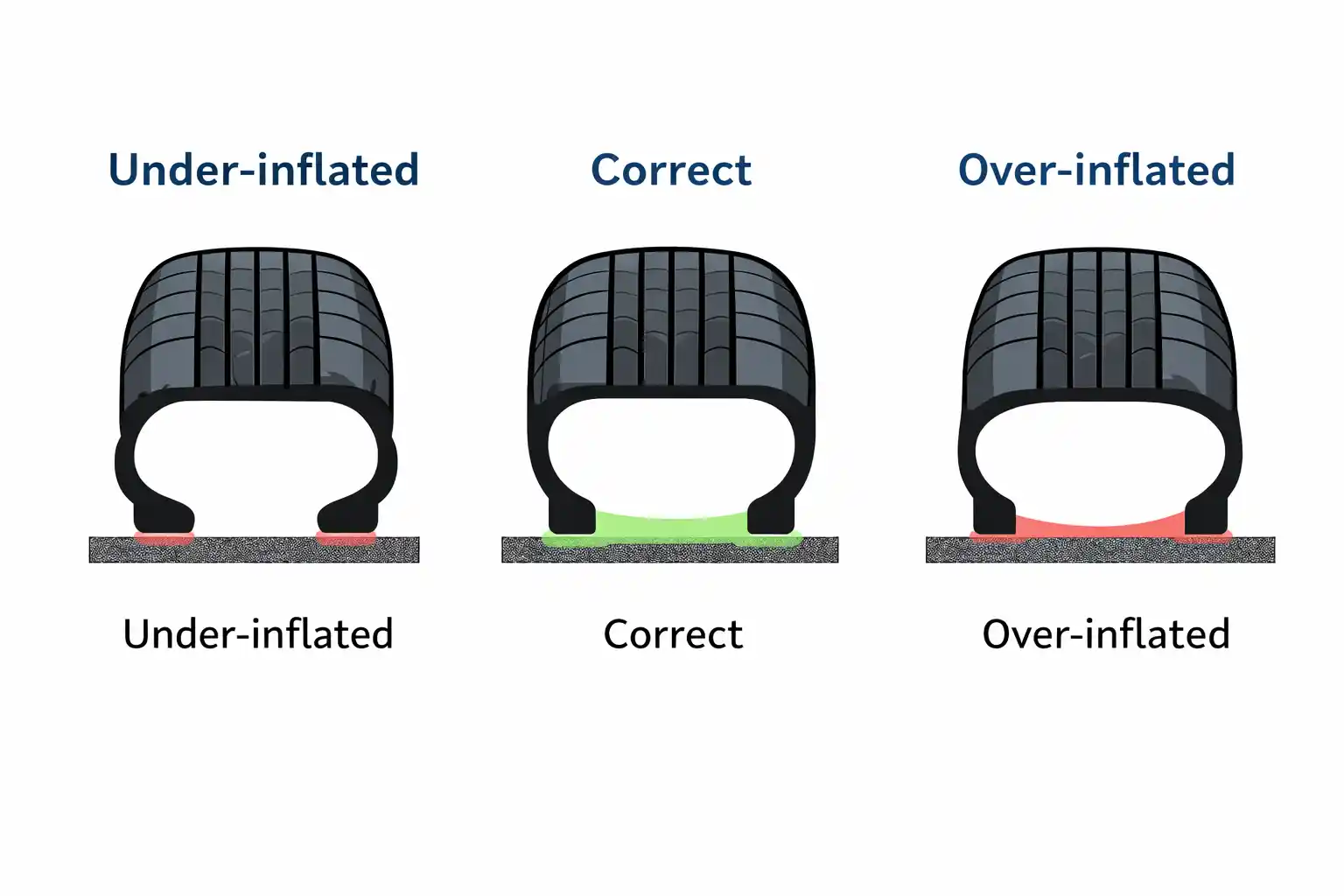
The "Contact Patch" Paradox
Air carries the load, not the tire. The rubber is simply a container for the air. When that container is not filled to specification, the shape of the tire changes, drastically altering how it touches the road.
Many drivers assume that if the tire "looks round," it's fine. This is a dangerous myth. A radial tire can lose 30% of its air pressure and still look perfectly normal to the naked eye. However, the physics have already shifted against you.
The Under-Inflation Risk
When pressure drops, the tire's sidewalls sag. The center of the tread lifts off the road, shifting the weight to the outer edges (shoulders). This causes excessive heat buildup—the number one cause of highway blowouts.
The Over-Inflation Risk
Too much air makes the tire balloon. Only the very center touches the road. Your traction is reduced by up to 50%, making your car feel "floaty" and significantly increasing braking distances.
Why "Max PSI" is NOT the Target
Walk around any parking lot, and you will see drivers filling their tires to the number stamped on the sidewall (e.g., "Max Press 50 PSI"). This is a critical mistake.
That number is the maximum pressure the tire can hold before bursting, not the operating pressure for your car. You must always use the placard located on your driver's side door jamb. That is the pressure calculated by the engineers who designed your suspension.
⚠️ Safety Alert: Hydroplaning
Low tire pressure collapses the tread grooves that are designed to channel water away. An under-inflated tire is 3x more likely to hydroplane on wet highways, causing a total loss of control even at moderate speeds.
To ensure you are safe, you need accuracy. Gas station gauges are notoriously inaccurate, often off by 5-10 PSI due to abuse. Every driver needs their own calibrated gauge.
Get a Professional Digital Gauge