Your tires are your car’s only contact with the road, making their condition critical for safety. Wear is often gradual, making it hard to notice when they become dangerous. This guide covers the four vital signs that it's time for a change.
1. Check Tread Depth
Worn-out treads reduce grip and drastically raise the risk of hydroplaning. For trucks and SUVs, this is especially critical due to their heavier weight and longer stopping distances.
[Image of tire tread depth measurement]- Legal minimum: 2/32 inch (US Standard).
- Safety recommendation: 4/32 inch for wet roads and 6/32 inch for snow.
- Pro Tip: Use the "Penny Test" (inserting a penny head-first into the tread) or a digital gauge for 100% accuracy.
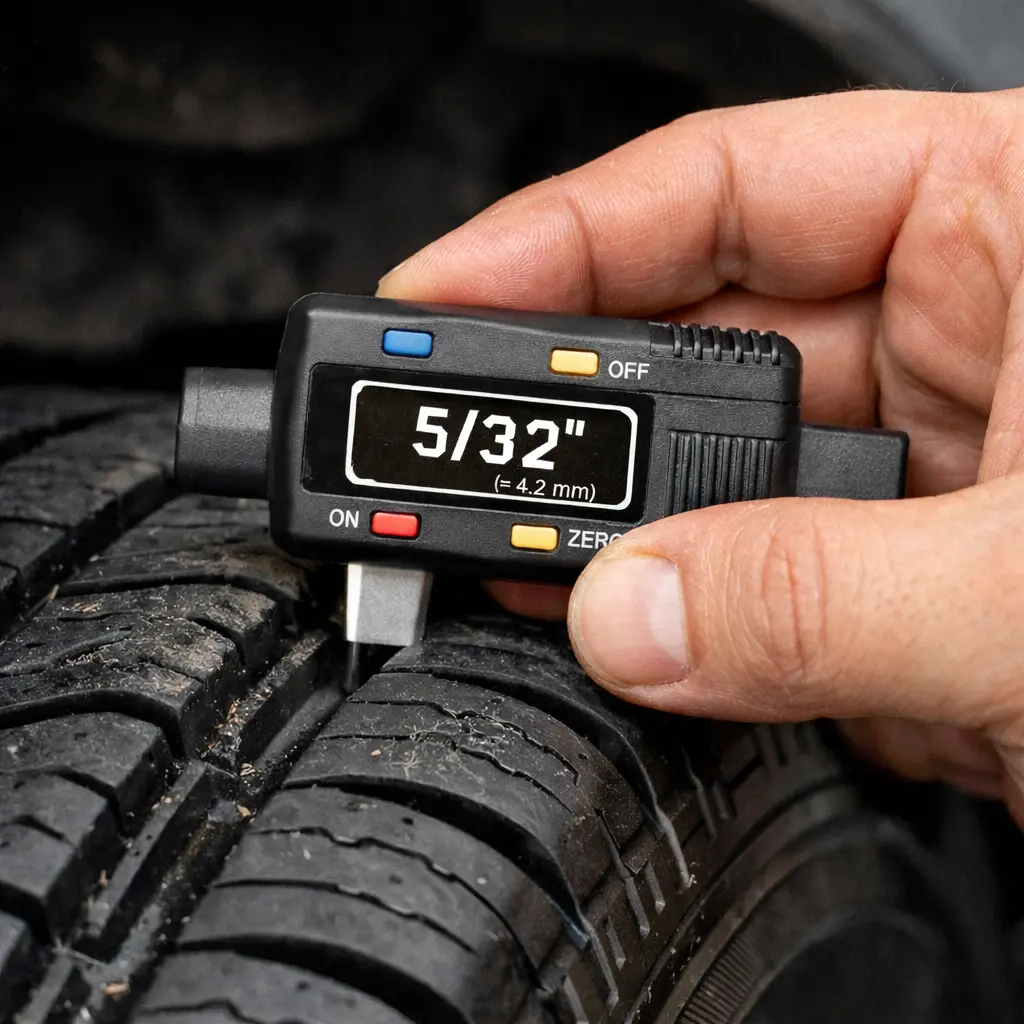 Get a Tread Depth Gauge on Amazon
2. Uneven Wear or Damage
Inspect for signs that your tires are being "scrubbed" away prematurely. This usually points to underlying mechanical or maintenance issues.
- Edge wear: Usually points to chronic under-inflation.
- Center wear: Usually points to chronic over-inflation.
- Inner/Outer wear: Indicates wheel alignment or worn suspension components.
3. The 6-Year Rule (DOT Code)
Tires degrade internally due to UV exposure and oxidation, regardless of tread depth. Even if they look new, the rubber becomes brittle over time.
[Image showing where to find the DOT code on a tire sidewall]4. Visible Sidewall Damage
Do not ignore physical deformities. Sidewall issues cannot be repaired and are the leading cause of high-speed blowouts.
- Bulges or Bubbles: Indicates internal structural failure. Replace the tire immediately.
- Cracking: Often called "dry rot," this means the rubber compounds are breaking down.
- Deep Cuts: If you can see internal cords or wire, the tire is no longer safe to drive on.
Summary
Regular inspections save lives. If your tires are low on tread, showing signs of age, or have visible damage, don't wait. It is always safer and more cost-effective to replace them before a total failure occurs.