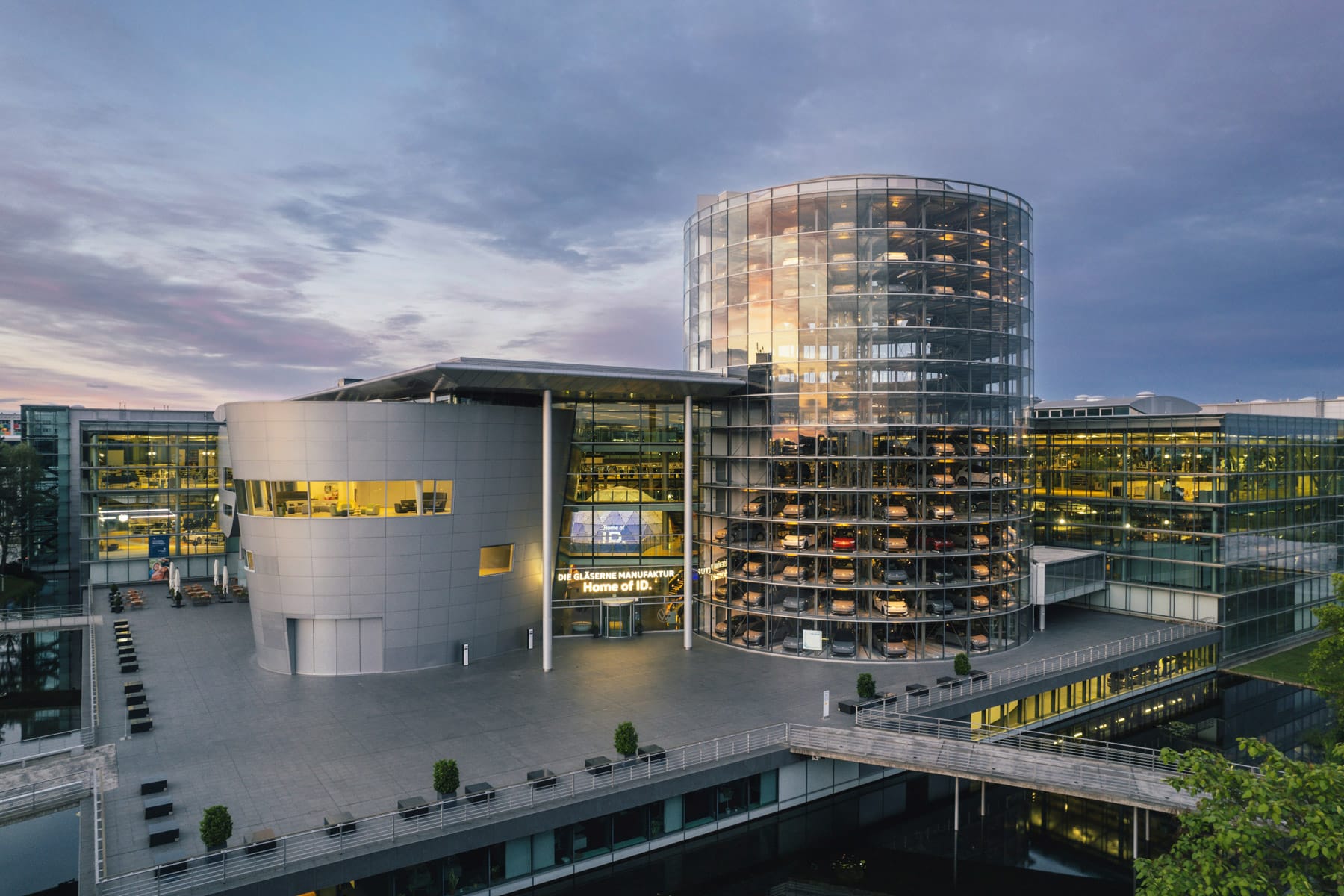
Recent buzz from China suggesting that electric vehicle powerhouse BYD was eyeing Volkswagen's historic Gläserne Manufaktur in Dresden has been swiftly and emphatically debunked by the German automaker. Volkswagen has flatly rejected these claims, stating the information is "decidedly false." The denial comes as the iconic "Transparent Factory," once a symbol of VW luxury and cutting-edge production, transitions away from vehicle manufacturing.
The Legacy of the Gläserne Manufaktur
The Gläserne Manufaktur, known for its stunning architecture and innovative assembly line where customers could watch their cars being built, was once a jewel in the Volkswagen crown. It initially served as the exclusive production site for the ultra-luxury VW Phaeton, later assembling some Bentley models, and more recently, Volkswagen's electric vehicles. However, vehicle production officially ceased in late 2024.
Currently, a significant portion of the Dresden facility is being transformed into an innovation center through a collaborative effort between Volkswagen, the Free State of Saxony, and the Technical University of Dresden. Despite these new initiatives, the primary assembly halls – the very spaces where generations of premium automobiles came to life – presently lie dormant.
The BYD Rumor Mill Sparks Up
The speculation originated from the Chinese automotive portal CarNewsChina, which, citing a single source reportedly familiar with the matter, reported that BYD was in negotiations with Volkswagen. The alleged interest was not in the new innovation hub, but specifically targeted the idle buildings that formerly housed vehicle production. According to the report, BYD intended to utilize these facilities for its own electric vehicle manufacturing, leveraging the prestigious "Made in Germany" label to enhance its brand recognition across Europe.
Shop EV Chargers on AmazonVolkswagen's Firm Denial
While BYD itself declined to comment on the matter when approached by CarNewsChina, Volkswagen wasted no time in setting the record straight. A spokesperson for Volkswagen Sachsen issued a concise statement: "We decidedly reject these speculations." This firm rebuttal leaves little room for ambiguity regarding the German giant's position.
BYD's Ambitious European Expansion
The rumor, though denied, underscores BYD's aggressive expansion strategy in Europe. The world's largest electric vehicle manufacturer is already establishing two production facilities on the continent, with plants underway in Hungary and Turkey. There were also reports of BYD considering a third European factory in Spain, potentially attracted by lower production costs compared to other European nations. Nevertheless, securing a manufacturing base in Germany, the traditional heartland of global automotive engineering, would undoubtedly carry immense prestige and strategic value for the Chinese brand as it pushes into Western markets.
Browse Automotive Parts & AccessoriesA Wider Trend in European Manufacturing
The Gläserne Manufaktur speculation also highlights a broader trend within the automotive industry: Chinese automakers' increasing desire to establish European production capabilities. Other prominent Chinese brands such as Dongfeng, Xiaomi, and Xpeng are reportedly exploring potential partnerships or acquisitions of existing production capacities, including in Stellantis-owned factories. Even companies with existing ties to Volkswagen, like Xpeng (a development partner in China) and MG Motor (part of the SAIC Group, a key joint-venture partner for VW in China), have been mentioned in discussions regarding the utilization of European Volkswagen facilities. However, it seems the Gläserne Manufaktur, despite its dormant state, is not currently part of these broader discussions concerning VW's partners.
As the electric vehicle market continues its rapid growth, the strategic placement of manufacturing hubs across continents remains a critical play for global dominance, even if some initial rumors prove to be just that—rumors.
Source: electrive.net