Used Tire Russian Roulette: Why a "Bargain" Could Cost Your Life
We’ve all seen the signs: "Gently Used Tires - 80% Tread - $40 Each." In an economy where everything is getting more expensive, the temptation to save $400 on a set of rubber is massive. But in the world of automotive safety, there is no such thing as a free lunch. In this exhaustive tire guide, we go deep into the "Used Tire Russian Roulette" and show you why that bargain tire might be a ticking time bomb.
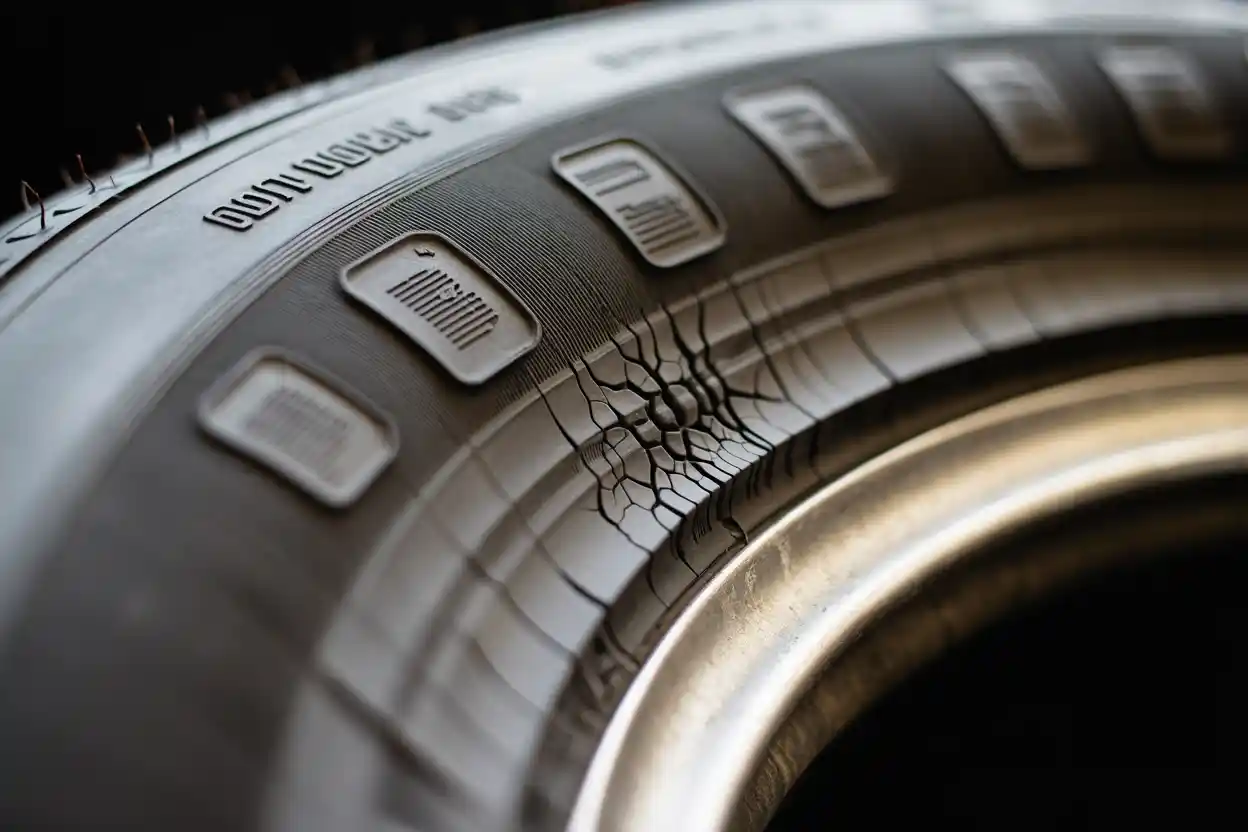
1. Rubber is Organic: The Myth of "Good Tread"
The biggest mistake people make when inspecting a tire is looking only at the tread depth. You can have a tire with 90% tread that is functionally useless. Why? Because rubber is an organic compound mixed with chemicals that degrade over time, regardless of whether the tire is being driven on or sitting in a hot garage.
Think of a tire like an apple. It looks great on the outside for a while, but eventually, it turns mealy and loses its structure. In tires, this is called Oxidation. Oxygen interacts with the rubber compounds, making them hard and brittle. A hard tire cannot grip the road, especially in the rain. Even if your tire pressure is set perfectly to 32 PSI, a brittle tire will slide over the asphalt like plastic on ice.
2. Forensic Analysis: The DOT Code
Every tire sold in the United States and Europe must have a DOT (Department of Transportation) code stamped on the sidewall. This is the tire's "birth certificate." You need to look for a four-digit number at the end of the DOT string, usually inside an oval window.
How to Read the Code (e.g., 2422)
- First two digits (24): The week of manufacture (24th week).
- Last two digits (22): The year of manufacture (2022).
If you see a 3-digit code, the tire was manufactured before 2000. Do not buy it. It belongs in a museum, not on your car.
3. Hidden Killers: What You Can't See
When you buy a tire online from a reputable dealer, the tire has been stored in a temperature-controlled warehouse. When you buy a used tire from a Craigslist ad or a sarki "used tire shop," you have no idea where it’s been.
The Interior Liner Damage
If the previous owner drove on the tire while the tire pressure was critically low (even for just a mile), the sidewall could be internally shredded. The heat causes the inner liner to crumble. You can’t see this from the outside until the tire is mounted and a "bubble" appears on the sidewall. By then, your money is gone.
Dry Rot (Weather Cracking)
Look closely at the grooves of the tread and the area near the rim. Do you see tiny hairlike cracks? That is "Dry Rot." It means the UV stabilizers in the rubber have failed. At highway speeds, these cracks can expand, leading to a catastrophic tread delamination—where the entire tread surface peels off the carcass like an orange skin.
🛒 Get a Digital Tread Depth Gauge to Verify Safety4. The Regrooving Scam
In some unscrupulous shops, "regrooving" is common. They take a bald tire and use a heated blade to cut new grooves deeper into the rubber. This is illegal for passenger cars and extremely dangerous, as it leaves only a paper-thin layer of rubber between the road and the internal steel belts. If you see tread that looks "too sharp" or inconsistent, walk away.
✅ The Used Tire Inspection Checklist:
- DOT Date: Is it older than 5 years? (If yes, skip it).
- Bead Condition: Is the inner circle (where it hits the rim) torn or jagged?
- Repairs: Are there more than two plugs? Is there a patch near the sidewall?
- The Smell Test: Does it smell like fresh rubber or like old, dry dust?
- Uneven Wear: Is one side more worn? This indicates a bent suspension from the previous car.
5. The Price Per Mile: Why New is Actually Cheaper
Let's do the math that used tire shops don't want you to see.
Used Tire: $50 + $20 mounting = $70. It has 4/32" tread. It will last you 8,000 miles.
Cost: $0.0087 per mile.
New Tire Online: $120 + $20 mounting = $140. It has 11/32" tread and a 60,000-mile warranty.
Cost: $0.0023 per mile.
The new tire is actually 3.7 times cheaper in the long run, and you get the benefit of modern safety tech, a warranty, and peace of mind at 80 MPH.
🏁 The Final Verdict
Your tires are the only thing connecting your family to the road. Using a used tire is like buying a used parachute—it might work, but is the $50 saving worth the risk? Our tire guide conclusion is clear: If you are on a budget, buy a reputable mid-range tire online rather than a "premium" used tire. Your life is worth more than a bargain.
Stay safe. Stay informed. Check your tire pressure every month.
*As an Amazon Associate, we earn from qualifying purchases.*