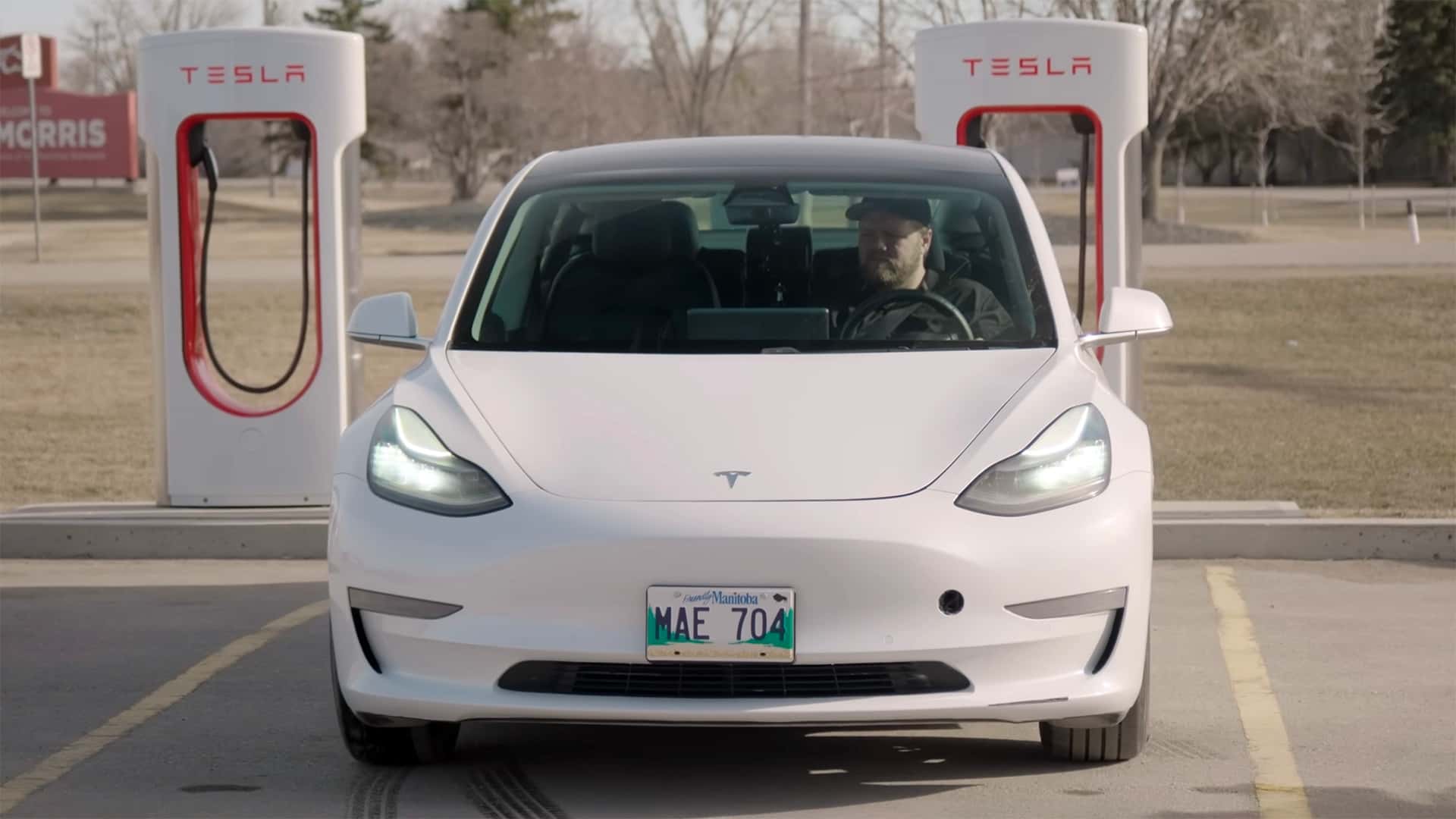
Electric vehicle longevity is a topic often debated, with battery degradation standing as a primary concern for prospective buyers. However, a recent case study involving a 2019 Tesla Model 3 Standard Range with an astounding 380,000 miles (610,000 km) on its original battery is setting new benchmarks for durability, albeit with a significant caveat: range loss.
The Canadian team at Drive Protected acquired this high-mileage Model 3 to put its endurance to the test. What they found paints a picture of robust engineering tempered by the inevitable march of time and use. When new, this Model 3 boasted an estimated range of 240 miles (386 km) on a full charge. Today, after nearly four hundred thousand miles, a 100% charge displays a more modest 158 miles (254 km).
This represents an 82-mile (132 km) reduction, or a 34.2% drop in capacity from its original specification. While this certainly qualifies as a "huge" loss, bringing the battery below 70% of its initial capacity—often a benchmark for potential replacement—the vehicle itself appears to be otherwise mechanically sound. For owners with shorter commutes or access to frequent charging, 150+ miles of range remains perfectly usable.
To further quantify the degradation, Drive Protected conducted a highway range test. Driving at a consistent 110 km/h (68 mph), the car eventually returned to the charger showing 0% battery after covering 138.3 miles (222.6 km). During this test, the ambient temperature rose from 51.8°F (11°C) to 73.4°F (23°C), and the average consumption was an impressive 4.27 miles/kWh (14.55 kWh/100 km). This implies the vehicle utilized approximately 32.4 kilowatt-hours for the journey, considerably less than its original 49 kWh usable capacity, yet consistent with its degraded state.
Understanding EV Battery Health
This Model 3 serves as a powerful reminder that battery degradation is far from a simple linear process. While 34.2% loss is substantial, the fact that the original battery has propelled a car for 380,000 miles is remarkable. It highlights Tesla's battery management prowess and the inherent durability of EV powertrains. Many gasoline-powered vehicles would have seen multiple engine rebuilds or been retired from service long before reaching such extreme mileage.
For those considering a used EV, especially one with high mileage, understanding the battery's current health and potential range is paramount. Tools and services exist to help assess this, allowing buyers to make informed decisions.
Check EV Battery Health Monitors on AmazonThe Road Ahead for High-Mileage EVs
Despite the notable range reduction, this Model 3 continues to function as a reliable mode of transport, demonstrating that "degraded" does not necessarily mean "unusable." This case sets a fascinating precedent for the lifecycle expectations of electric vehicles and their components. While a battery swap could restore its original range, the current performance suggests that a replacement isn't immediately critical for many drivers.
The lessons from this 380,000-mile Tesla are clear: EVs can achieve incredible longevity, but managing and understanding battery degradation is a crucial part of the ownership experience. As the EV market matures, such real-world tests provide invaluable data for both manufacturers and consumers.
Find Tesla Model 3 Charging Solutions on AmazonSource: insideevs.com