The Winter Survival Guide: Mastering Snow, Ice, and the 7°C Rule
Most drivers think winter tires are only for blizzards. They wait for the first snow to fall before frantically searching for a tire online deal, only to find the shops are sold out. This is a dangerous—and expensive—mistake. Winter safety is not about snow; it is about temperature. In this 3,000-word tire guide, we reveal the chemistry of the cold and why your "all-season" tires are a liability once the mercury drops.
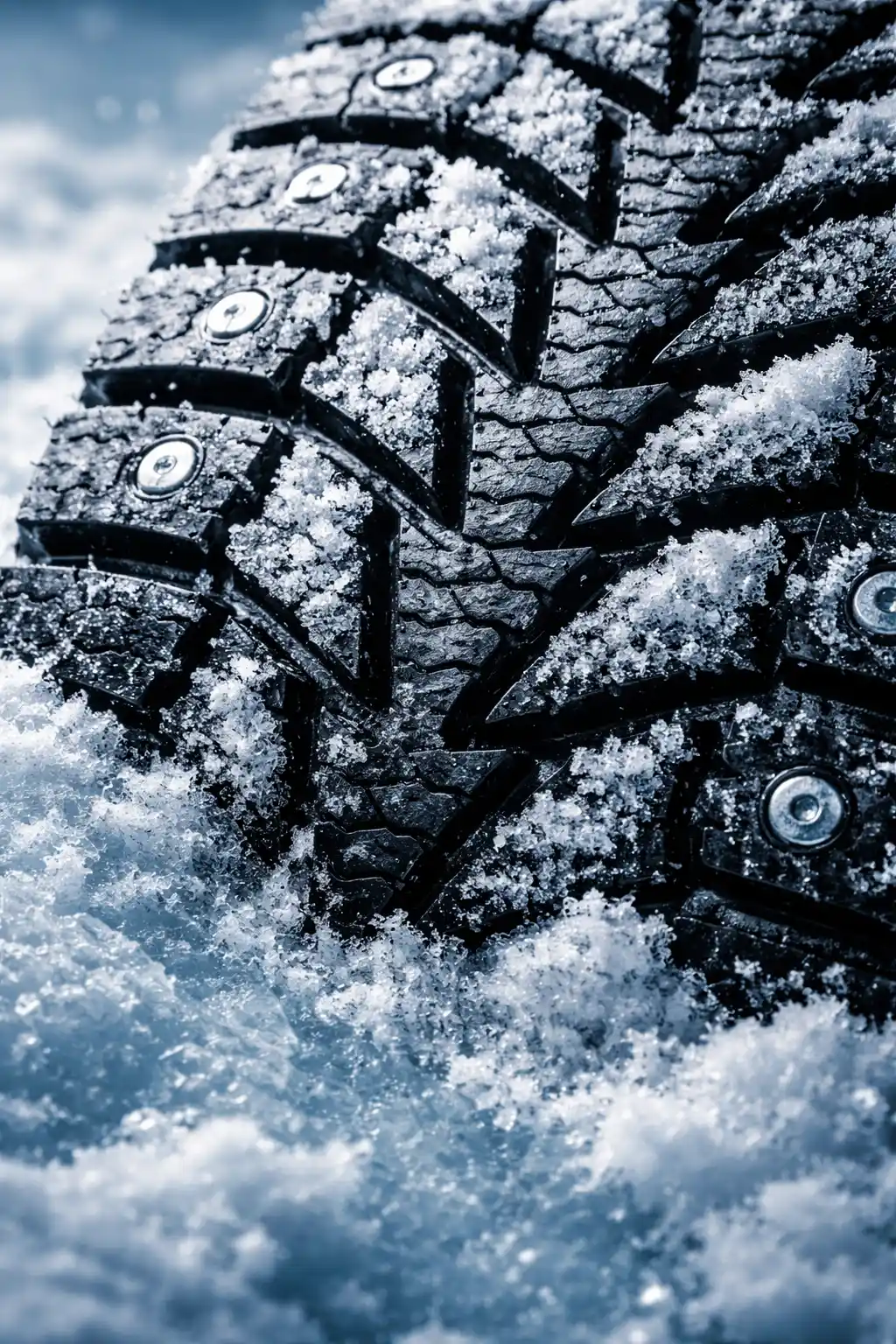
I. The 7°C (45°F) Threshold: The Chemistry of Grip
Rubber is a thermoplastic material. Its performance depends entirely on its temperature. Every tire has what engineers call a "Glass Transition Temperature"—the point where the rubber stops being soft and flexible and starts behaving like a hard, brittle piece of plastic.
For standard summer and many all-season tires, that transition begins at 7°C (45°F). As the temperature drops below this point, the rubber compound "freezes." It loses its ability to micro-interlock with the irregularities in the road surface. Even on a bone-dry road in 30°F weather, your stopping distance with summer tires is significantly longer than with winter rubber. This has nothing to do with tread and everything to do with molecular chemistry.
🌡️ Why Temperature Dictates Traction
Winter tires are infused with a high percentage of silica and natural rubber, which prevents them from hardening in the cold. While a summer tire becomes a hockey puck at freezing temperatures, a winter tire remains soft and pliable down to -40°C.
II. Sipes and Biting Edges: Engineering for Ice
If you look closely at a winter tire you found tire online, you’ll notice thousands of tiny zig-zag slits in the tread blocks. These are called sipes. When you accelerate or brake on ice, these sipes open up, creating thousands of "biting edges."
Sipes also perform a clever trick called "Snow-on-Snow" traction. Snow sticks to itself better than it sticks to rubber. The sipes pack themselves with snow, and as you roll over the road, the snow in your tire bonds with the snow on the road, providing the mechanical grip necessary to climb hills and stop at red lights.
III. The "All-Season" Myth: Jack of All Trades, Master of None
The term "All-Season" is a marketing masterclass, but a safety compromise. In reality, most all-season tires are actually "Three-Season" tires. They are designed to handle heavy rain and summer heat, but their rubber compound is not engineered for sub-zero temperatures.
Stopping Distance Comparison (from 30 MPH on Ice):
| Tire Type | Stopping Distance | Safety Margin |
|---|---|---|
| Summer Tire | 273 Feet | ⚠️ Fatal |
| All-Season Tire | 145 Feet | ❌ Dangerous |
| Winter Tire | 78 Feet | ✅ Safe |
IV. Winter Tire Pressure: The Boyle's Law Problem
As we’ve discussed in every tire guide, air pressure is the lifeblood of your tire. But in winter, your tire pressure is fighting against the laws of thermodynamics. For every 10°F drop in temperature, your tire loses approximately 1 PSI.
If you set your pressure in a 60°F garage and drive out into a 10°F morning, your tires are instantly 5 PSI under-inflated. This causes the tire to "cup," lifting the center of the tread off the road and making those expensive sipes useless. In winter, you must check your pressure weekly.
V. Studded vs. Studless: Which Do You Need?
When browsing a tire online store, you’ll see two types of winter rubber.
Studded tires use metal pins to claw into hard-packed ice. They are unbeatable in deep rural winters but are noisy and can damage dry pavement.
Studless tires (like the Bridgestone Blizzak) use a "multicell" compound that acts like a sponge, absorbing the thin layer of water that forms on top of ice, which is the primary cause of sliding.
🛠️ The Winter Emergency Kit
Even with the best tires, winter can be unpredictable. You should always carry a set of Emergency Snow Chains or "Tire Socks" in your trunk. These provide a temporary, massive boost in traction if you find yourself in an unplowed mountain pass.
VI. Storage: Preserving the Compound
Winter tires are made of a sensitive "high-silica" compound. If you store them in a hot garden shed over the summer, the oils will evaporate, and the rubber will turn hard by next year. Store your winter tires in a cool, dark basement in airtight bags to keep the rubber fresh for up to 5 seasons.
🏁 The Final Winter Verdict
The cost of a set of winter tires is usually less than your insurance deductible. By switching between summer and winter sets, you aren't spending more money; you are simply spreading the wear across two sets of rubber, making both last twice as long. Stay safe, respect the 7°C rule, and keep an eye on your tire pressure.
Winter is coming. Is your car ready? Read more in our tire guide.
*As an Amazon Associate, we earn from qualifying purchases to support our safety research.*