The Silent Tire Killer: Why a 0.1 Degree Alignment Error is Costing You a Fortune
Imagine walking ten miles every day while dragging your left foot sideways. Within a week, your shoe would be ruined, your hip would ache, and your energy would be depleted. This is exactly what happens to your vehicle when the wheel alignment is neglected. In this definitive tire guide, we go beyond the surface to explain the brutal physics of geometry.
1. The Financial Suicide of Misalignment
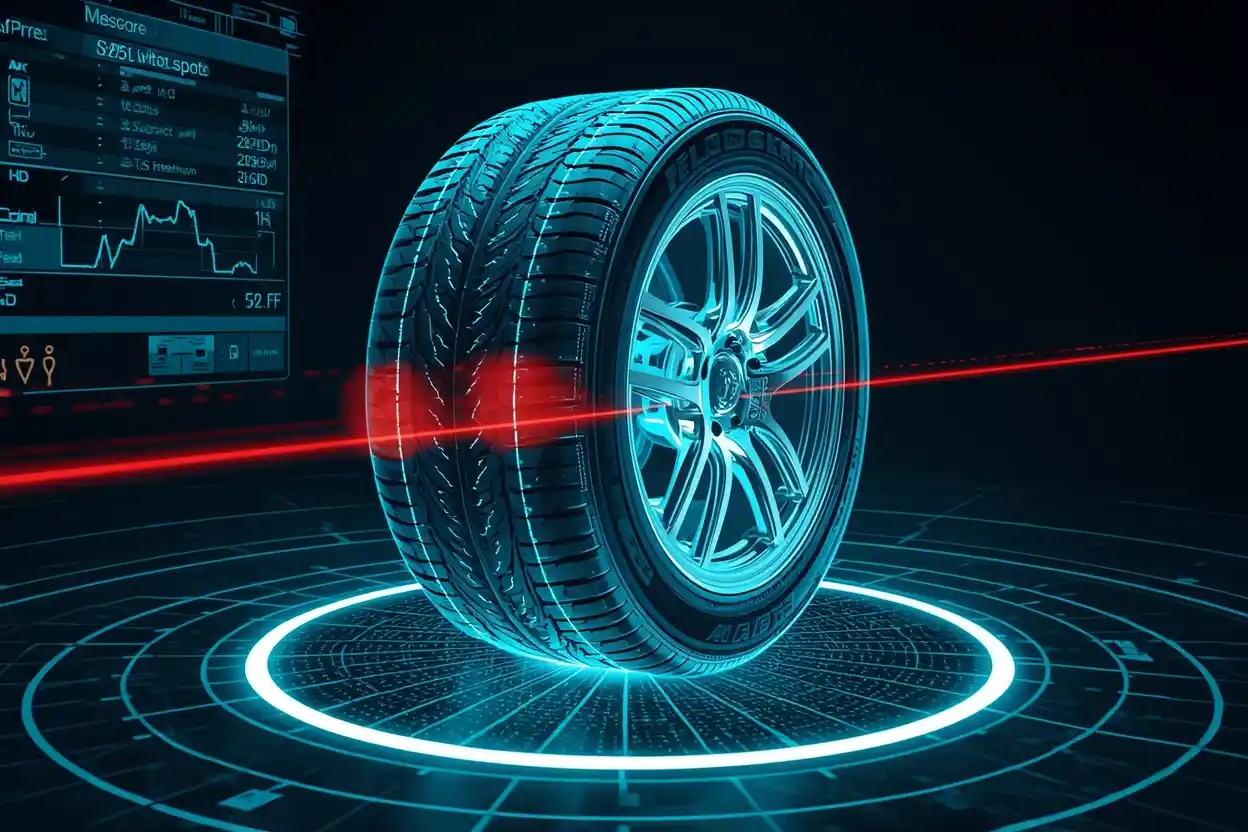
Wheel alignment is often viewed as an "upsell" at the mechanic, but the math tells a different story. A vehicle that is out of alignment increases its rolling resistance. Physics dictates that if your tires aren't pointing exactly where the car is traveling, they are effectively "scrubbing" the road surface instead of rolling over it.
This scrubbing creates friction, and friction creates heat. As we mentioned in our previous tire pressure deep dives, heat is the enemy of rubber. Misalignment can reduce the life of a premium tire set by 50% or more. If you bought a high-end set of tires online for $1,000, a $100 alignment check isn't an expense—it's an insurance policy.
2. Decoding the "Holy Trinity" of Geometry
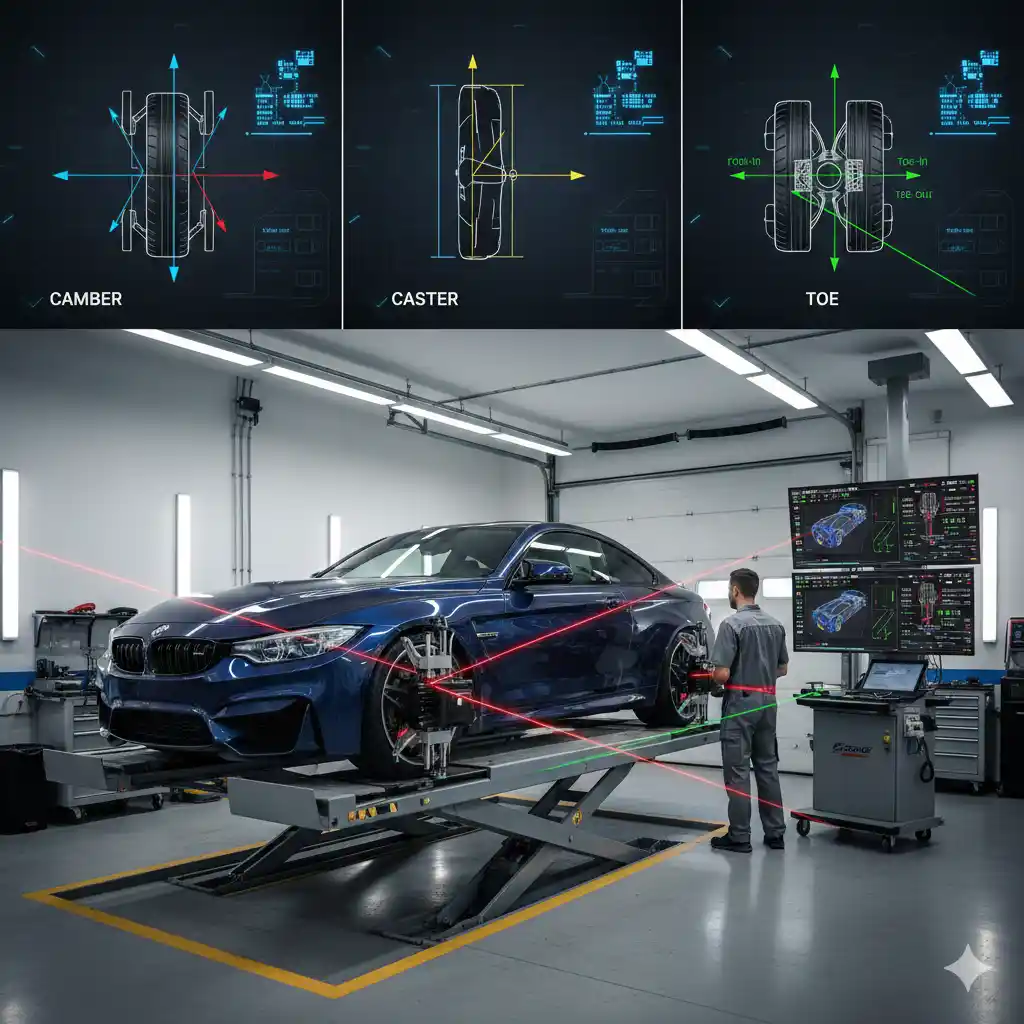
Toe: The Silent Eraser
Toe is the most critical angle for tire wear. Viewed from above, "Toe-In" means the fronts of the tires point toward each other, while "Toe-Out" means they point away. Even a fraction of a degree off-spec means your tires are being dragged sideways. This creates "feathering"—a wear pattern where the edges of the tread blocks become sharp like saw teeth.
Camber: The Posture of the Tire
Camber is the inward or outward tilt when viewed from the front. If you've ever seen a "stanced" car with tires leaning inward, that is extreme negative camber. While it helps high-speed cornering, for a daily driver, it results in the inner shoulder of the tire wearing down to the steel cords while the outside looks brand new. This is why checking your tire pressure isn't enough; you need to see how the tire sits on the tarmac.
Caster: The Stability Factor
Caster doesn't affect tire wear as much as the others, but it is responsible for your steering wheel returning to center after a turn. Poor caster makes a car feel "darty" or unstable at highway speeds, leading to driver fatigue and safety risks.
💡 The "Pothole" Effect
A single impact with a deep pothole can deliver several tons of force to your suspension components. This is often enough to bend a tie rod or shift a strut tower by a millimeter. That millimeter is enough to ruin a tire you just purchased online within a few thousand miles. If you hit a hard bump, don't wait—check the alignment.
3. Safety, Stability, and the Contact Patch
Your car's safety systems—ABS, Traction Control, and Stability Control—are all calibrated based on the assumption that the tires have a full, flat contact patch with the road. When your alignment is off, that patch is distorted. In a panic braking situation, a misaligned car may pull violently to one side or take significantly longer to stop.
Vehicle stability is also compromised during rain. A misaligned tire cannot efficiently channel water through its grooves because the tread is not meeting the road at the designed angle. This drastically increases the risk of hydroplaning, regardless of how much tire pressure you have.
🛒 Shop Precision DIY Alignment Gauges on Amazon4. When Should You Get an Alignment?
Our tire guide recommendation is simple: follow the "Rule of Three":
- Every 10,000 miles: Even if the car feels fine, components settle and bushings wear.
- When Buying New Tires: Never put new rubber on an old, crooked suspension. It's like putting a new soul into a broken body.
- After a "Life Event": This includes hitting a curb, a major pothole, or replacing any suspension parts like struts or control arms.
5. Buying Tires Online and the Alignment Trap
Many consumers who buy a tire online forget to budget for the alignment at the local installer. They see the low price of the rubber and ignore the setup cost. To truly save money, you must view the tire and the alignment as a single unit. A perfectly aligned cheap tire will often outlast a misaligned premium tire.
🏁 The Final Verdict
Alignment is the difference between an enjoyable driving experience and a stressful, expensive one. It affects your steering feel, your braking distance, your fuel bill, and your tire longevity. Don't be the driver who ignores the "Silent Killer" until the steel belts are poking through the rubber.
For more expert advice, check out our full tire guide dashboard.
*As an Amazon Associate, we earn from qualifying purchases. This supports our independent testing.*