The Great Analog Resurgence: Why the American Automotive Soul is Fighting Back
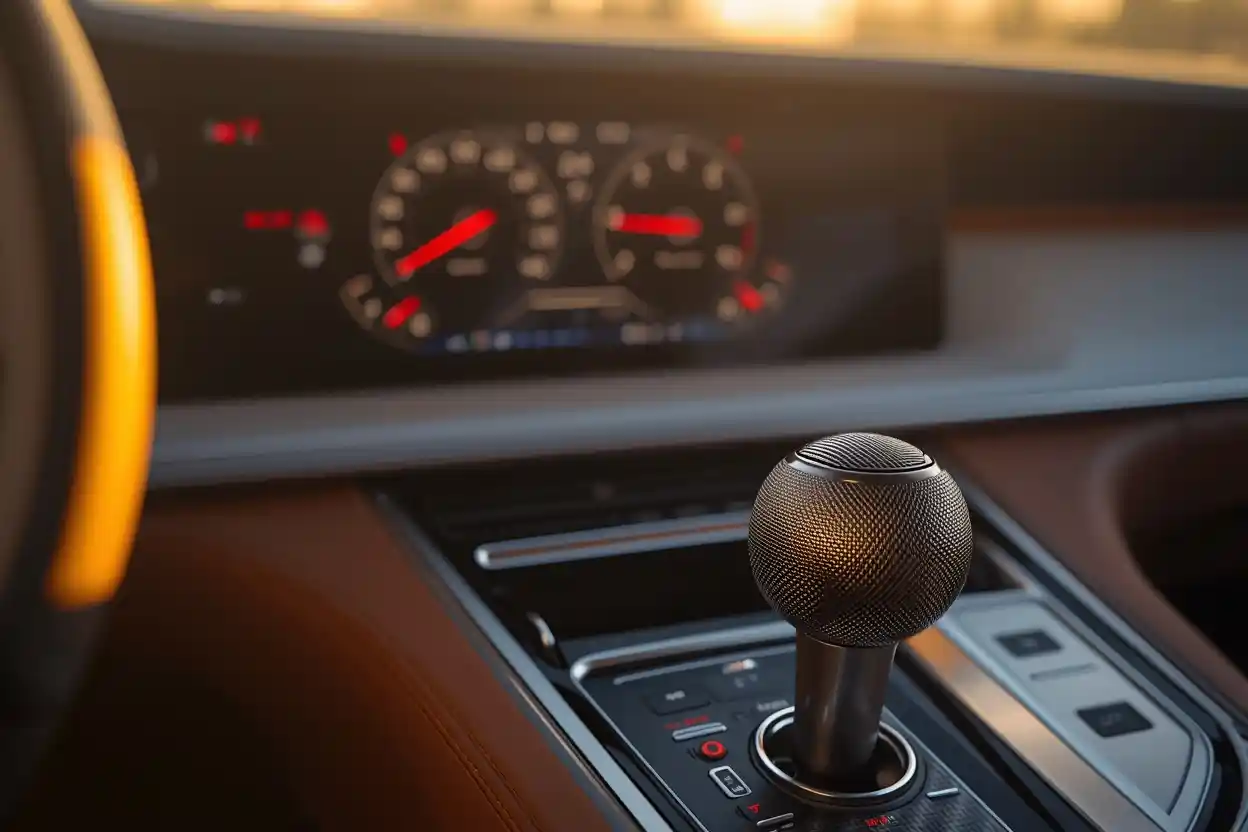
The Digital Saturation Point
By February 2026, the American automotive industry reached what social scientists call the "Digital Saturation Point." For over a decade, manufacturers raced to turn the automobile into a "smartphone on wheels." We saw the introduction of massive pillar-to-pillar screens, the elimination of every physical stalk and button, and the transition of the driving experience into a series of software-mediated interactions.
But a funny thing happened on the way to the future. The American consumer—the most car-centric population on Earth—started to revolt. The "Analog Resurgence" isn't just a nostalgic whim of the elderly; it is a full-scale cultural movement led by Gen Z and Millennials who are tired of living their lives through a screen. In 2026, the ultimate luxury is no longer "connectedness"—it is disconnection.
Chapter 1: The Ergonomic Failure of the "Glass Cockpit"
The primary catalyst for the Analog Resurgence was the total failure of touch-based ergonomics. Between 2018 and 2024, interior designers removed physical knobs for volume, temperature, and fan speed, forcing drivers to look away from the road to perform basic tasks. Just like trying to find the right tire pressure hidden in a sub-menu, critical driving functions became digital chores.
The Muscle Memory Deficit: In a 2026 survey of American drivers, 82% reported "high frustration" with haptic touch surfaces. Humans are tactile creatures. We rely on "muscle memory"—the ability to reach for a dial and feel its "click" without taking our eyes off a rainy highway at 70 mph. The industry’s pivot back to physical switchgear is a victory for safety over styling. We are seeing the return of "Weighted Controls"—knobs made of knurled aluminum or heavy-duty polymers that provide a satisfying mechanical resistance. In the knowledge hub of 2026, the "click-feel" of a toggle switch is discussed with the same reverence that enthusiasts used to reserve for 0-60 times.

Tactile Upgrade: Knurled Aluminum Control Knobs
Restore the mechanical soul of your interior. These weighted, aluminum knobs replace cheap plastic sliders, providing the satisfying physical click that 2026 drivers crave. Reclaim your muscle memory.
View on AmazonChapter 2: The "Ten-Year Brick" – The Obsolescence Crisis
The American "Forever Car" culture is undergoing a massive revival due to the fear of software obsolescence. In 2026, the first generation of "highly connected" EVs from the early 2020s are starting to hit the used market, and the results are catastrophic for resale values. Buyers are looking for vehicles they can actually maintain without a cloud connection—the kind of reliability you'd expect from a tire online purchase with a 60,000-mile warranty.
The Software Deadlock: Buyers are realizing that a car controlled entirely by a proprietary operating system is a ticking time bomb. If the manufacturer goes bankrupt, or simply decides to stop supporting a specific "v1.0" software architecture, the car effectively becomes a "brick." Screens fail, UI-lag becomes unbearable, and critical features like climate control become inaccessible because the "cloud server" no longer responds. This has caused a price explosion in what enthusiasts call the "Golden Era Analog Vehicles" (roughly 2005–2015). These cars feature modern safety (ABS, airbags, stability control) but their primary interfaces are mechanical.
The 2026 Resale Constant: As software dependency decreases, the long-term asset value ($V$) increases.
Chapter 3: The Psychology of the Drive – Dopamine vs. Connection
In the hyper-connected world of 2026, the car was supposed to be another "device" in our ecosystem. But the American driver has rediscovered that the car is actually an escape from that ecosystem. The "Flow State": Psychologists studying driving habits in 2026 have found that "Analog Driving"—cars with manual transmissions, mechanical steering, and minimal screens—promotes a "Flow State." When a driver is forced to engage with the machine (shifting gears, matching revs, feeling the vibration of the road through the steering rack), the brain enters a state of high focus and low stress.

Preservation Master: Custom Fit Dashboard Shade
Protect your analog sanctuary. Prevent UV damage to your dashboards and gauges. In the "Forever Car" era of 2026, preserving the physical interior is the best investment you can make for your vehicle's resale value.
Check Price on AmazonChapter 4: The Manual Renaissance – The 6-Speed Counter-Culture
If you asked a car analyst in 2015, they would have told you the manual transmission would be extinct by 2026. They were wrong. While automatics and EVs dominate the "appliance car" market, the "Enthusiast" market has seen a massive manual revival. In 2026, a manual gearbox is a "theft-deterrent," a "skill-badge," and a "luxury-option." For the American enthusiast, the stick shift is the ultimate middle finger to the autonomous future.
Chapter 5: The Rise of "Analog-Modernism" (The OEM Pivot)
Manufacturers are finally listening. In 2026, we are seeing the birth of "Analog-Modernism." These are brand-new cars that utilize the best of 2026 engineering (carbon fiber, high-efficiency engines, advanced safety) but intentionally strip away the digital clutter. The "Minimalist Cockpit" Trend: New 2026 models are being released with "Incognito Modes." At the press of a button, every screen in the car dims and retracts into the dashboard, leaving only a physical, needle-based speedometer and tachometer.
Chapter 6: The "Right to Repair" and the Mechanical Rebellion
The Analog Resurgence is also a political movement. The "Right to Repair" act has become a major talking point in the 2026 election cycle. Americans are tired of "Software-Locked" components. In the DIY community, we are seeing a trend of "Digital Stripping." Enthusiasts are taking modern cars and "downgrading" them—swapping out electronic steering racks for hydraulic ones to regain Mechanical Transparency.

The Toolbox of Freedom: 230-Piece Mechanics Set
Join the Mechanical Rebellion. Don't let a software lock dictate your life. This professional-grade tool set gives you the power to maintain, repair, and reclaim your analog machine. Built for 2026's Right to Repair movement.
View on AmazonChapter 7: The Future of the Past (2030 and Beyond)
As we look toward the end of the decade, the "Analog Resurgence" will likely stabilize into a permanent luxury niche. Just as mechanical watches survived the quartz crisis and vinyl records survived the MP3, the analog car will survive the EV revolution. The car of the future isn't a "computer on wheels"—it’s a sanctuary. In 2026, we have learned that the more we automate the drive, the less we value the journey. True quality of an automobile is measured in the tangible, mechanical feedback that tells the driver: "You are in control. You are alive. You are free."
The Tire.Guide Editorial Team - Celebrating the Soul of Driving in 2026.